


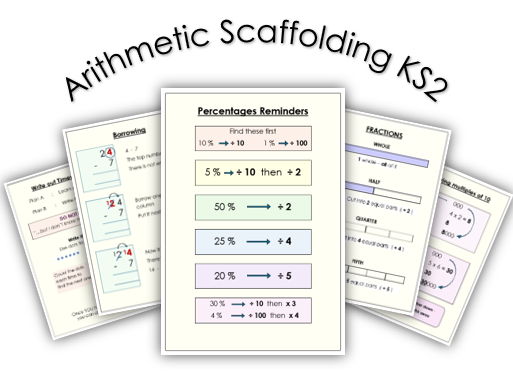

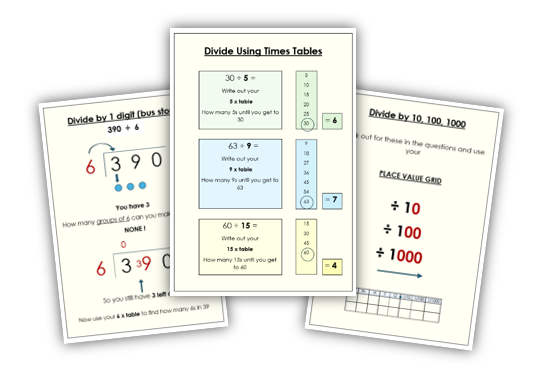
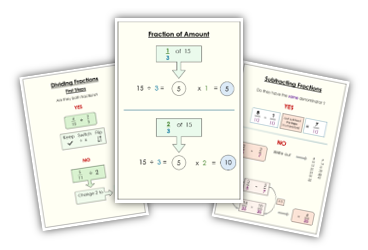
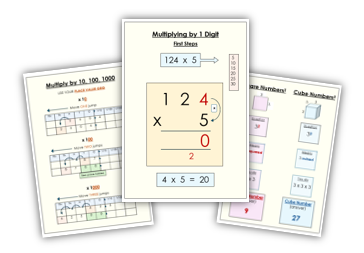
Scaffolding, memory aid help sheets to encourage independent work and progression, and to improve active learning skills.
This resource is aimed at KS2 maths students, particularly for Year 6 SATs, but they can be used for any year group that needs reminders. They are particularly good for SEN / low ability groups or PP pupils. The cards support teaching by having reminders available for pupils to access themselves.
The cards contain examples or help tips, or the first steps for a question. Some have more than one version depending on degree of scaffolding required or alternative methods.
Includes 7 packs of help cards: (pages in each pack)
- Addition (8)
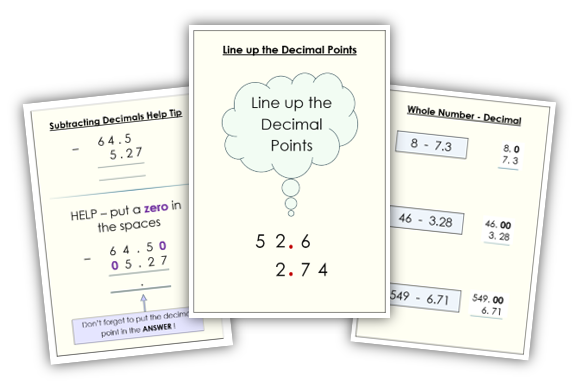
- Subtraction (12)
- Multiplication (20)
- Division (12)
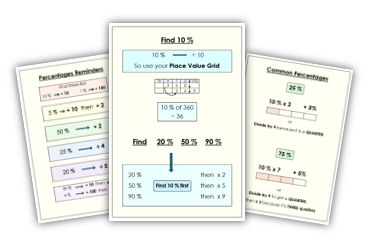
- Percentages (9)
- Fractions (24)
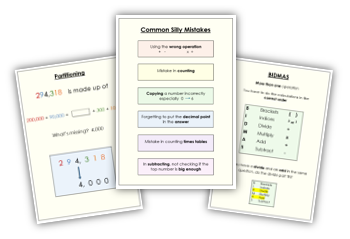
- Other/mixed including BIDMAS, partitioning, mixed operations (13)
Word document
- I call them ‘help cards’ because that’s how I use them. They are on white sheets so they can be printed on coloured card or paper.
- A4 size, but can be printed or enlarged for posters.
- Can be printed/reduced onto A5 card for revision or classwork.
- Could be printed into booklets.
- Document can be used as teaching aid on computer/interactive whiteboard as examples.
I designed this resource to aid memory and encourage independent work. There are many reasons why many pupils can find this difficult - slow processing, low motivation/confidence, memory difficulties, poor concentration - and the adults are very often repeating the same instructions over and over. I feel that if the pupils look at help cards themselves they are more active in their learning.
Also, quite often, their own work books can be difficult to look back at for help as they can be full of gaps/unorganised work. I want to get them out of the habit of just saying “I don’t know” and not doing anything, or hiding and waiting for us to notice them or be free to help.
Our year 6 class do a practice arithmetic paper every week but not as a test. We put the help cards at the back of the room, along with the answers. After three questions the pupils get up to mark their work and find a card to help themselves (movement break!) Obviously this is less chaotic in a small class.
We also look at their papers every week and if they are making the same silly errors, or avoiding certain questions, we give them a help card on their desk for the next paper.
Also, to extend some, they can look at the help card for a topic they haven’t done yet to see if they can work it out. This form of self pre-teach can make the pupils familiar with the question when we do explain it, and feel pleased when they understand and progress by themselves.
I have also used the cards with year 5 pupils, when explaining an arithmetic question, to show them an example without having to make one up quickly on a whiteboard.
These cards help pupils to not be afraid to TRY SOMETHING!
Something went wrong, please try again later.
This resource hasn't been reviewed yet
To ensure quality for our reviews, only customers who have purchased this resource can review it
Report this resourceto let us know if it violates our terms and conditions.
Our customer service team will review your report and will be in touch.
£3.00