


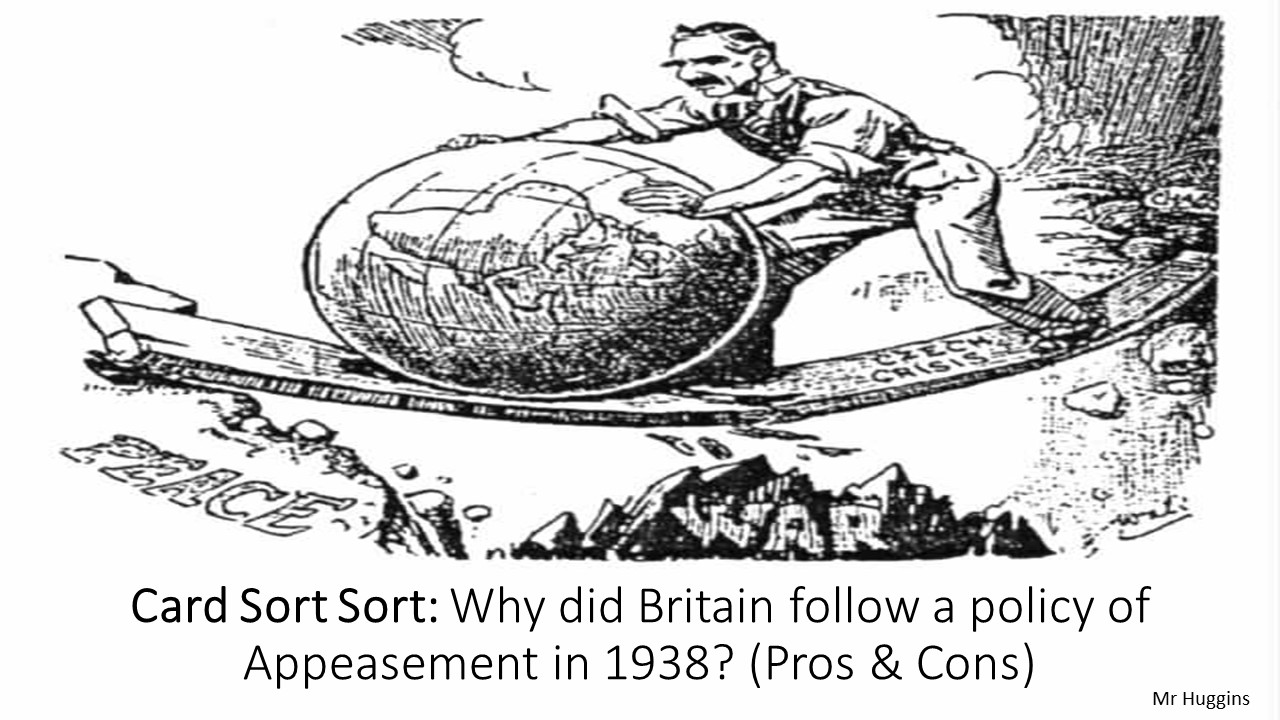
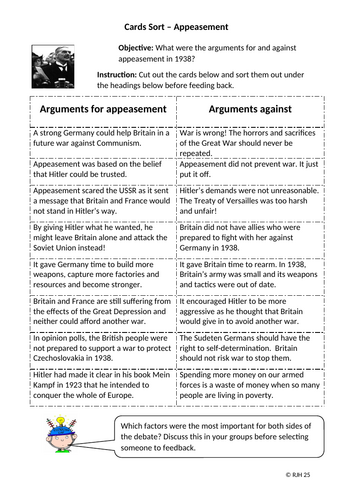
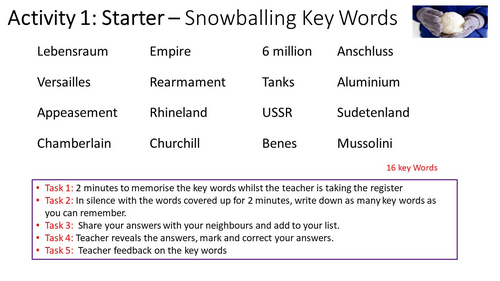
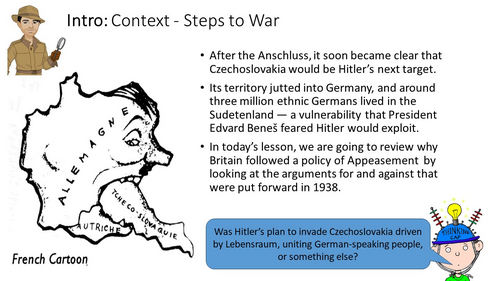
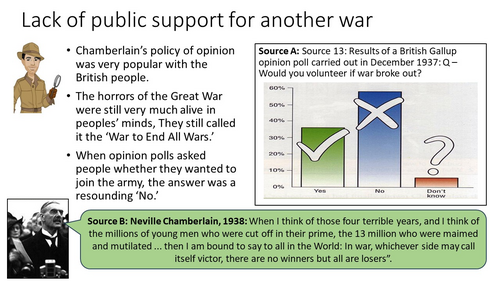
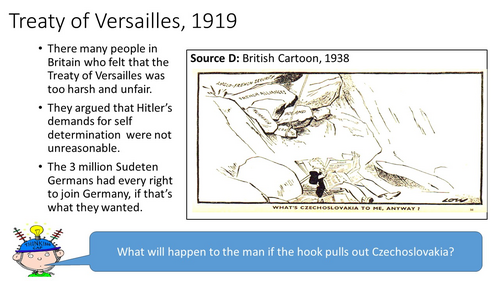
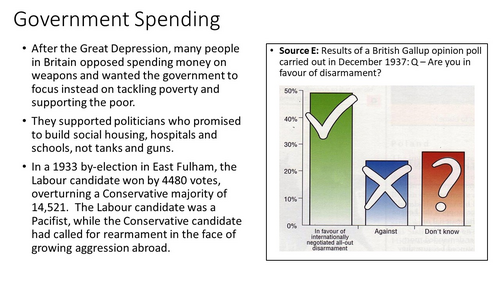
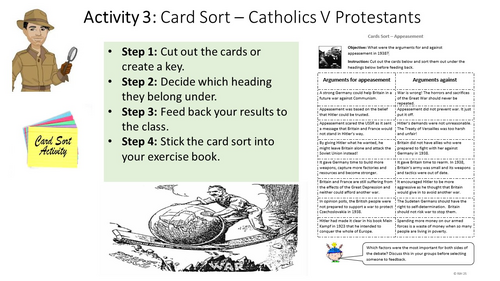
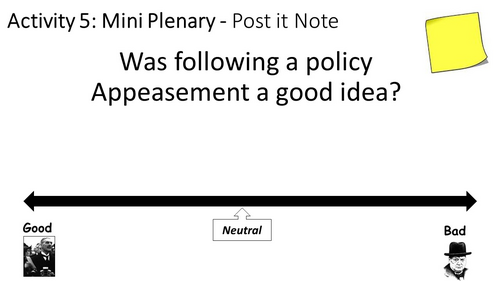
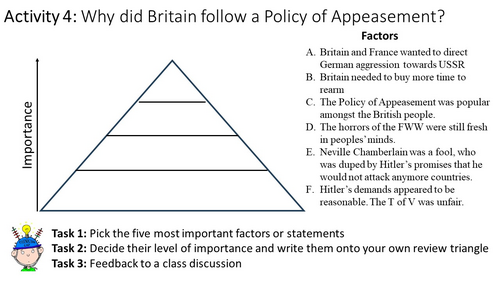
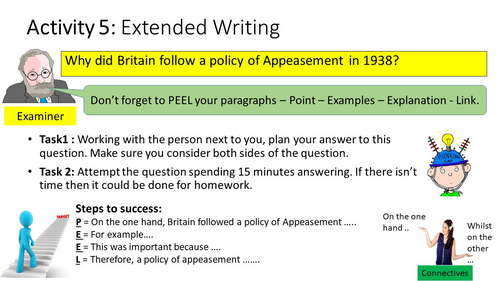
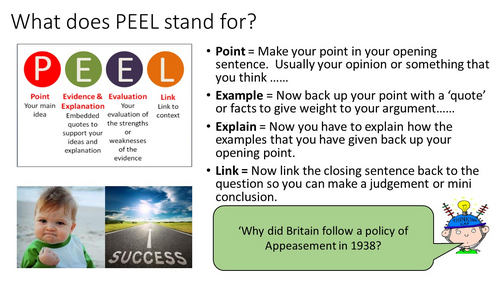
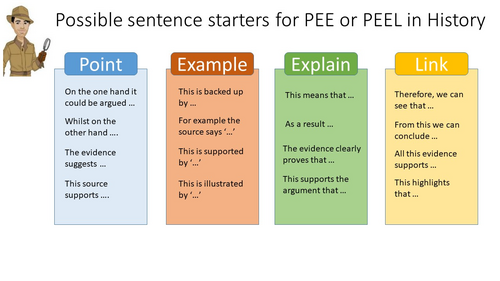
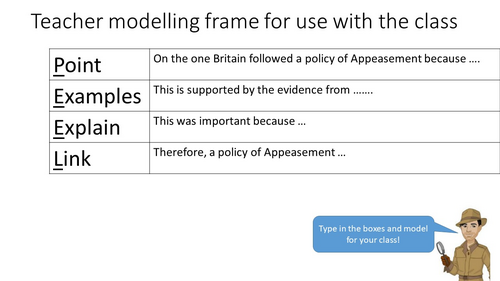
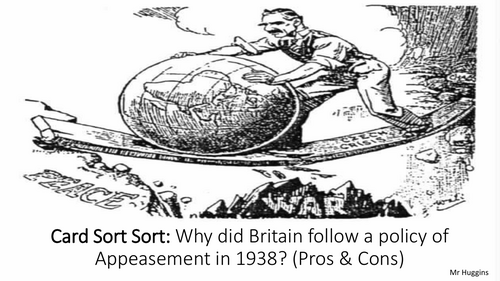
This tried and tested card sort activity has been carefully designed to help students understand why Britain followed a policy of appeasement in 1938. Suitable for a wide range of abilities, it works effectively as a starter, plenary, revision task or as part of an assessment for learning approach.
Card sorts are a highly effective teaching strategy because they encourage students to actively engage with the content, rather than passively receive information. By sorting, grouping and discussing the statements, pupils are required to think critically, justify their decisions, and make explicit links between different arguments. This process supports deeper understanding and helps develop key historical skills such as classification, explanation, and evaluation. Card sorts also provide excellent opportunities for collaborative learning, making them ideal for promoting high-quality paired or group work.
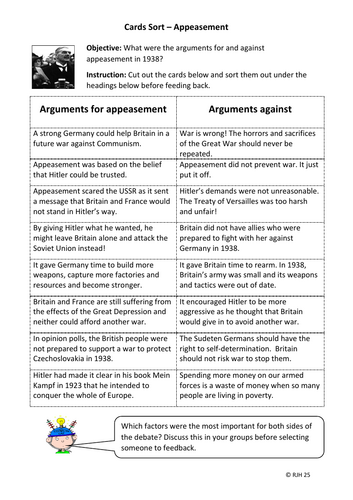
When you purchase this resource, you will receive a fully editable Microsoft Word document containing two heading cards labelled Arguments For Appeasement and Arguments Against, along with sixteen statement cards that reflect a range of contemporary views and perspectives from 1938. These cards have been carefully written to ensure accuracy and accessibility for students. We have also included an accompanying PowerPoint presentation which includes aims, objectives, differentiated outcomes, starters, plenaries, information slides, appropriate video clips, templates and writing frames.
Once pupils have sorted the statements under the correct headings, they can extend their learning by ranking the arguments in order of importance or grouping them into themes (political, military, economic, etc.). This naturally leads into writing an extended answer or essay on why Britain supported appeasement, giving students a well-organised foundation for their written work.
Aims and Objectives
Theme: Causes of the Second World War, 1939–1945
Know: What was the policy of appeasement?
Understand: What arguments were made for and against this policy in 1938?
Evaluate: Why did Britain support appeasement?
WILF – What Am I Looking For?
Identify and describe the policy of appeasement
Explain arguments for and against the policy
Analyse why Britain followed a policy of appeasement in 1938
If you are looking for a more demanding activity to stretch higher-attaining students, you may also be interested in my Diamond 9 ranking task on this topic. For additional resources on appeasement and the causes of the Second World War, please visit my TES shop. You can also follow The History Academy on social media for updates, new resources, and teaching ideas.
Thank you for exploring this resource, and I hope it supports engaging and productive lessons in your classroom.
Kind Regards
Roy
Get this resource as part of a bundle and save up to 47%
A bundle is a package of resources grouped together to teach a particular topic, or a series of lessons, in one place.
Something went wrong, please try again later.
This resource hasn't been reviewed yet
To ensure quality for our reviews, only customers who have purchased this resource can review it
Report this resourceto let us know if it violates our terms and conditions.
Our customer service team will review your report and will be in touch.
£3.60