


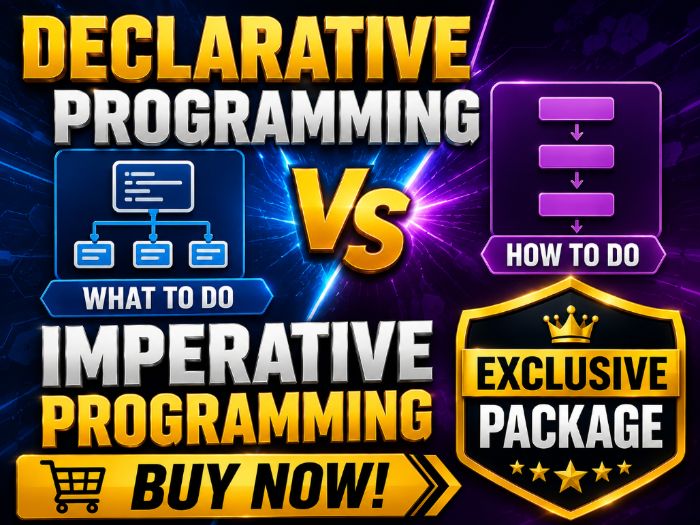
Declarative vs Imperative Programming – Complete Computer Science Teaching Resource Pack
Help students understand two fundamental programming approaches with this comprehensive, classroom-ready teaching resource pack. This collection explains the differences between declarative and imperative programming, explores their key characteristics, and uses clear examples to develop students’ understanding of how programming languages express instructions and solve problems.
Designed to make abstract programming concepts easier to teach and understand, this resource combines structured presentations, student worksheets, classroom activities and assessment materials.
What’s Included?
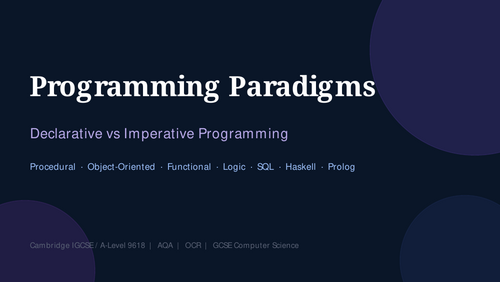
PowerPoint Presentation: Professionally structured slides covering declarative and imperative programming, their characteristics, differences and examples.
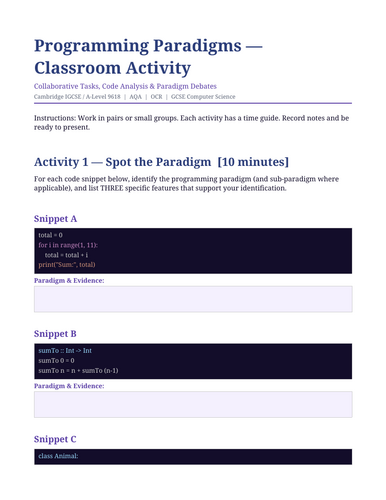
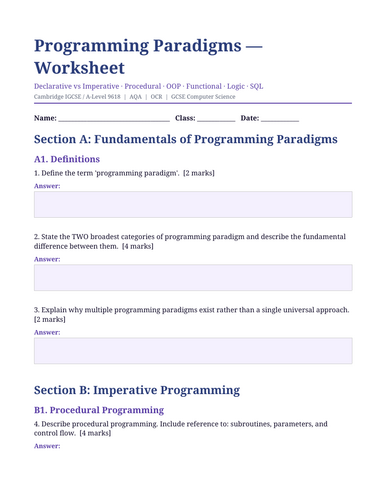
Student Worksheets: Questions and exercises to reinforce key concepts and develop understanding.
Classroom Activities: Interactive comparison tasks, problem-solving exercises and practical learning activities.
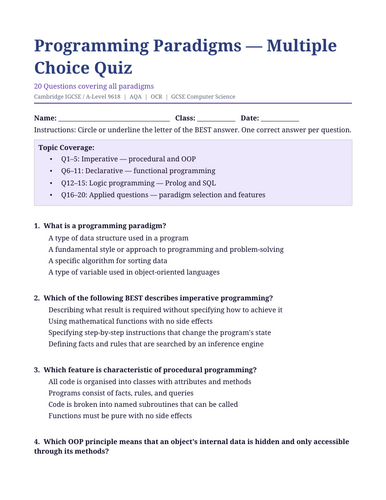
Multiple-Choice Questions (MCQs): Assessment questions to test knowledge and identify misconceptions.
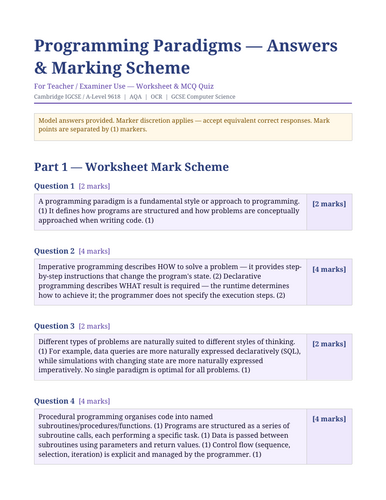
Marking Scheme and Answers: Supporting answers and marking guidance for efficient assessment and feedback.
Topics Covered
Introduction to programming paradigms
What is imperative programming?
What is declarative programming?
Key characteristics of imperative programming
Key characteristics of declarative programming
Step-by-step instructions and control flow
Describing what a program should achieve
The role of algorithms and instructions
Statements, sequences, selection and iteration
State changes and variable updates
Expressions, rules and logic
Examples of imperative programming languages
Examples of declarative programming languages
SQL as an example of declarative programming
Functional and logic programming approaches
Real-world applications of both paradigms
Advantages and disadvantages of each approach
Similarities and differences between declarative and imperative programming
Choosing the appropriate programming approach
Something went wrong, please try again later.
This resource hasn't been reviewed yet
To ensure quality for our reviews, only customers who have purchased this resource can review it
Report this resourceto let us know if it violates our terms and conditions.
Our customer service team will review your report and will be in touch.
£6.99