





KS3 Excel Lesson 6 – Party Planner! Costing, Pricing & Profit/Loss Modelling (Dyslexia-Friendly | Real-World Maths | High Engagement)
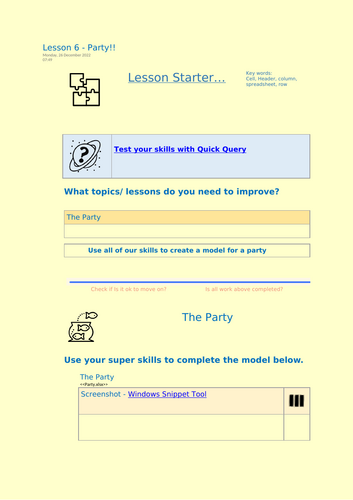
End the unit with a highly engaging, real-world challenge: students design and cost their own party using Excel, then calculate whether they will make a profit or a loss. This lesson is hands-on, creative and ideal for consolidating all spreadsheet skills learned so far — from cell referencing to formulas and modelling.
All resources are fully dyslexia-friendly, using clear fonts, soft pastel backgrounds, clean layout, and colour-coded instructions to support all learners.
What students will learn (Lesson 6):
- Real-world modelling — Students build a spreadsheet similar to those used in event planning, catering and budgeting.
- Creating a full cost breakdown — Pupils add food, drink, decorations and entertainment to a party shopping list.
- Adding their own items — Students personalise the plan by choosing extra items and entering their own prices.
- Using formulas to calculate totals — Apply addition, multiplication and cell referencing to work out costs for quantities.
- Pricing to make profit — Set a ticket price, number of guests and calculate profit or loss.
- Dynamic modelling — Changing any value updates the entire plan, showing how real businesses use spreadsheets.
Why this resource sells well on TES:
- ✔ Fully dyslexia-friendly – OpenDyslexic (or similar) font, pastel palettes, clean spacing and easy-to-follow visuals.
- ✔ Very high engagement – Students love planning a party and adding their own items, making the lesson feel creative and personal.
- ✔ Real-life maths made meaningful – Pupils see how budgeting, costing and profit actually work in real events.
- ✔ Perfect for mixed-ability groups – Scaffolded worksheet, clear examples, optional challenge tasks (e.g., “maximise profit with a £50 budget”).
- ✔ Ready to teach – Editable Excel template, worksheet, and teacher slides supplied.
By the end of the lesson, students can:
- Build a full party cost plan using a spreadsheet
- Use formulas for totals, quantities and pricing
- Understand profit and loss in a real context
- Adapt spreadsheets by adding new items and adjusting quantities
- See how spreadsheet models support real-world financial decisions
This final KS3 lesson ties the whole sequence together, combining creativity with practical budgeting skills — a fun, meaningful and memorable way to finish your spreadsheet unit.
Something went wrong, please try again later.
This resource hasn't been reviewed yet
To ensure quality for our reviews, only customers who have purchased this resource can review it
Report this resourceto let us know if it violates our terms and conditions.
Our customer service team will review your report and will be in touch.
£2.50