







This lesson is designed for the NEW AQA Physics GCSE, particularly the ‘Motion’ SoW.
For more lessons designed to meet specification points for the NEW AQA Trilogy specifications for Biology, Chemistry and Physics please see my shop: https://www.tes.com/teaching-resources/shop/SWiftScience
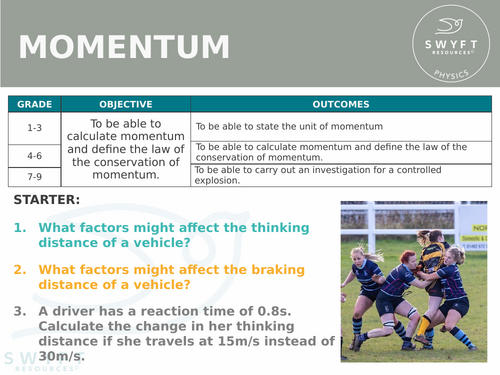
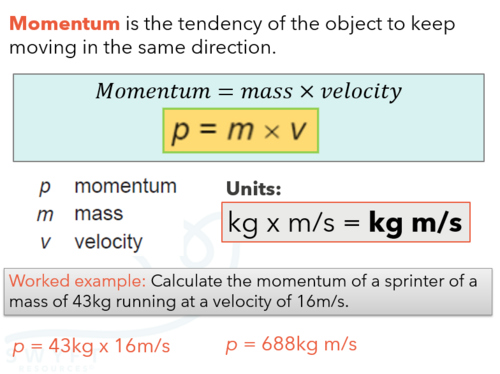
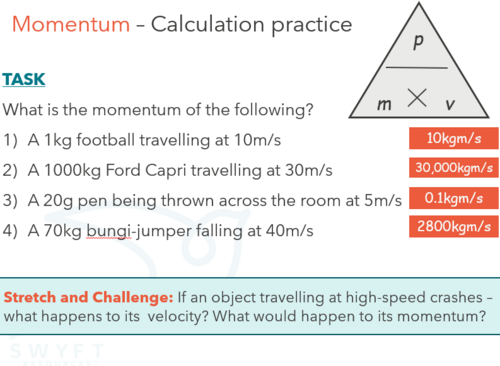
The lesson begins with an introduction to momentum, children are given a definition and the calculation which links momentum, mass and velocity. Students will be shown a worked example for use of this calculation, before completing a few quick momentum questions on their own. The answers to these are included so students can assess their own work.
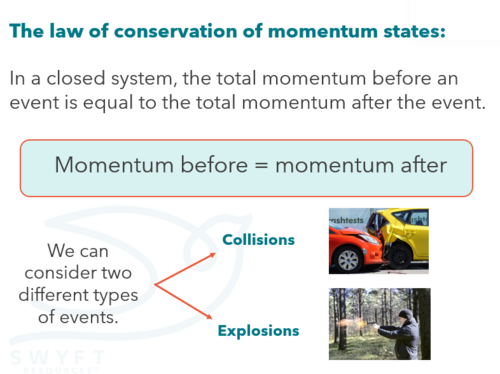
Next, students will be introduced to the law of the conservation of momentum, and the following parts of the lesson will show how we can use this law, plus the momentum calculation, to determine factors relating to two events: collisions and explosions.
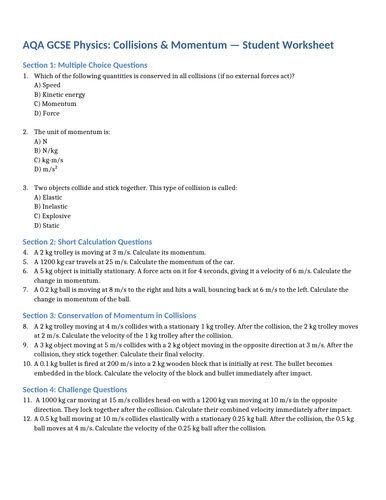
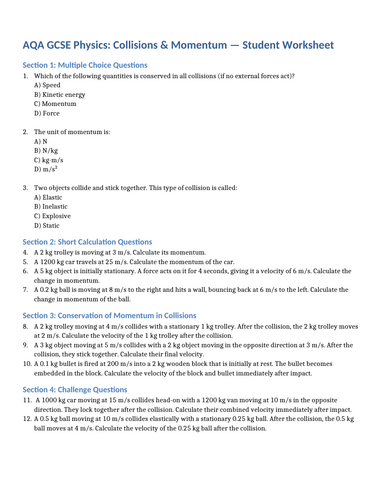
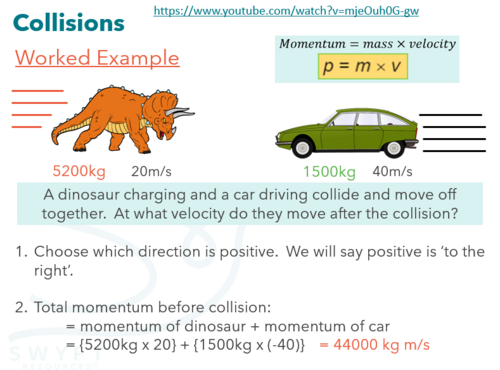
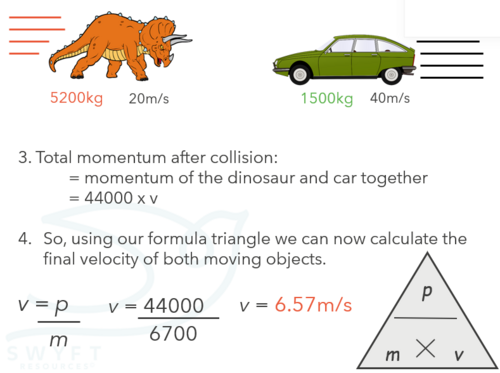
Firstly, students will be shown a worked example of a dinosaur charging and a car driving colliding and move off together. We are asked to calculate the velocity the two objects will move at, after the collision. The PowerPoint will go through step-by-step how to calculate the velocity. There is also a video which goes through the same steps, if your students need some extra consolidation on this topic before moving onto questions. Once students feel confident, they can complete a set of questions on collisions and the conservation of momentum. The mark scheme for this worksheet is included in the resources.
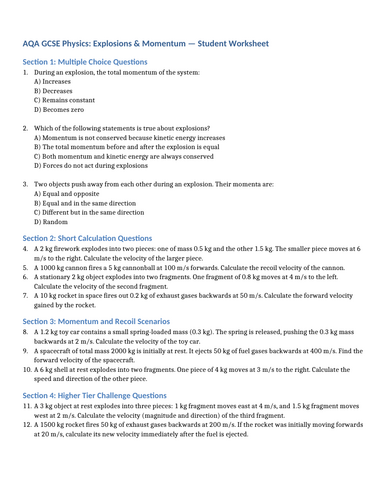
Next, students will be shown a worked example of an explosion - a gun firing a bullet, students will be asked to calculate the speed in which the gun recoils. Again, students are walked through this process step-by-step to show how you would approach a question such as this, plus there is an additional video that students can watch to reiterate the same steps. Once you feel students are confident with approaching this type of question, you can give them the question sheet provided. The mark scheme for both the collision and explosion questions are included, so students can self-assess or peer-assess their work once complete.
The plenary task requires students to spend a minute talking to the person next to them about what they learned this lesson.
All resources are included. Thanks for looking, if you have any questions please let me know in the comments section and any feedback would be appreciated.
Get this resource as part of a bundle and save up to 33%
A bundle is a package of resources grouped together to teach a particular topic, or a series of lessons, in one place.
Something went wrong, please try again later.
This resource hasn't been reviewed yet
To ensure quality for our reviews, only customers who have purchased this resource can review it
Report this resourceto let us know if it violates our terms and conditions.
Our customer service team will review your report and will be in touch.
£3.00