


This lesson is designed for the NEW AQA Physics GCSE, particularly the ‘The properties of waves’ SoW.
For more lessons designed to meet specification points for the NEW AQA Trilogy specifications for Biology, Chemistry and Physics please see my shop: https://www.tes.com/teaching-resources/shop/SWiftScience
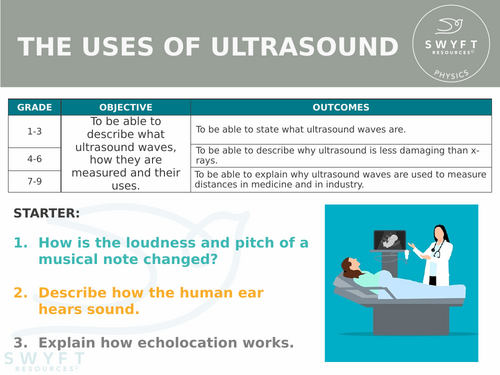
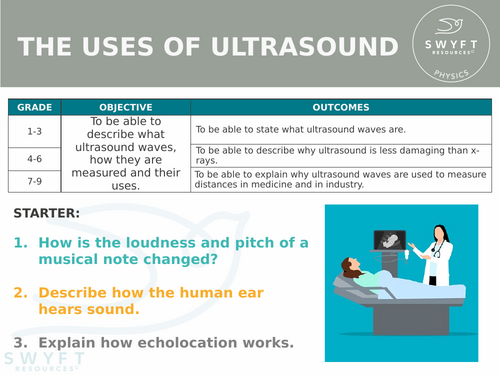
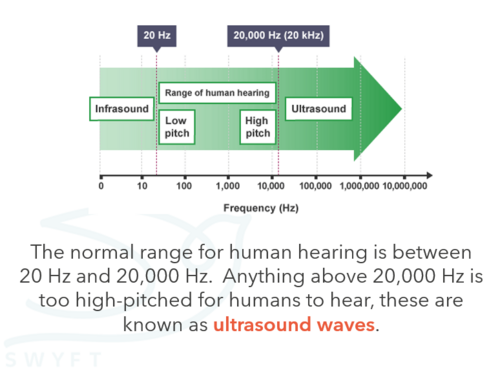
The lesson begins with a recap of the human range of hearing, between 20 - 20,000 Hz. This shows a diagram depicting the different frequencies of sound within this range, including infrasound and ultrasound as frequencies of sound below and above the normal range of sound for humans.
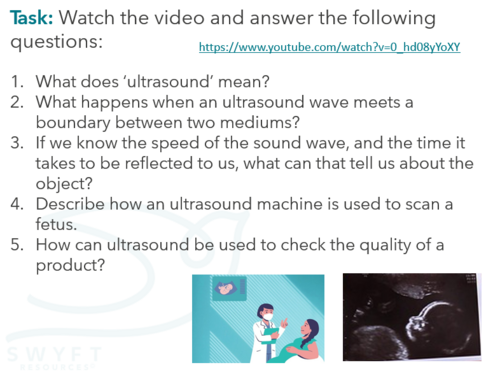
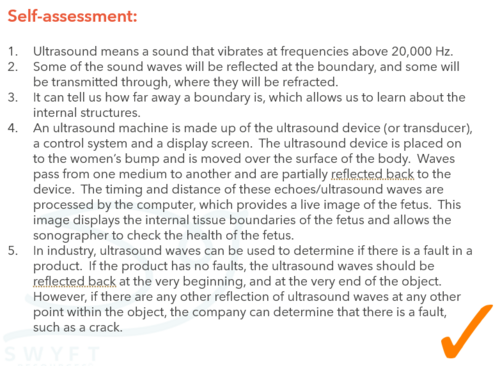
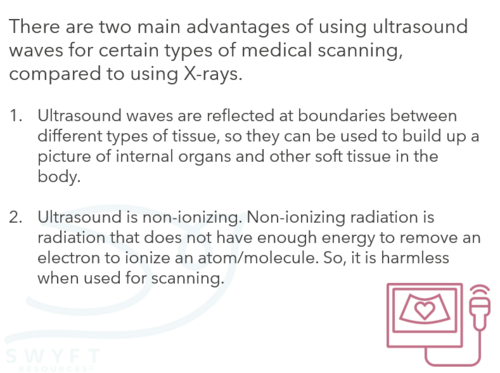
The next part of the lesson includes a video on uses of ultrasound in fetal scanning, students should watch and then answer the set of questions provided. Once complete, students can assess their work using the answers provided. There is then a slide which explains the benefits of ultrasound in medicine, compared to using X-rays.
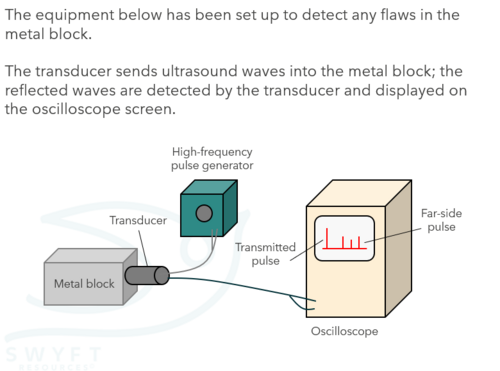
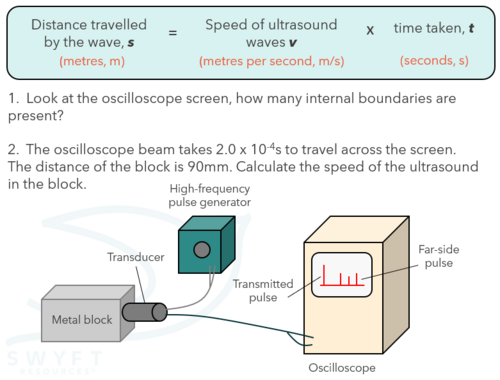
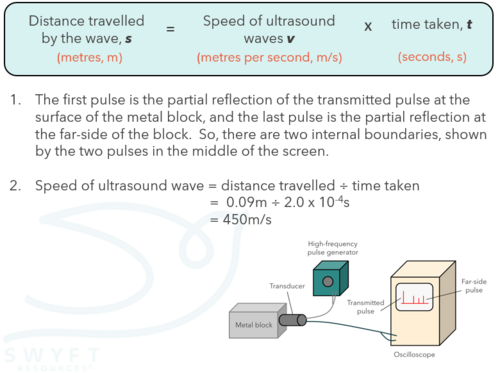
The next part of the lesson looks at other uses of ultrasound, one area being in industry. Students are shown a diagram of equipment which is used to detect any flaws in a metal block, and a worked example of how the oscilloscope reading can be used to detect any internal boundaries within the block.
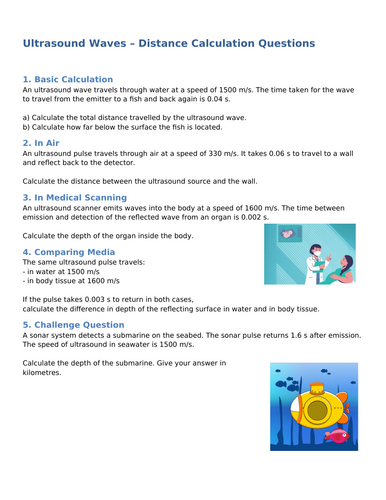
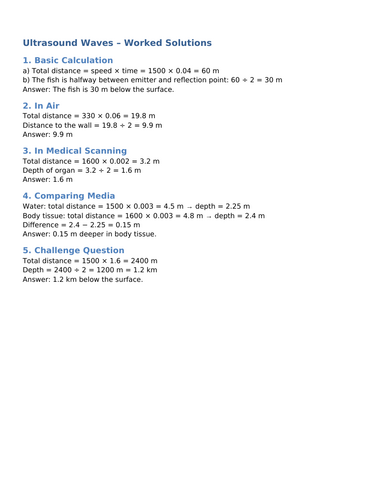
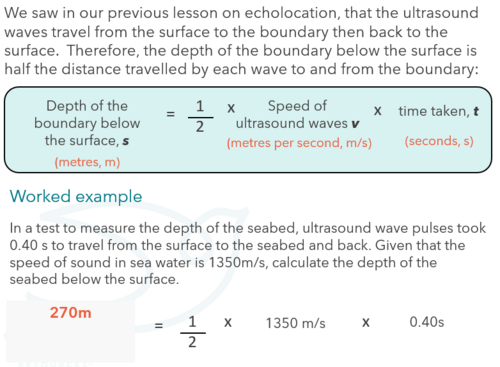
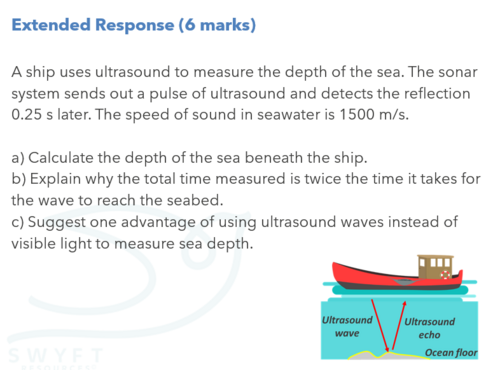
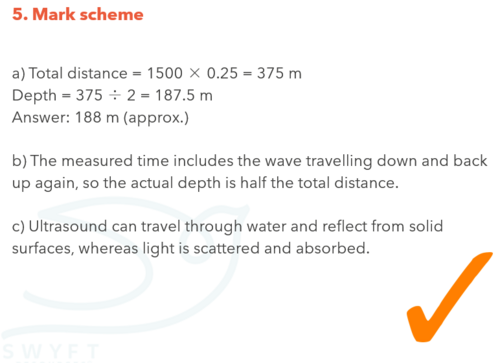
Lastly, there is a recap on how echolocation can be used to determine the depth of a sea bed/boundary below the surface. Again, there is a worked example of how the calculation can be used. Then, students will be given a worksheet of questions which they can complete in their books. The mark scheme for this task in included so students can either self-assess or peer-assess their work.
The last activity is an extended response question, the mark scheme for this task is included too.
The plenary task requires students to write three quiz questions (including answers!) on the topics they have learned about this lesson.
All resources are included. Thanks for looking, if you have any questions please let me know in the comments section and any feedback would be appreciated.
Get this resource as part of a bundle and save up to 33%
A bundle is a package of resources grouped together to teach a particular topic, or a series of lessons, in one place.
Something went wrong, please try again later.
This resource hasn't been reviewed yet
To ensure quality for our reviews, only customers who have purchased this resource can review it
Report this resourceto let us know if it violates our terms and conditions.
Our customer service team will review your report and will be in touch.
£3.00