


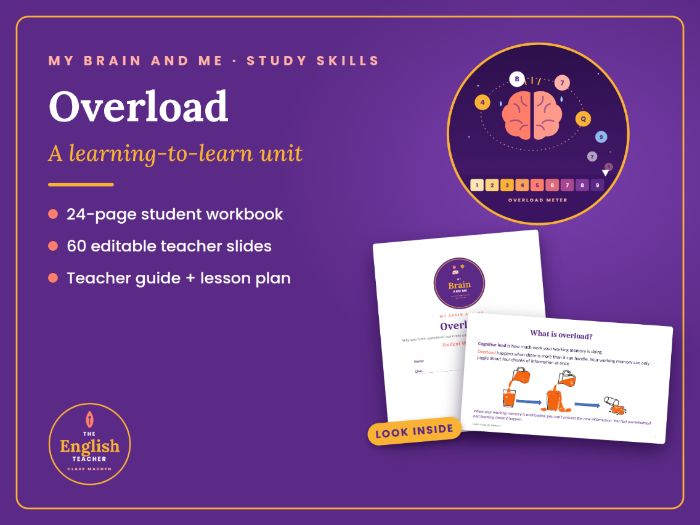
Why does your brain sometimes just stop? In this hands-on learning-to-learn unit, students feel cognitive overload for themselves through seven short tests, find out why it happens, and learn three practical ways to manage it.
Created by Clare Madden, a secondary teacher with 15 years’ experience who has a special interest in how students learn, and author of the My Brain and Me programme.
What’s included
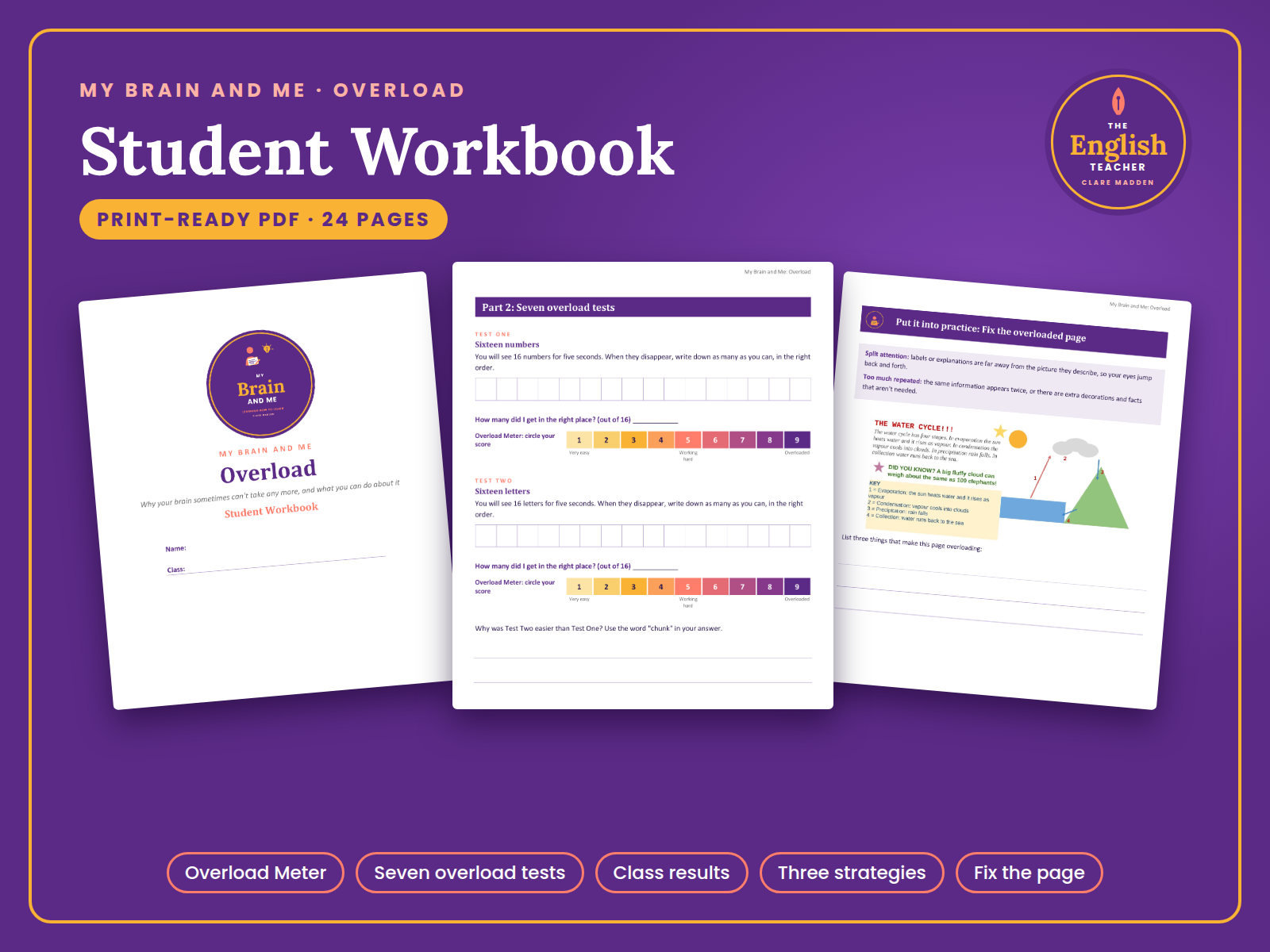
Student Workbook (24-page PDF): recording space for every test with a built-in Overload Meter, a class results table, research boxes, strategy tasks, two “put it into practice” tasks and a final notes task.
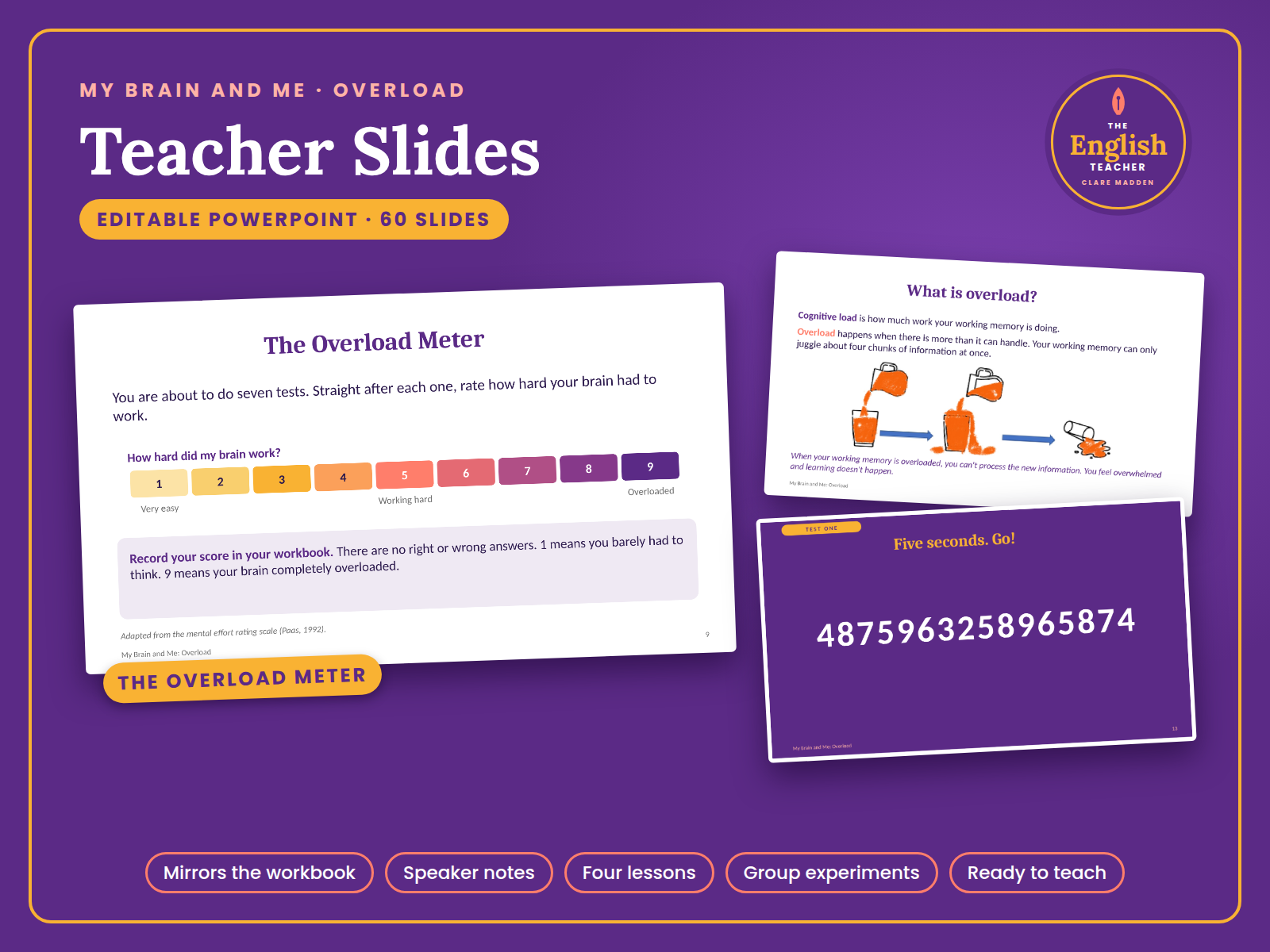
Teacher Slides (60 editable PowerPoint slides): these mirror the workbook, with speaker notes. The mystery passage, the worked example and the hint for the stories task appear only on the slides, so one group can see them while the other has heads down.
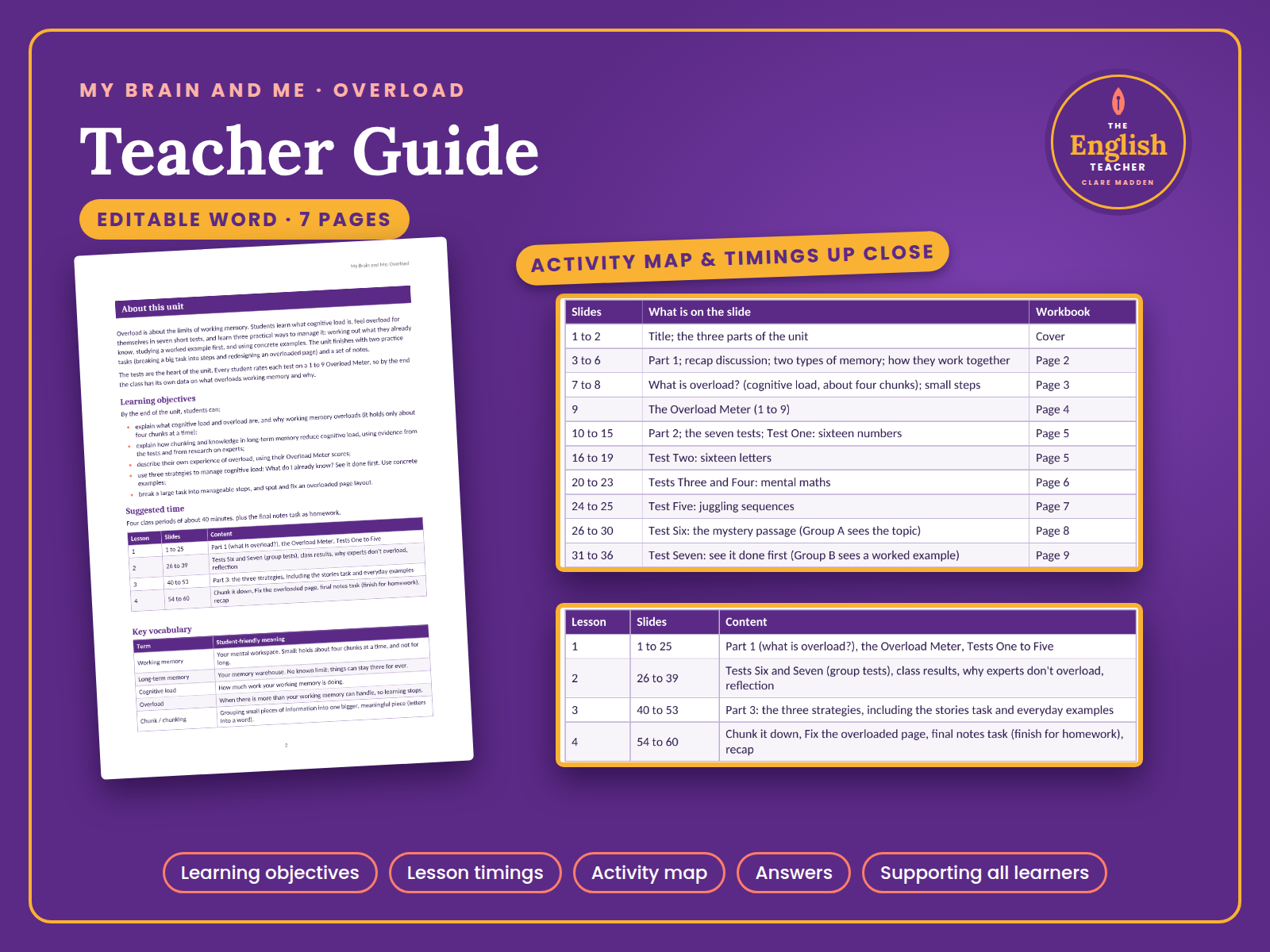
Teacher Guide (7-page editable Word document): learning objectives, timings for four lessons, key vocabulary, a materials checklist, an activity map linking slides to workbook pages, delivery notes with answers for every test, ideas for supporting all learners, and further reading.
How the unit works
What is overload? Students recap working memory and long-term memory, then learn what cognitive load is and why working memory can only juggle about four chunks at once.
Seven overload tests. After each test, students rate how hard their brain worked on a 1–9 Overload Meter, adapted from a scale used in cognitive load research. The tests are sixteen numbers, sixteen letters, two mental maths problems, juggling two sequences at once, a mystery passage that only makes sense once you know the topic, and learning a new method with or without a worked example. The class then compares its results and finds out why experts, such as chess masters, don’t overload.
Three ways to beat overload. Students learn three strategies: What do I already know?, See it done first, and Use concrete examples. They try each one, including a classic problem-solving story task. They then put it into practice by breaking a big task into steps and redesigning an overloaded page, and finish by writing their own notes on overload.
Why teachers use it
Students feel overload first, then learn why it happens, so the idea sticks
Their own class data drives the discussion
Gives students strategies they can use straight away in every subject
Ready to teach in four 40-minute lessons, with the final notes task as homework
Works well for study skills, wellbeing, form time or pastoral programmes
Suitable for ages 12–16 (lower to middle secondary). Files: PowerPoint, PDF and Word.
Something went wrong, please try again later.
This resource hasn't been reviewed yet
To ensure quality for our reviews, only customers who have purchased this resource can review it
Report this resourceto let us know if it violates our terms and conditions.
Our customer service team will review your report and will be in touch.
£4.00