



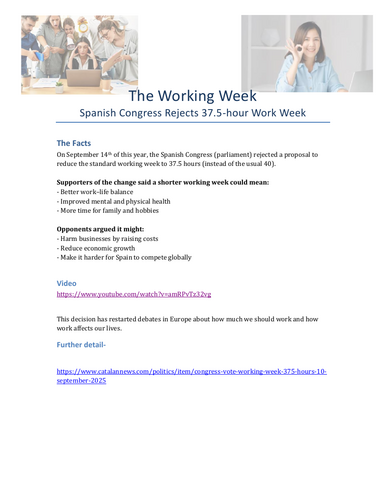
This downloadable one-lesson project uses a real political decision in Spain to help students explore work, productivity, and what a balanced life should look like in modern society.
Designed using the Philosophy for Children (P4C) approach, the lesson centres on the Spanish Congress’s rejection of a proposal to reduce the standard working week from 40 to 37.5 hours. Students are presented with clear, balanced arguments from both sides of the debate: supporters who argue that shorter hours improve well-being and work–life balance, and opponents who warn of economic costs, reduced competitiveness, and pressure on businesses.
Structured closed questions invite learners to take a clear position on whether Spain should reduce working hours and whether fewer hours would actually make workers more productive. Open-ended discussion questions then deepen the enquiry, encouraging students to reflect on what a “good” work–life balance means, how work shapes daily life, and how changes to working hours could affect learning, family time, and society more broadly.
The lesson requires minimal preparation and includes clear stimulus material, debate prompts, and reflective questions. It develops critical thinking, ethical reasoning, and civic awareness within a single, flexible session.
Ideal for upper primary or secondary classrooms, this ready-to-use resource helps students form and justify their own views on work, well-being, and the kind of life society should aim to support.
Something went wrong, please try again later.
This resource hasn't been reviewed yet
To ensure quality for our reviews, only customers who have purchased this resource can review it
Report this resourceto let us know if it violates our terms and conditions.
Our customer service team will review your report and will be in touch.
£2.00