


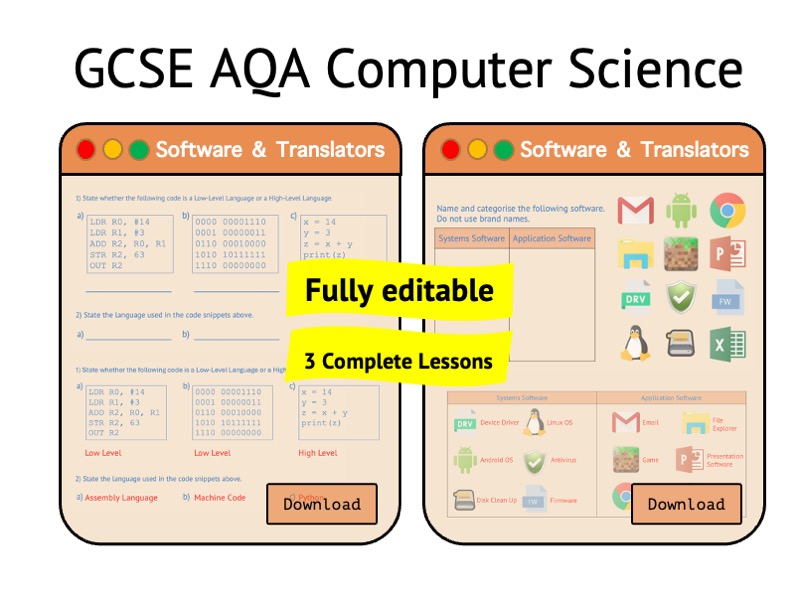
Teach the Classification of Programming Languages and Translators with this ready-to-use lesson resource, designed to clearly explain key GCSE Computer Science concepts.
This resource supports students in understanding different types of software, the classification of programming languages, and how translators (assemblers, compilers, and interpreters) are used to convert code into machine-readable form.
What’s Included:
Lesson Slides
Clear explanations with engaging activities throughout.
Software Classification Activities
Helps students distinguish between system software, application software, and utilities.
Programming Languages Activities
Covers low-level vs high-level languages and their characteristics.
Translators Activities
Focuses on assemblers, compilers, and interpreters.
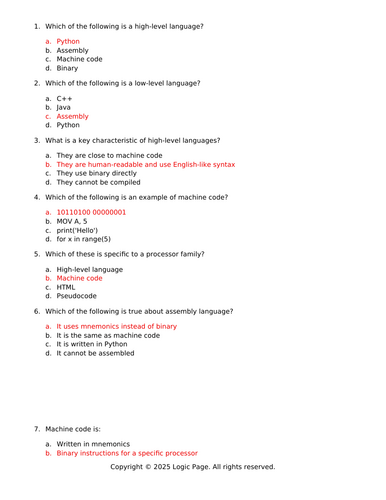
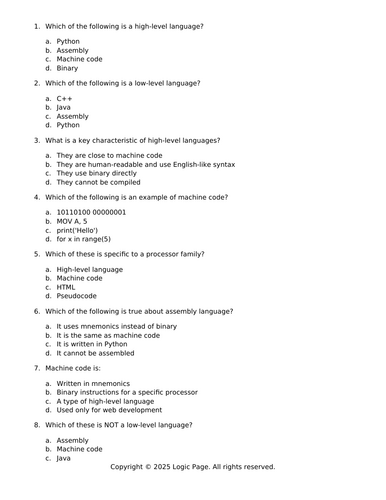
Multiple Choice Quiz
Ideal for assessment, retrieval practice, or revision.
Why This Resource Works:
Ideal for GCSE Computer Science (KS4)
Clear, structured delivery of core theory
Includes assessment to check understanding
Minimal preparation required
Suitable for teaching, revision, or cover lessons
Perfect For:
GCSE Computer Science teachers
Introducing or revising software and programming concepts
Supporting exam preparation
Download now to deliver a clear, structured, and engaging lesson on Programming Languages and Translators with confidence.
Something went wrong, please try again later.
This resource hasn't been reviewed yet
To ensure quality for our reviews, only customers who have purchased this resource can review it
Report this resourceto let us know if it violates our terms and conditions.
Our customer service team will review your report and will be in touch.
£2.00