


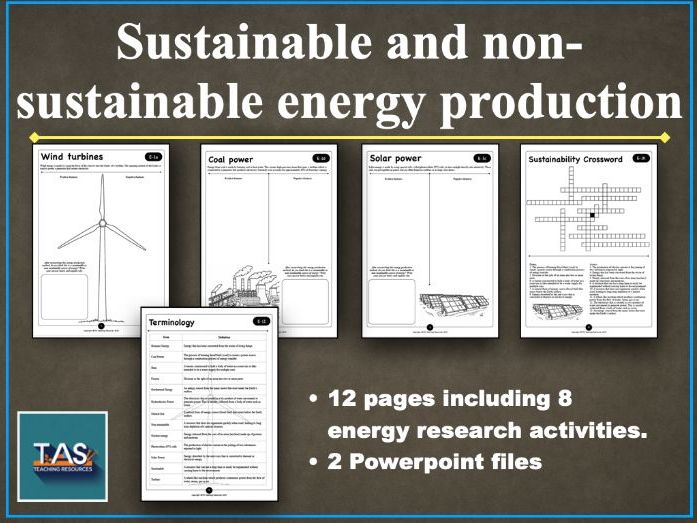

This engaging and ready-to-use worksheet pack introduces students to key energy production methods — both sustainable and non-sustainable. It includes short, easy-to-understand explanations of energy types such as wind, solar, nuclear, hydroelectric, geothermal, biomass, coal, and natural gas.
Students are guided to research each energy source, identify its positive and negative features, and evaluate whether it is sustainable. The pack also includes extension literacy-based activities such as a terminology match, crossword, and find-a-word — perfect for consolidation, revision, or use as homework, for early finishers or as simple cover lesson activities.
What is included?
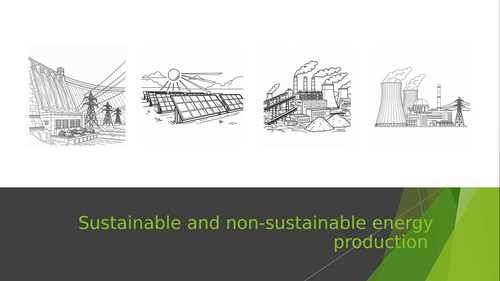
The activity includes a wide variety of energy production methods for the students to research and report on. Also included are 2 Powerpoint files which compliment the various research activities.
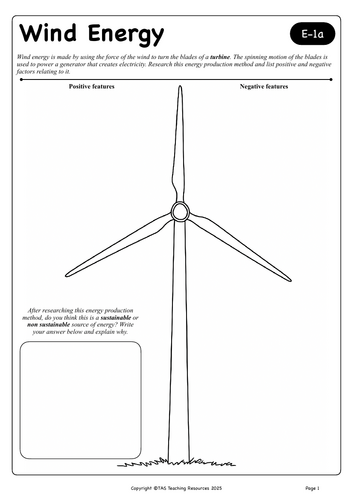
E1a - Wind turbines
E1b - Nuclear energy
E1c - Solar energy
E1d - Coal power
E1e - Natural gas
E1f - Hydroelectric energy
E1g - Biomass energy
E1h - Geothermal energy
E1i - Sustainability Terminology
E1j - Matching activity
E1k - Sustainability crossword
E1l - Sustainability Find-a-word
Poweroint file 1 - Glossary
PowerPoint file 2 - Positive and negative
Sample solutions provided for activities E1a - E1l
Where can I use this?
This resource pack is Ideal across a variety of subject areas.
For Key Stage 3 Design & Technology or Engineering units, this resource promotes critical thinking about sustainability, energy systems, and the environmental impact of design choices.
UK Curriculum Fit
Subject Areas:
- Design and Technology (KS3)
- Engineering (Level 2/3 vocational)
- Science - Energy Transfers & Electricity Generation
- Supports the teaching of renewable and non-renewable energy resources and the problems related to the use of fossil fuels. Students will analyse how electricity is generated from various sources, linking to the wider concept of energy conservation and dissipation.
**Geography KS3 - Human Geography: Natural Resources and Sustainability
**
Directly addresses the use of natural resources and the concept of sustainable development. It is ideal for the ‘Energy in the UK’ or ‘Resource Consumption’ units, where students study the national energy mix and the geographical factors influencing energy decisions.
Something went wrong, please try again later.
This resource hasn't been reviewed yet
To ensure quality for our reviews, only customers who have purchased this resource can review it
Report this resourceto let us know if it violates our terms and conditions.
Our customer service team will review your report and will be in touch.
£10.99