


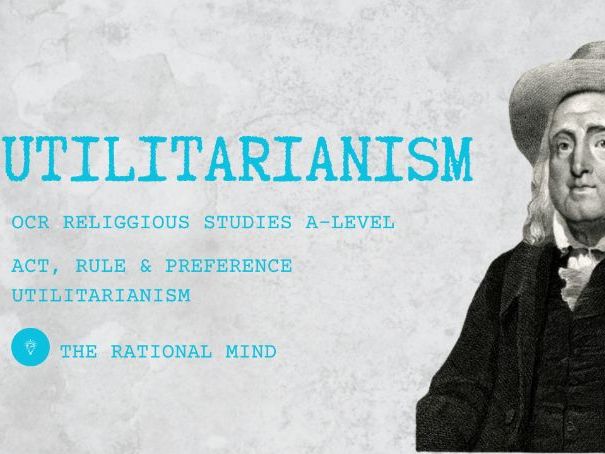

This resource introduces Utilitarianism as a key normative ethical theory within the OCR A Level Religious Studies Ethics specification. It explains that Utilitarianism is a teleological and consequentialist theory, meaning that the morality of an action is determined by its consequences. The resource outlines the central principle of utility, which focuses on maximising pleasure and minimising pain.
The resource explores Classical Utilitarianism as developed by Jeremy Bentham, including the hedonic calculus as a method for measuring pleasure and pain. It also examines John Stuart Mill’s development of Utilitarianism, including the distinction between higher and lower pleasures and his emphasis on intellectual and moral pleasures as superior. The resource explains Mill’s rule-based approach and his focus on protecting long-term happiness.
Key concepts such as the greatest happiness principle and the importance of impartiality are explained to support students’ understanding of how Utilitarianism applies to moral decision making. The resource also introduces act and rule utilitarian approaches as part of OCR specification content.
Exam questions are included at the end of the resource, supporting students in structuring and evaluating Utilitarianism in OCR essay questions.
Something went wrong, please try again later.
This resource hasn't been reviewed yet
To ensure quality for our reviews, only customers who have purchased this resource can review it
Report this resourceto let us know if it violates our terms and conditions.
Our customer service team will review your report and will be in touch.
£5.00