


Summary
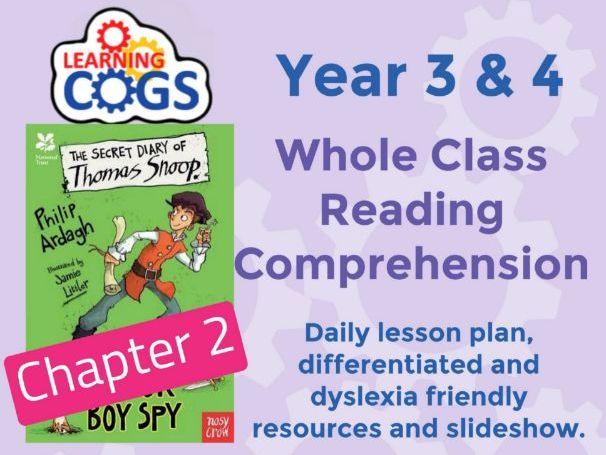
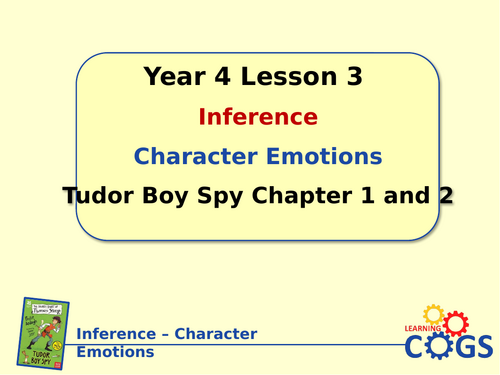
A complete, dyslexia-friendly inference lesson pack for Year 4, based on The Secret Diary of Thomas Snoop – Chapters 1-2.
Pupils act as “reading detectives,” using clues, quotes, and behaviour to infer how characters feel and why.
All slides and worksheets are designed using British Dyslexia Association (BDA) style principles, featuring Century Gothic font, cream backgrounds, and dual-coding visuals for inclusive, confident reading and writing.
What’s Included
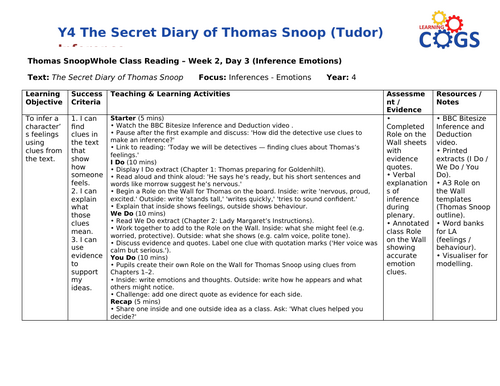
Full lesson plan (Learning COGS format) with objectives, success criteria, and structured I Do / We Do / You Do sequence
Whole-class PowerPoint slideshow explaining how to find clues, quote evidence, and infer emotion
Two differentiated resource packs:
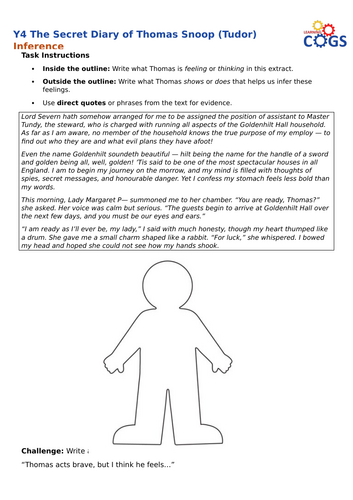
ARE version – full extract with “Role on the Wall” inference chart and evidence prompts
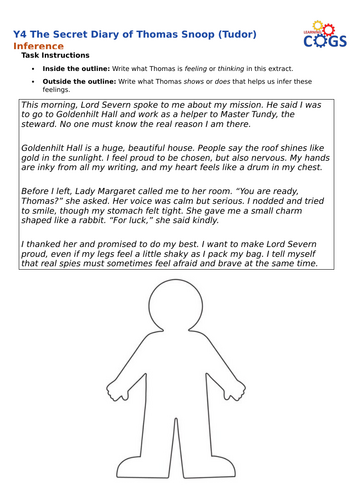
LA version – simplified extract with word banks and guided sentence stems (“Thomas feels ___ because ___.”)
Challenge task – pupils write a short paragraph beginning “Thomas acts brave, but I think he feels …”
Learning Aims
Identify clues in text that reveal a character’s feelings
Explain what those clues mean using evidence and quotation
Distinguish between a character’s outward actions and inner thoughts
Record ideas visually through a “Role on the Wall” organiser
Dyslexia-Friendly Design
All materials follow BDA Style Guide standards to support accessibility and comprehension:
Century Gothic font for clarity and rounded shapes
Cream or pastel backgrounds and dark grey text to reduce glare
1.5–2 line spacing and wide margins for smooth eye tracking
Left-aligned text (no justification) for consistent spacing
Bold keywords instead of italics or underlining
Dual-coding icons linking emotion vocabulary to facial or body cues
Predictable slide layout and uncluttered pages to reduce cognitive load
These features ensure pupils with dyslexia, visual-processing, or working-memory needs can participate confidently alongside their peers.
Curriculum Links
Reading: inference, evidence, and empathy in narrative texts
Writing: using descriptive evidence to show emotion
Speaking & Listening: explaining reasoning and supporting opinions
History: understanding Tudor life, hierarchy, and communication
Perfect For
Whole-class reading, guided comprehension, or SEND literacy sessions.
Engaging Tudor humour, emotional depth, and accessible layout make this resource ideal for developing inference skills and emotional literacy in all learners.
Something went wrong, please try again later.
This resource hasn't been reviewed yet
To ensure quality for our reviews, only customers who have purchased this resource can review it
Report this resourceto let us know if it violates our terms and conditions.
Our customer service team will review your report and will be in touch.
£2.00