Give your dance students a way into creative work without the blank page. Twenty-three limitation cards, such as The Stuck Joint, The Invisible Wall and The Partner Echo, each set one clear constraint that pushes students to explore, adapt and make original movement. Use a card as a ten-minute workshop starter, or build solo, duet and group work into a full scheme of work.
Includes: printable cards, a card-back design, and a teacher guide with a sample lesson sequence and reflection prompts.
The complete Choreographic Minds collection — lessons, card decks, a student workbook and assessment tools for a full term of contemporary dance.
Full description:
This bundle brings together the full Choreographic Minds resource collection — everything needed to plan, teach, resource and assess a coherent half-term (or full-term) of contemporary dance, without piecing it together from separate purchases. It spans standalone choreographer-led lessons, two printable card decks covering starters and cool-downs all year, exam-focused Year 11 material, and a full set of student-facing and teacher-facing tracking and assessment tools — all built to the same consistent structure and covering complementary, non-overlapping ground.
Included in this bundle:
• Choreographic Creativity Through Cunningham’s Spine Positions
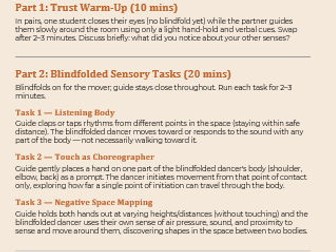
• Choreographic Discovery Through Blindfolded Exploration
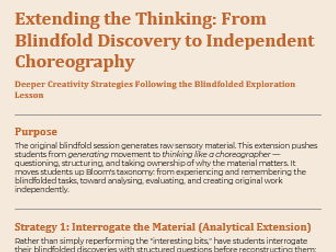
• Extending the Thinking: From Blindfold Discovery to Independent Choreography
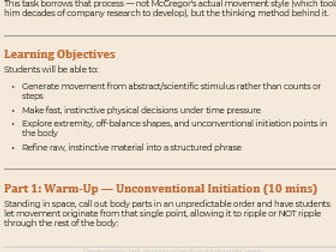
• Choreographic Task: Working in the Style of Wayne McGregor
• Unique Creativity Tasks for Year 11 Dance Students
• Starter-of-the-Day Card Deck (48 cards)
• Cool-Down & Reflection Card Mini-Deck (24 cards)
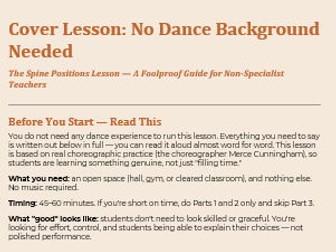
• Cover Lesson: No Dance Background Needed
• Choreographer Knowledge Organisers
• Student Workbook
• My Dance Assessment Booklet
• Assessment Rubric Companion
• Choreographic Minds: Scheme of Work (free with bundle)
Ideal for: Heads of Dance building a department-wide resource library, and any teacher wanting a complete, ready-to-teach term of contemporary dance in one purchase rather than piecing it together.
Format: A zipped collection of fully editable Word documents, each ready to print or project.
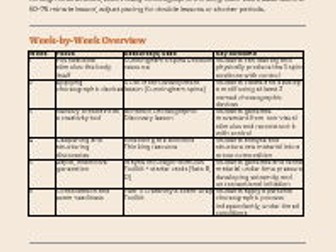
A ready-to-teach 6-week half-term sequence linking a full contemporary dance resource collection into one coherent, exam-ready unit.
Full description:
Planning a coherent half-term from a collection of individually strong resources still takes real time — this scheme does that work for you. It sequences a full set of lessons into six weeks, moving students from raw creative generation through to structured, exam-ready choreographic thinking, with a clear focus, resource list, and key outcome specified for every week.
Each week includes detailed lesson notes covering exactly which resource (and which sections of it) to use, direct workbook section links for any accompanying student journal, and rubric links for building assessment gradually rather than all at once. A full Assessment Checkpoints table specifies formative check-ins at Weeks 2 and 4 and a mock assessment at Week 6, alongside a week-by-week materials checklist so setup is never a last-minute scramble.
An Adapting This Scheme section covers three common variations: compressing into a 4-week course, adapting for KS3 by removing exam-specific framing and rubric banding, and extending into a full term using additional standalone lessons. This makes the scheme genuinely flexible for departments with different timetabling constraints, not just a single fixed pathway.
What’s included:
• A full 6-week, week-by-week teaching sequence with focus and key outcomes
• Detailed lesson notes with workbook and rubric links for each week
• An Assessment Checkpoints table with formative and mock assessment points
• A week-by-week materials checklist
• Guidance for compressing, adapting for KS3, or extending to a full term
Ideal for: Heads of Dance or individual teachers planning a coherent half-term (or full-term) unit, especially departments already using — or planning to use — multiple resources from the same collection.
Format: Fully editable Word document. Best used alongside the specific lesson resources it references — check your own resource collection against the week-by-week list before teaching.
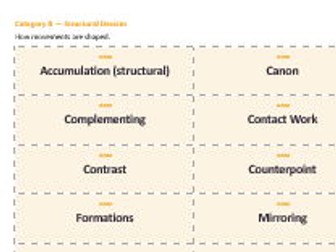
Four simple games to introduce and revise terminology for WJEC GCSE Dance.
Simply Print, Cut and Laminate.
Using all three categories from the WJEC syllabus.
A student-facing progress tracker translating AO1–AO4 into plain language, with lesson logs, a mid-term check-in, and peer feedback slots.
Full description:
Assessment objectives mean little to students until they’re translated into plain, honest language — this booklet does exactly that. A simple table reframes Creating, Performing, Talking About My Own Work, and Knowing About Professional Dance into questions a student can actually answer about themselves, before they self-rate honestly against a four-point scale at both the start and end of term.
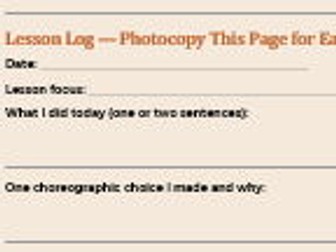
A photocopiable Lesson Log page lets students record what they did, one choreographic choice they made and why, an effort rating, and their response to teacher comments — built to take about two minutes per lesson so it becomes a genuine habit rather than a chore. A Mid-Term Check-In section tracks what’s improved and sets one specific goal for the second half of term, and a Peer Feedback Snapshot builds structured, low-stakes peer assessment into the routine.
The booklet closes with a full End-of-Term Summary — re-rating all four areas, comparing against the starting point, and capturing what the student is most proud of and wants to focus on next — with space for both student and teacher sign-off, making it a genuinely useful artefact for parents’ evenings or progress conversations, not just a classroom exercise.
What’s included:
• A plain-language translation of AO1–AO4 into student-friendly questions
• A photocopiable Lesson Log page for ongoing use
• A structured Mid-Term Check-In and Peer Feedback Snapshot
• A full End-of-Term Summary with student/teacher sign-off
Ideal for: Any KS4 Dance class wanting a simple, honest, ongoing progress-tracking habit that students can genuinely engage with, and a useful record for reporting and parents’ evenings.
Format: Fully editable Word document, ready to print as a student booklet.
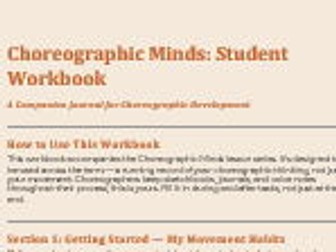
An 8-section student companion workbook tracking choreographic development across a term — pairs with the full Choreographic Minds lesson series.
Full description:
Choreographers keep sketchbooks, journals, and voice notes throughout their process — this workbook gives students the same habit. Designed to be used across a full term, it’s a running record of choreographic thinking, not just movement, with sections that pair directly with specific lessons in the wider Choreographic Minds series.
Eight sections guide students from initial honesty about their own movement habits, through a Spine Positions Log (pairing with the Cunningham resource), a Blindfold/Sensory Discovery Log, and a Stimulus Response Tracker (pairing with rapid-solve, McGregor-style tasks), into a Choreographic Intent Draft-and-Redraft section that tracks how a student’s stated intent genuinely shifts across the development process. A Choreographic Devices Checklist keeps a running record of which devices have been used and where, a Weekly Reflection Log builds a photocopiable habit of ongoing reflection, and a Pre-Exam/Pre-Deadline Checklist consolidates everything into exam- or coursework-ready form.
Every section is designed to surface genuinely personal insight rather than generic description — prompting students to notice their own default movement habits, track how their thinking actually changes over a term, and arrive at a coursework deadline able to explain their choices with real specificity.
What’s included:
• 8 structured sections covering habits, logs, drafts, devices, and reflection
• Direct pairing with the Cunningham, Blindfold, and McGregor-style lessons
• A photocopiable Weekly Reflection Log for ongoing use
• A Pre-Exam/Pre-Deadline Checklist to consolidate the term’s work
Ideal for: Any KS4/5 Dance class working through a term-long choreographic project, especially alongside other resources in the Choreographic Minds series.
Format: Fully editable Word document, ready to print as a student booklet.
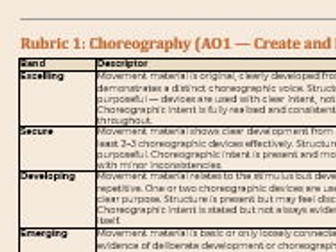
Four mark-scheme-style rubrics covering choreography, performance and written AO3/AO4 responses, plus photocopiable peer/self-assessment slips.
Full description:
Giving students consistent, specific feedback throughout a course — not just at final assessment points — depends on having a shared, reusable set of descriptors. This companion translates the four GCSE Dance assessment objectives into classroom-usable rubric grids: Rubric 1 (Choreography, AO1), Rubric 2 (Performance, AO2), Rubric 3 (Written Analysis and Evaluation of Own Work, AO3), and Rubric 4 (Written Analysis of Professional/Set Works, AO4), each with four clear bands from Emerging to Excelling.
Every rubric is followed by quick, ready-written feedback prompts for each band — specific, actionable next-step questions rather than generic comments — so verbal or written feedback during a lesson takes seconds to give rather than minutes to compose. Photocopiable Peer Assessment and Self-Assessment slips are included, built around the same four bands, so students build the habit of honest, criteria-based judgement about their own and others’ work well before any formal assessment point.
A clear teacher note distinguishes these from official exam board mark schemes — they’re formative teaching tools, not summative marking criteria, and should be calibrated against your board’s current live materials for anything grade-weighted. A suggested Using These Rubrics Across a Term section shows how to introduce them gradually: informal use during early exploration, formal banding during development, and full mock assessment ahead of any real deadline.
What’s included:
• 4 full rubric grids covering AO1–AO4, each with 4 clear bands
• Ready-written quick feedback prompts for every band
• Photocopiable peer- and self-assessment slips
• Guidance on introducing formal banding gradually across a term
Ideal for: GCSE Dance departments wanting consistent, reusable formative feedback tools across choreography, performance, and written responses — ideally alongside a full scheme of lessons.
Format: Fully editable Word document, ready to print or project.
12 exam-focused creativity tasks building an individual choreographic voice for Year 11 GCSE Dance coursework and practical exam conditions.
Full description:
By Year 11, most students already know the vocabulary of choreographic devices — what’s usually missing is a reliable personal process for generating original ideas under time pressure, and the confidence to trust unusual or half-formed material rather than defaulting to safe, familiar movement. This resource is built specifically to close that gap, ready for coursework deadlines and the performance/choreography exam.
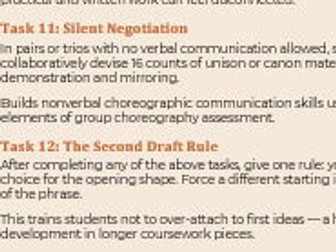
Twelve distinct tasks are included, each with a clear rationale linking it directly to exam-style demands: from The 60-Second Memory Bank (using authentic personal material for genuinely individual intent statements) and The Deliberately “Wrong” Answer (rewarding originality over predictable stimulus interpretation), through to The 90-Second Deadline Drill and The Interruption Task (both directly simulating exam-style time pressure and unpredictability), and The Critique-First Task (strengthening the link between AO3/AO4 analytical language and practical decision-making — a common weak point in coursework).
A Using These Tasks Across the Year guide groups all twelve into three phases — early Year 11 idea generation, mid-year development and structuring, and pre-exam/coursework deadline preparation — so the resource can be used as a single lesson or threaded across a full year. A closing note on assessment language prompts students to narrate their choices using exam vocabulary throughout, building the habit ahead of written responses and viva-style questioning.
What’s included:
• 12 fully-explained creativity tasks, each with a clear exam-relevance rationale
• A three-phase guide for using tasks across a full Year 11 course
• A note on embedding exam vocabulary into everyday practical work
• Suitable for individual lessons or as a term-long sequence
Ideal for: Year 11 GCSE Dance classes preparing for coursework deadlines and the performance/choreography exam, and any KS4 teacher wanting to build genuine creative independence rather than formulaic responses.
Format: Fully editable Word document, ready to print or project
5 ready-filled choreographer profiles (Cunningham, McGregor, Bourne, Khan, Bruce) plus a blank template — a revision resource for AO4 GCSE Dance.
Full description:
Written responses on professional choreographers are consistently one of the harder areas for GCSE Dance students to revise well — not because the knowledge is complex, but because it’s rarely organised consistently enough for students to compare choreographers or build exam vocabulary with confidence. This resource solves that with five pre-filled organisers, all following the same structure, so students can move between choreographers and immediately compare like with like.
Merce Cunningham, Wayne McGregor, Matthew Bourne, Akram Khan and Christopher Bruce are each covered across seven consistent categories: background, choreographic approach, typical stimulus, favoured choreographic devices, collaborators, production features, and exam vocabulary to link. A blank template in the same format is included at the end, ready for you to build organisers for your own exam board’s current anthology or set works.
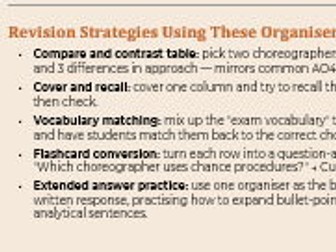
Five ready-to-use revision strategies are included: a compare-and-contrast task mirroring common AO4 exam question formats, cover-and-recall practice, vocabulary matching across all five organisers, flashcard conversion, and extended-answer practice for turning bullet-point knowledge into full analytical sentences. A clear teacher note flags that the pre-filled organisers are general teaching profiles, not verified anthology summaries — always to be checked against your board’s current official materials before exam use.
What’s included:
• 5 pre-filled choreographer organisers in a consistent, comparable format
• A blank template for building your own exam-board-specific organisers
• 5 ready-to-use revision strategies, including AO4-style compare-and-contrast practice
• A clear teacher note on cross-checking against official anthology materials
Ideal for: GCSE Dance classes revising for AO4 written responses, and any teacher wanting a consistent, comparable knowledge-organiser format across multiple choreographers.
Format: Fully editable Word document, ready to print or project — adapt or extend the blank template for your own specification.
A follow-on lesson pushing blindfold discoveries into structured choreography, with 5 analytical strategies and reflection tools for KS4/5 Dance.
Full description:
This resource is the natural next step after any blindfolded or sensory-constraint dance lesson. Where the original session generates raw sensory material, this extension pushes students from simply generating movement to thinking like a choreographer — questioning, structuring, and taking ownership of why the material matters. It moves students up Bloom’s taxonomy, from experiencing and remembering the original tasks toward analysing, evaluating, and creating independently.
Five distinct strategies are provided, each fully explained and ready to run without further planning: Interrogate the Material (structured analytical questioning of discoveries before reconstruction), Constraint Swapping (inventing and predicting the effect of a new constraint, building the habit of choreographic hypothesis-testing), Cross-Sensory Transfer (translating a movement discovery into a completely different sensory language, such as a drawing or a single word), Structuring Into a Group Work (moving from individual/paired phrases into full group composition with genuine structural decision-making), and Critical Reflection as a Creative Tool (using journaling, peer interview, and evolving choreographer’s statements as engines for further development, not just write-ups).
A set of guiding questions is included to keep visible in the studio as recurring provocations throughout the unit, along with a suggested independent/homework extension where students design and safely trial their own sensory-constraint task — closing the loop from experiencing a teacher-designed constraint to designing one of their own.
What’s included:
• 5 fully-explained choreographic extension strategies, ready to run with no further planning
• A constraint-swapping table with prediction prompts
• Guiding questions for ongoing studio use
• A safely-scoped independent/homework extension task
• Written for direct pairing with any blindfolded or sensory-constraint discovery lesson
Ideal for: KS4/5 Dance classes that have already run a sensory-constraint or blindfolded discovery session and are ready to develop that material into structured, exam-ready choreography.
Format: Fully editable Word document, ready to print or project.
A fully scripted spine-positions dance lesson for non-specialist and cover teachers — no dance background needed, everything read aloud.
Full description:
Every dance department eventually needs a lesson that a non-specialist can run with confidence — whether that’s a cover supervisor, a PE colleague stepping in, or a trainee teacher in their first term. This resource is built specifically for that situation: every instruction is written out in full, ready to be read aloud almost word for word, with no dance training required to deliver it.
Based on Merce Cunningham’s five spine positions, the lesson takes 45–60 minutes and needs nothing beyond an open space — no music, no specialist equipment. It’s structured in five clearly timed parts: explaining the idea, teaching the five positions (with exact scripted wording for each), a paired choreographic task where students link three positions into their own short sequence, a structured sharing and feedback section, and a quick wrap-up. Simple guiding questions are provided throughout so the cover teacher can prompt meaningfully without needing to know a “correct” answer.
A troubleshooting section covers common classroom moments — an over-energetic class, a student who refuses to participate, running out of time, or no open space being available — plus a ready-written handover script for what to tell the regular teacher afterward. Because it’s based on real choreographic practice, students are learning something genuine, not just being kept occupied.
What’s included:
• A fully scripted lesson plan, readable aloud almost word for word
• Exact spoken wording for teaching all 5 spine positions
• A structured paired choreographic task with simple prompt questions
• A troubleshooting section for common cover-lesson scenarios
• A ready-written handover note for the regular class teacher
Ideal for: Cover supervisors, non-specialist teachers covering a dance class at short notice, trainee teachers, and departments building an emergency-cover resource bank.
Format: Fully editable Word document, ready to print or read directly from a screen.
A 5-part lesson borrowing Wayne McGregor’s process — scientific stimulus, rapid instinctive decision-making, and physical extremity — for KS4/5 Dance.
Full description:
Wayne McGregor is known for pushing dancers into movement that looks almost impossible — off-balance, hyper-articulate, and constantly shifting initiation points — generated not from steps but from stimulus and task: a scientific concept, an instruction, or a piece of data the dancer must solve with their body, often at speed and without time to “polish” the response. This lesson borrows that process, not McGregor’s finished movement style, so students engage with a genuine professional working method rather than an imitation of his choreography.
The lesson opens with an unconventional-initiation warm-up, then works through a bank of genuinely non-dance stimuli (scientific terms, blunt instructions, data constraints, and borrowed external structures) before the core rapid-solving task: a sequence of 20-second, no-revision physical solves designed to bypass students’ habitual “safe” choices. Selected responses are then developed using McGregor-inspired manipulations — pushing joint range, removing recovery points, fracturing timing, and layering a second initiation point — before being structured into a full phrase, including transitions generated the same instinctive way.
Discussion questions connect the practical work directly to McGregor’s own cross-disciplinary collaborations and use of technology, and extension ideas include filming and speed-manipulating footage, a cross-subject collaboration for generating stimulus, and a written research task on Studio Wayne McGregor repertory. A dedicated safe practice note keeps the physical extremity work within safe, sensible limits.
What’s included:
• Background on McGregor’s choreographic approach and process
• An unconventional-initiation warm-up
• A ready-to-use bank of scientific/abstract/instructional stimuli
• A structured rapid-solving task with McGregor-inspired development techniques
• Discussion questions and 3 extension ideas (technology, collaboration, written research)
• A dedicated safe practice note for off-balance/extreme-range work
Ideal for: KS4/5 Dance classes ready for a faster-paced, more demanding stimulus lesson, GCSE/A Level students studying McGregor or needing AO4-relevant practical context, and any teacher wanting to introduce process-based (rather than style-based) choreographic thinking.
Format: Fully editable Word document, ready to print or project. No specialist equipment needed beyond open floor space.
A full 60–75 minute contemporary dance lesson using blindfolded sensory exploration to generate original movement, with a detailed safety protocol.
Full description:
Sight is the sense most dancers default to for spatial orientation, timing, and copying movement — which means it’s also the sense most likely to be quietly limiting their creativity. This lesson removes it. By working blindfolded (or eyes-closed, for students who prefer not to use a physical blindfold), students generate movement from proprioception, touch, sound and instinct instead of visual habit or self-consciousness, producing material that genuinely surprises them and, often, you.
Because blindfolded work carries real physical risk, this resource leads with a full, explicit safety protocol — covering space clearance, pair/small-group systems, a rehearsed stop signal, boundary marking, contraindication checks, and verbal check-ins — so you can run the session with confidence even if you’ve never taught sensory-constraint work before.
The lesson itself moves through a trust-building warm-up, four blindfolded sensory tasks (Listening Body, Touch as Choreographer, Negative Space Mapping, and Weight and Support), a guided reconstruction phase where students bring their discoveries back into sighted, controlled phrase work, and a full sharing and discussion section with exam-relevant reflection questions (directly applicable to GCSE-style AO3/AO4 written responses). Extension ideas include a group “sculpting” version, turning the session’s ambient sounds into a sound score, and a written reflection task linking sensory constraint to choreographic strategy.
What’s included:
• A full, explicit safety protocol — essential reading before running any blindfolded session
• A trust-building partner warm-up
• 4 fully-explained blindfolded sensory tasks with guide/mover instructions
• A structured reconstruction phase bringing discoveries back into a sighted, controlled phrase
• Sharing and discussion questions, including exam-relevant reflection prompts
• 3 extension ideas and a dedicated Notes for Teachers section
Ideal for: KS3/4 contemporary dance units on creativity and stimulus, GCSE Dance classes needing strong AO3/AO4 reflection material, and any teacher wanting a genuinely different, high-impact stimulus lesson.
Format: Fully editable Word document, ready to print or project. Requires blindfolds or eye masks (or eyes-closed as a lower-risk alternative) and a cleared, open working space.
A ready-to-teach contemporary dance resource exploring Merce Cunningham’s 5 spine positions, with warm-ups, 6 choreographic tasks and reflection prompts.
Full description:
This resource introduces students to one of the most influential ideas in contemporary dance technique: Merce Cunningham’s approach to training the spine independently of the limbs. Rather than teaching fixed steps, Cunningham treated the torso as a generator of movement in its own right — and this lesson uses that same principle to unlock genuinely original choreographic material in your classroom, with no need for prior knowledge of Cunningham technique from you or your students.
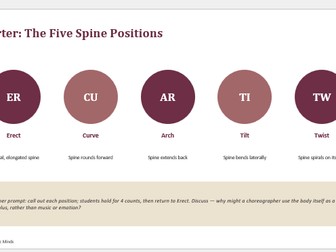
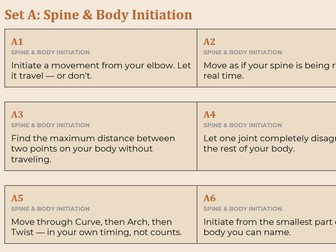
Students are introduced to the 5 core spine positions — Erect, Curve, Arch, Tilt and Twist — each explained with a clear physical description and a sensation cue, so students find the movement in their own bodies rather than simply copying a shape from the front of the room. A structured warm-up sequence (including an eyes-closed repeat and a speed-variation extension) builds clarity and physical vocabulary before students move into six fully-explained choreographic exploration tasks: independent layering of legs and spine, chance-based phrase building using dice or a randomiser (echoing Cunningham’s own creative process), paired initiation and response work, extremity and interruption, full group composition, and reverse-engineering existing phrases to find hidden spine-logic.
The resource closes with discussion prompts for critical reflection and a dedicated Notes for Teachers section covering differentiation — from beginner (one position at a time) through to advanced (multiple simultaneous layers and full chance procedures) — so the same resource stretches across ability levels without any extra planning on your part. A suggested pairing with Cunningham repertory (e.g. Beach Birds, Biped) is included for classes ready to connect the practical work to professional practice.
What’s included:
• Background on Cunningham’s choreographic approach, written for both teacher reference and student-facing use
• A clearly labelled table of all 5 spine positions with physical description and sensation cue
• A structured warm-up sequence with eyes-closed and speed-variation extensions
• 6 fully-explained choreographic tasks, ready to run with no further planning
• Discussion prompts for verbal or written reflection
• Teacher notes on differentiation and suggested repertory pairings
Ideal for: KS3 contemporary dance and composition units, KS4 GCSE Dance schemes needing a strong stimulus-based lesson, and any teacher wanting a genuinely choreographer-led (rather than generic) approach to movement invention.
Format: Fully editable Word document, ready to print or project — adapt wording, tasks, or pacing to suit your group. No specialist equipment needed beyond open floor space.
This printable resource of 24 cards, are a great way to conclude your dance lesson. Helps students to reflect on their work and their achievements.
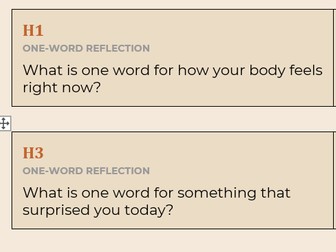
Get students to pick and card, encourage leadership in your classroom where students determine how to cool down and reflect on that days activities.
Printable pack of cards.
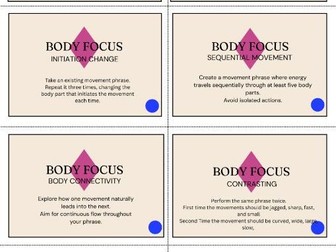
These cards can be used as a quick starter the to lesson, to help focus and engage dance students. These can be a stand alone activity or build into some extended work.
These help students to understand Dance vocabulary and explicit choreography terminology.
Print - Cut - Laminate.
The second set of choreographic prompt cards. These cards delve a little deeper encouraging students to develop their thinking and creativity further.
These printable cards can be used on their own or in conjunction with each other as students build and develop their phrases.
Dance Your Words -
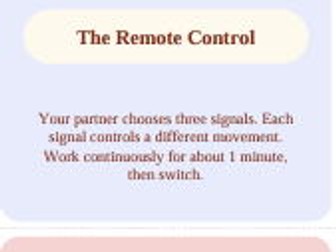
This printable pack contains 40 Prompt cards, to help students to explore and creative and develop movement.
These can be used at the start or during the choreographic process to help students explore and think more creatively.
Cards are designed for beginner and intermediate levels.


 Quick View