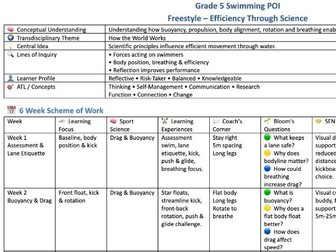
New to teaching swimming in an IB PYP school? Looking for a simple way to teach **freestyle, backstroke, breaststroke and butterfly ** through an inquiry-based approach?
This resource provides 6-week Scheme of Work overviews for each year group from Early Years to Grade 5, helping teachers confidently plan and deliver progressive swimming lessons within the IB PYP.
These are planning frameworks, not detailed lesson plans, giving you the flexibility to adapt activities to your own students, facilities and Programme of Inquiry.
Included:
Freestyle progression (EY–Grade 5)
Backstroke progression (EY–Grade 5)
Breaststroke progression (KG2–Grade 5)
Butterfly progression (Grade 1-5)
Each overview includes:
Links to the relevant IB PYP Units of Inquiry
Meaningful inquiry connections and curriculum ideas
Progressive skill development across each year group
A clear planning framework to support curriculum design
Flexible guidance that can be adapted to your school’s Programme of Inquiry
Perfect for:
Teachers new to the IB PYP
Swimming and PE specialists
International schools delivering inquiry-based learning
Schools developing or reviewing their swimming curriculum
Save hours of planning while building a progressive, inquiry-based swimming programme that develops both technical swimming skills and conceptual understanding.
Please note: These resources are planning frameworks and Scheme of Work overviews designed to support curriculum planning. They are intended to inspire and guide teachers rather than provide fully detailed lesson plans.
“Changing States of Matter Worksheet: NGSS-aligned for grades 5-9! Interactive diagrams, real-world examples & critical thinking. Print & go—download now!”
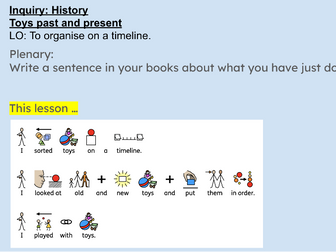
This resource includes, PowerPoint slides for organising toys on a timeline with SEN support and activity ideas on the slides. This lesson involves: children exploring a timeline which shows within and beyond their living memory, organising real toys and then photos of these toys for evidence in their books, and a summary sentence for the plenary.
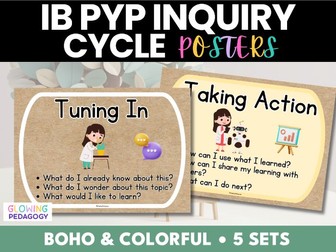
Bring the IB PYP Inquiry Cycle into your classroom with these colorful, ready-to-print posters based on Kath Murdoch’s inquiry-based learning framework. Designed for primary and international school classrooms, these visual displays help students understand, follow and revisit each stage of the inquiry process.
The 6 Stages of the Inquiry Cycle
The posters feature the six stages of Kath Murdoch’s Inquiry Cycle:
Tuning In
Finding Out
Sorting Out
Going Further
Making Conclusions
Taking Action
Arrows are included to visually connect the stages and help students see inquiry as an ongoing process.
What’s Included
This resource includes 5 complete Inquiry Cycle poster styles:
Boho Neutral
Classic Color
Boho Bright
Boho Pastel
Colorful Borders
Choose the style that best suits your classroom theme or mix and match the designs to create your preferred classroom display.
Why Use These Inquiry Cycle Posters?
Making the inquiry process visible gives students a consistent visual reference throughout their learning. These IB PYP classroom posters can be displayed on a classroom wall, inquiry board, bulletin board or learning space and revisited during different stages of an inquiry.
They are ideal for:
Making the Inquiry Cycle visible in your classroom
Supporting inquiry-based learning
Helping students identify their current stage of inquiry
Encouraging students to reflect on and revisit the inquiry process
Creating a purposeful IB PYP classroom display
Adding cohesive classroom decor without extensive preparation
Perfect For
IB PYP classrooms
International schools
Primary classrooms
Inquiry-based learning environments
Classroom walls and bulletin boards
Inquiry boards and learning displays
Back-to-school classroom setup
Teachers following Kath Murdoch’s inquiry approach
Easy to Prepare
Simply choose your preferred design, print the pages you need, and display them in your classroom. With five styles included, you can select the look that best complements your existing classroom decor.
These Inquiry Cycle posters are designed to make the language and stages of inquiry easy for students to see, understand and use throughout the school year.
Resource type: Printable classroom posters
Suitable for: Primary | IB PYP | International Schools
Framework: Kath Murdoch’s Inquiry Cycle
Copyright Notice:
This product is for personal use only. It is not for commercial use. If you wish to share or distribute this product, please purchase additional licenses at a discounted rate.
All rights reserved by the author. Unauthorized reproduction or distribution is prohibited.
IB PYP Inquiry Cycle Posters | Kath Murdoch | Classroom Display
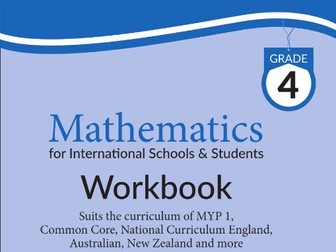
Grade 4 Math Workbook
BeeOne workbooks are a teacher’s special as they feature a huge collection of highly engaging and result driven worksheets for daily practice. This downloadable PDF E-workbook of 363 pages features Global standard worksheets of PYP(IB), US Common Core Standards, UK National Curriculum, Singapore Curriculum, Australian Curriculum, New Zealand Curriculum and suitable for any International curriculum from BeeOne Books
The topics covered are Number & Place Value, Fractions, Decimals & Fractions, Addition, Subtraction, Multiplication, Division, Shapes & Geometry, Position & Movement, Measurement, Time and Handling Data.
This E-workbook features well designed worksheets with examples given in most of them and ideal for use throughout the year to support classroom work, to help with internal assessments, holiday practice and to revise for the end-of- year examinations at school
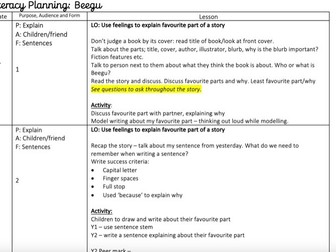
Three weeks of plans and resources and teaching slides for Beegu. Aimed at a year 1/2 class.
All slides and LO’s included (editable). Including purpose and audience
All lesson reosurces included. (editable)
Three weeks (this includes a 4 day week 1 of term so you could easily drag a couple of lessons to make up for the teacher only days)
follow on Instagram for more teaching ideas
@miss_howells_teach
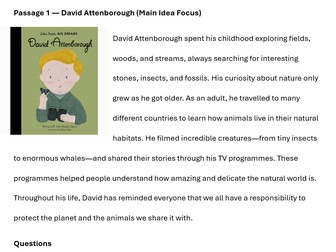
Little People, Big Dreams Reading Comprehension Bundle – Grade 3
Bring the inspiring “Little People, Big Dreams” series to your classroom with this Grade 3 reading comprehension bundle! Students will explore the lives of remarkable figures and discover how curiosity, creativity, and courage can make a big impact.
What’s Included:
This bundle features five engaging passages inspired by the Little People, Big Dreams series:
David Attenborough – Discover the wonders of nature and the importance of protecting our planet.
Vincent van Gogh – Explore creativity, emotion, and self-expression through art.
Mahatma Gandhi – Learn about peaceful action, fairness, and standing up for what’s right.
Jane Goodall – Understand patience, observation, and the intelligence of animals.
Coco Chanel – Learn about innovation, confidence, and changing the world of fashion.
Each passage comes with age-appropriate questions focusing on key reading skills:
Main Idea
Vocabulary in Context
Sequencing
Inference
Skills Developed:
Identifying the main idea and supporting details
Understanding new vocabulary from context
Sequencing events in order
Making inferences and drawing conclusions
Connecting reading to real-life actions and values
Encouraging thoughtful discussion and reflection
Perfect For:
Guided reading or literacy centers
Independent practice and homework
Assessment and comprehension revision
ESL/EAL learners
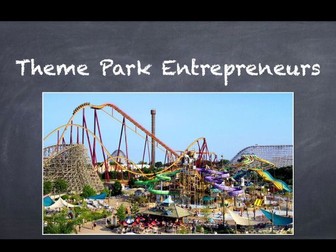
Bring financial literacy to life in your classroom with this interactive Theme Park Enterprise Project, where students design, build, and run their own theme park while learning key skills in budgeting, profit calculation, and pricing strategy.
This 8-lesson project guides students through a realistic business simulation, allowing them to apply maths in a practical, engaging way. Ideal for upper primary (KS2/Year 5/Year 6) or early secondary classes.
Whether you are looking for a class project or wanting to put on a whole school project, this is guaranteed to get the children engaged and showcase their learning.
What’s Included:
Full Teacher’s Lesson Plan (8 clearly structured lessons)
Detailed step-by-step instructions for each stage of the project
Printable lesson structure table for easy classroom use
Explanation of loan, budgeting, running costs, profit calculation, pricing, and customer happiness
Award categories to build competition and engagement
Detailed breakdown of visitor numbers, advertising impact, and financial adjustments
Profit tracking and happiness scoring system
Realistic business language: loans, interest, advertising, revenue, costs
Skills Developed:
Financial literacy
Budgeting and pricing
Profit and loss calculation
Strategic thinking and decision-making
Data handling and real-life maths application
Teamwork and problem-solving
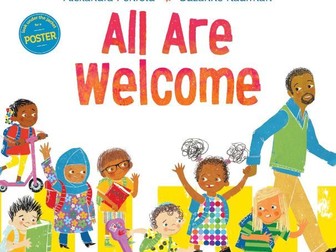
Join the call for a better world with this New York Times bestselling picture book about a school where diversity and inclusion are celebrated. The perfect back-to-school read for every kid, family and classroom!
In our classroom safe and sound.
Fears are lost and hope is found.
Discover a school where all young children have a place, have a space, and are loved and appreciated.
Readers will follow a group of children through a day in their school, where everyone is welcomed with open arms. A school where students from all backgrounds learn from and celebrate each other’s traditions. A school that shows the world as we will make it to be.
“An important book that celebrates diversity and inclusion in a beautiful, age-appropriate way.” – Trudy Ludwig, author of The Invisible Boy
This color-coded visual mind map is designed to help beginners learn how to describe themselves in French in a clear and engaging way. Perfect for A1 learners / KS2–KS3 students, this resource covers all key elements of basic description:
Le nom
L’âge
La nationalité
La taille
La description physique (les cheveux et les yeux)
Le caractère et les traits de personnalité
The layout is visually structured to support memory, speaking, and writing skills, making it ideal for classroom display, revision, or guided practice.
Tables are used to organize information and are widely present in many situations of our students’ everyday activities. Students usually face difficulties interpreting the Double-entry table. Therefore, this worksheet aims to help students read and interpret double-entry tables and then asks them to construct a table to fill in given data.
Suitable for History, Geography, PYP where we are in time and place
L.O: I can identify primary and secondary sources of information.
Review your vocab with the following document with your teacher
Read through the PPT with your teacher, identifying the difference between primary vs secondary sources of info.
In groups- sort the following into primary or secondary sources of information. List your reasons why for each choice. Sorting activity
Activity 2: In pairs, take turns asking Q- “Primary or Secondary?” to your partner.
Challenge
G & T (Extension)
Plenary: Complete the exit ticket
EAL Display poster
Soon to be a major motion picture!
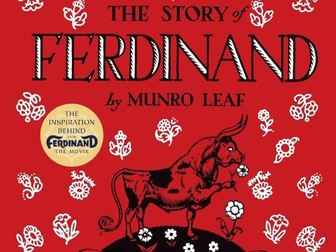
Ferdinand is the world’s most peaceful–and–beloved little bull. While all of the other bulls snort, leap, and butt their heads, Ferdinand is content to just sit and smell the flowers under his favorite cork tree. Leaf’s simple storytelling paired with Lawson’s pen-and-ink drawings make The Story of Ferdinand a true classic. Commemorate the 75th anniversary of the book’s original publication with this beautiful and affordable 8x8 paperback edition.
Report an issue with this product or seller
Reading age
2 - 6 years, from customers
Print length
32 pages
Language
English
Lexile
Grade 4 Fractions Worksheets and Workbook | BeeOne
This downloadable PDF E-workbook of 30 pages features Global standard worksheets of PYP(IB), US Common Core Standards, UK National Curriculum, Singapore Curriculum, Australian Curriculum, New Zealand Curriculum and suitable for any International curriculum from BeeOne Books
The topics covered are Exploring fractions, Ordering & Comparing fractions, Equivalent fractions, Mixed fractions, Improper fractions, Adding & Subtracting fractions, Real life word problems and more.
This E-workbook features well designed worksheets with examples given in most of them and ideal for use throughout the year to support classroom work, to help with internal assessments, holiday practice and to revise for the end-of- year examinations at school.
Grade 2 English Grammar Workbook | BeeOne Books
Build a strong grammar foundation with this 53-page Grade 2 Grammar Workbook, filled with engaging worksheets and activities. Designed to enhance language skills, this workbook covers essential grammar topics in a structured and easy-to-understand manner. Ideal for students following PYP (IB), US Common Core, UK National Curriculum, Singapore, Australian, New Zealand curricula, and other international programs.
What’s Inside?
Nouns & Pronouns – Identify nouns, plural nouns, collective nouns, and proper nouns.
Verbs & Adjectives – Learn about action verbs, comparative & superlative adjectives.
Grammar Essentials – Covers articles (a, an, the), tricky homophones, and prepositions.
Punctuation Practice – Focuses on sentence punctuation, capitalization, and more.
Why Choose This Workbook?
Perfect for classrooms, homeschooling, and extra practice at home.
Designed to strengthen language skills with fun and interactive exercises.
Aligned with international curricula for well-rounded learning.
A must-have resource to help Grade 2 students build confidence in grammar and communication
BeeOne Books is a leading publisher of hundreds of high-quality and results-driven workbooks for grades 1 to 6, and the creators of Grade1to6, a world-renowned website featuring high-quality math and English worksheets created by experienced teachers from around the world.
Grade 2 Math Multiplication & Division Workbook of 63 Pages
Calling all second-grade math enthusiasts. Dive into the exciting world of multiplication with this engaging workbook. Featuring a wide range of topics, from arrays to multiplication tables, drills, sentences, and more, this workbook is designed to help your child master multiplication with ease. Your child will have a blast solving real-life word problems, exploring reasoning, and tackling division facts and drills. With this comprehensive workbook, your child will be well on their way to becoming a multiplication master in no time
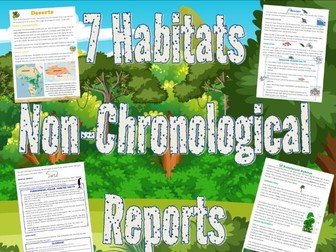
7 non-chronological reports texts - 7 habitats.
Non-chronological report, non-fiction, fact files.
Carefully researched & written and used in my own classroom.
Non chronological reports are double-sided A4 and include these features:
Topic Title,
Introduction Paragraph,
Subheadings,
Paragraphs,
Fact Boxes,
Bullet point lists,
Glossary,
Factual Language,
Present tense verbs,
3rd person point of view,
(some with labeled diagrams and maps)
Habitat Report titles:
Desert Habitats
Oceans Habitats
Polar Habitats
Freshwater Habitats
Temperate Forest Habitats
Rainforest Habitat
Grassland Habitats
 Quick View

 Quick View
 Quick View
 Quick View
 Quick View
 Quick View
 Quick View
 Quick View
 Quick View
 Quick View
 Quick View
 Quick View
 Quick View
 Quick View
 Quick View
 Quick View
 Quick View
 Quick View