Bonjour!
Here’s a free quiz about France with 33 colourful slides. It can be used at the beginning of the year or at the end. I usually have students to work in teams on it. The first 17 slides contain the questions and possible answers to choose from. The other slides contain the answers! This quiz was based on the bigger quiz with 107 slides which can be found here
Enjoy. It’s a great tool to recap about music, monuments, food, brands, culture, geography, history, sports etc.
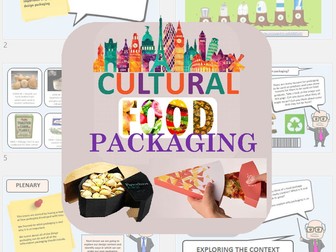
A KS3 graphics DT project that introduces students to packaging, materials associated with packaging and graphic communication techniques.
Full term project with slides and workbook.
The project will first introduce students to packaging and its history. They will learn how packaging has evolved over time. They will speciifcially focus on packaging of food items and learn about the important factors that need to be considered when packaging food. Students will then be given a design context to explore using subject specific methods of context exploration. They will be introduced to design briefs and specifications and then follow the design process of generation design ideas and developing them through modelling, they will be introduced to NETS and the aesthetic elements that need to be considered with graphic communication.
A great project to introduce students to graphic design. 49 slides that have been structured into outstanding lessons with clear objectives and success criteria. I have delivered this project for years and students enjoy the process.
Slides and booklet are completely editable for your own SOW and teaching style.
Students work book and PowerPoint for the whole unit.
Both include the following topics:
22 Engagement patterns of different social groups and the factors affecting participation.
23 Commercialisation, sponsorship, and the media.
24 Positive and negative impacts of sponsorship and the media.
25 Positive and negative impacts of technology.
26 Conduct of performers and introduction to drugs.
27 Sporting examples of drug taking.
28 Advantages/disadvantages to the performer/the sport of taking PED’s.
29 Spectator behaviour and hooliganism, including strategies to combat hooliganism.
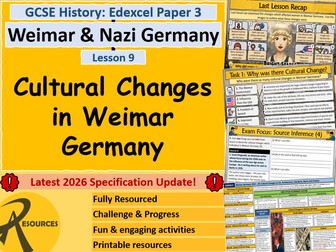
Students examine the reasons for and features of the cultural changes which took place in Weimar Germany between 1924-29 including changes to art, cinema, literature and architecture.
UPDATED & RE-VAMPED CONTENT IN LINE WITH THE 2026 SPEC
The 29 slide fully resourced lesson contains activities, tasks, practice exam questions, printable resources and all background knowledge:
Slide 1: Title slide
Slide 2: Lesson key questions
Slide 3: ‘As You Enter Warm Up’ - Students look at a piece of abstract art from 1920s Germany and simply discuss - ‘Is this art?’.
Slide 4-5: Recap - Students use 8 images to recap the various ways that women experienced change in the Weimar Republic.
Slide 6: Starter 1 - Students analyse two sources about culture in the Weimar Republic and have to identify what changed as well as how the two sources differ in their opinion of culture in Weimar Germany.
Slide 7-8: Starter 2 - A fun questionnaire style sheet which examines if students would like the cultural changes in Germany or not - responses/answer given.
Slide 9-11: Task 1 - Students match the reasons for the change in culture with the explanation. Answers given with printable worksheet.
Slide 12: An overview of the main changes in styles such as New Objectivity, Expressionism and Modernism.
Slide 13-16: Background information and images linked to the cultural changes which took place in Weimar Germany.
Slide 17: Task 2 - Instructions for students to complete an art exhibition poster for the Bauhaus.
Slide 18-19: Task 3: Printable worksheet based on the lesson fact sheet.
Slide 20: EXAM FOCUS - An example and printable answersheet of the ‘Source Inference’ question.
Slide 21: EXAM FOCUS - An example and structure guide to the ‘Explain why’ question.
Slide 22: EXAM FOCUS - An example of the 4 mark ‘Interpretation’ question with suggested structire guide.
Slide 23-27: EXAM FOCUS - Various examples and help sheets to guide students through the ‘How useful’ question. Includes model answer.
Slide 28: Lesson fact sheet
Slide 29 More from RA Resources
This lesson has been updated in line with the amended specification and exam questions ready for the 2025/6 examinations.
All images used in this lesson are in the public domain and are therefore copyright free. Images which require attribution have been attributed in the notes section of each slide where the image appears. If you feel any errors have been made, please contact me at raschoolresources@gmail.com in the first instance to resolve any issues. My lessons are completed using PowerPoint and designed on widescreen formatting. Thank you.
This resource is for personal use only unless a school license is purchased and for copyright reasons any slides, worksheets, RA Resources maps or diagrams should not be copied/amended for commercial use.
A complete poetry unit for KS3 (recommended year 8 but can be adapted for years 7 and 9).
This scheme of work includes 18 fully planned and resourced lessons covering both classic and contemporary poetry spanning the 19th to 21st centuries. The scheme explores cultures from each continent with a focus on British culture.
Resources included:
226 slide PPT with teacher notes, guidance and options for adaptive teaching (more challenging/accessible slide options)
Poetry booklet with full text of 15 poems
Poems included:
‘The British’ by Benjamin Zephaniah
‘God Save the King’ (English National Anthem)
‘Black’ by Dave (song - excerpt used)
‘Checking Out Me History’ by John Agard
‘The New Colossus’ by Emma Lazarus
‘The Hill We Climb’ by Amanda Gorman
‘Night of the Scorpion’ by Nissim Ezekiel
‘Haiku’ by Matsuo Basho (titles vary from translation)
‘Ballad of the Totems’ by Oodgeroo Noonuccal/Kath Walker
‘Africa My Africa’ by David Diop
‘Composed Upon Westminster Bridge’ by William Wordsworth
‘Welcome to Tottenham’ by Giovanni Rose
‘Island Man’ by Grace Nichols
‘Refugees’ by Brian Bilston
‘Game Changer’ by Solli Raphael
Medium term plan:
Week 1: Introduction and critical analysis of British culture
Week 2: Close analysis of ‘Checking Out Me History’ and introduction to American culture
Week 3: Exploration of American, Indian, and Japanese poetry
Week 4: Exploration of Australian and African poetry, then back to British poetry (19th century poem)
Week 5: Assessment Preparation: Comparison of 19th century and modern British poem (plus alternate assessment task for struggling students)
Week 6: Reading Assessment and creative writing/spoken language tasks
This is a chronology in summary form of twenty-two of the key events in the cultural history of Japan with dates and key events from the last 5000 years.
I think this resource is of use for a teacher's own research or to use as a student activity.
At the end of the document there is a suggested activity where students can use the information to create a timeline of Japanese cultural history. I have my students follow the directions as listed at the end of the chronology.
The work in selecting and compiling this chronology is my own. My main research resource for this information was from Morton and Olenik's book Japan: Its History and Culture. The timeline was developed, focusing on events that help address issues of culture, transmission, and geography.
Three timelines on the cultural history of India, China, and Japan. Carefully researched and full of detail. Can be used as classroom exercise or as background information for the teacher.
This is a chronology in summary form of twenty five of the key events in the cultural history of China. There follows a four page chronology of Chinese history with dates and key events from the last 7000 years. At the end of the document there is a suggested activity where students can use the information to create a timeline of Chinese cultural history. I have my students follow the directions as listed at the end of the chronology. I think this resource is of use for a teacher's own research or to use as a student activity.
The work in selecting and compiling this chronology is my own. My main research resource for this information was The Cambridge Illustrated History of China by Patricia Buckley.
The download includes a pdf of the chronology itself and a suggested activity, which could be modified.
Bonjour!
Here’s a free quiz about France with 33 colourful slides. It can be used at the beginning of the year or at the end. I usually have students to work in teams on it. The first 17 slides contain the questions and possible answers to choose from. The other slides contain the answers! This quiz was based on the bigger quiz with 107 slides which can be found here :
https://www.tes.co.uk/teaching-resource/general-culture-french-quiz-powerpoint-and-student-booklet--quiz-culture-general-en-francais-11052610
Enjoy. It’s a great tool to recap about music, monuments, food, brands, culture, geography, history, sports etc.
**Explore the Flavors of the World! **
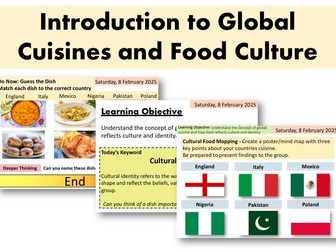
This exciting 1-hour lesson introduces students to global cuisines and the cultural significance of food. Perfect for Key Stage 3 & 4 Food Technology, this resource is designed to kickstart an 18-week course on international food traditions.
Lesson Overview:
Starter Task: A matching exercise to spark curiosity about world cuisines.
Main Activity: Group work using detailed fact sheets on England, Nigeria, Pakistan, Italy, Mexico, and Poland, covering key ingredients, traditional dishes, and eating customs.
Discussion & Collaboration: Students explore how climate, geography, and history shape national cuisines.
Review & Reflection: Two higher-order thinking questions to consolidate learning and encourage deeper analysis.
What’s Included?
Fully editable PowerPoint slides
6 Country Fact Sheets with key food insights
Discussion Questions & Review Tasks
Printable materials for group work and class discussion
Learning Outcomes:
Understand how food reflects cultural identity and traditions
Identify key ingredients and dishes from different global cuisines
Analyse how geography and climate influence food choices
Ideal for Food Technology, Food & Nutrition, Hospitality & Catering, and cross-curricular learning in Geography and Cultural Studies.
*Download now and bring global flavors into your classroom! *
This 81 slide Powerpoint includes all needed / relevant content on the following topics (looking at the socio-cultural issues faced in each time period and their effect on sport);
Sport in Pre-Industrial Britain
Sport in Post-Industrial Britain
Sport in the 20th Century
Sport in the 21st Century (globalisation of sport, e.g. golden triangle, media coverage etc…)
Within each topic are relevant past paper questions from the OCR spec and the answers are included; as well as many other little tasks to complete.
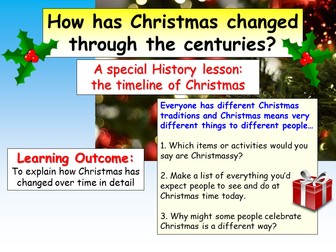
This lesson investigates the history of Christmas and Christmas traditions from medieval times to today. Students will learn about where our modern traditions of pulling crackers and sending Christmas cards originated as well as the creation of Santa Claus!
This download includes a fully editable powerpoint with all activities, instructions, clip links and worksheets/information sheets you need.
It is differentiated where possible with scaffolding and challenge options and is fully planned with plenty of activities for your students to complete including a starter, timeline activity, card sort, consolidation explanation question and challenge plenaries.
Activities are planned to encourage thinking and discussion.
Please take a look at our growing TES shop where you can find free or inexpensive lessons:
https://www.tes.com/teaching-resources/shop/DiscoveringHistory
If you are happy with your resource, PLEASE LEAVE US A REVIEW! If, by any chance, you encounter any issues with the resource, please email us at discoveringhistoryuk@gmail.com and we’ll try to solve them for you.
We have a wide range of KS3 & GCSE History lessons on their way, please keep an eye out - follow our social media pages for freebies, new resources and interesting facts!
Got a lesson suggestion? Or looking for something in particular? Email us!
This is a chronology in summary form of twenty of the key events in the cultural history of India with dates and key events from the last 4500 years. I think this resource is of use for a teacher's own research or to use as a student activity.
At the end of the document there is a suggested activity where students can use the information to create a timeline of Indian cultural history. I have my students follow the directions as listed at the end of the chronology.
The work in selecting and compiling this chronology is my own. My main research resource for this information was from India: A History by Hermann Kulke and Dietmar Rothermund. For areas of cultural history that I felt Kulke neglected, I also consulted A History of Asia, 5th edition by Rhoads Murphey.
Attached are 3 Quizzes A Level aimed at A Level students.
_ First one is a multi choice PPT Quizz in French made of 6 categories of 10 questions covering various aspects of the French Speaking Culture and the A Level programs:
Geography, Gastronomy, History, Arts, Literature, Sports, Cinema, Music and some bonus questions.
It lasts around 45 minutes.
_ Second one is a 97 slides PPT with 46 questions on various French cultural topics. Geography, Gastronomy, Politics History, Cinema etc… Answers are provided. Around 40 mn long.
_ Last one is a Word document made of 40 different questions about French culture.
around 20mn
These educational and fun quizzes are fully editable and can be used for end of term activities.
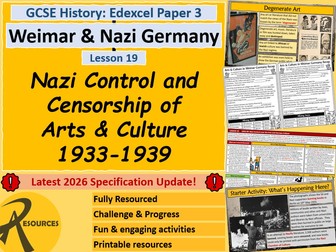
Students examine how the Nazi Party controlled and censored the arts and culture in Nazi Germany between 1933-39 including the control of art, literature, film, architecture and music.
**UPDATED & RE-VAMPED CONTENT IN LINE WITH THE 2026 SPEC**
The 22 slide fully resourced lesson contains activities, tasks, practice exam questions, printable resources and all background knowledge:
- Slide 1: Title slide
- Slide 2: Lesson key questions
- Slide 3: An overview of the difference between propaganda and censorship
- Slide 4-6: A recap of how the arts and culture changed during the Weimar Republic to give students a chance to contrast this with Nazi Germany.
- Slide 7-8: Starter - What is Happening? Two images of the Nazi book burning with an overview of the events on slide 8.
- Slide 9: Starter Source Inference
- Slide 10-11: Background information about Nazi arts and culture and the term degenerate art
- Slide 12: Class clips and questions
- Slide 13: Printable worksheet/question sheet linked to the fact sheet.
- Slide 14: Quotes by Adolf Hitler about degenerate art
- Slide 15-16: Learning Review - 8 multiple choice questions with answers
- Slide 17-18: Just for Fun Fact or Fake News quiz with answers
- Slide 19: Lesson fact sheet
- Slide 20: EXAM FOCUS - An example of a 'Source Inference' question with printable answer sheet
- Slide 21: EXAM FOCUS - An example of an 'Explain why' question
- Slide 22: More from RA Resources
This lesson has been updated in line with the amended specification and exam questions ready for the 2025/6 examinations.
All images used in this lesson are in the public domain and are therefore copyright free. Images which require attribution have been attributed in the notes section of each slide where the image appears. If you feel any errors have been made, please contact me at raschoolresources@gmail.com in the first instance to resolve any issues. My lessons are completed using PowerPoint and designed on widescreen formatting. Thank you.
This resource is for personal use only unless a school license is purchased and for copyright reasons any slides, worksheets, RA Resources maps or diagrams should not be copied/amended for commercial use.
Includes Editable & PDF Versions | Full Student Workbook + PowerPoint
Want to see before you buy?
You can download the FREE PREVIEW of this pack now — it includes the full PowerPoint in PDF format so you can explore the structure, content and layout of the entire unit before purchasing.
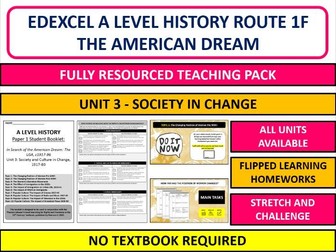
This complete teaching pack covers the entire EQ3 unit of the Edexcel A-Level History Paper 1 topic In Search of the American Dream: The USA, c1917–96. It includes both an editable and PDF version of the full student booklet and PowerPoint presentation, with every resource carefully structured around 10 clearly defined topics.
Everything you need to teach the unit — including flipped learning homeworks, structured tasks, and exam-focused content — is included. No textbook is required.
What’s Included:
Editable and PDF versions of the student workbook
Editable and PDF versions of the full teaching PowerPoint
Fully sequenced content, recall tasks, challenge prompts and structured essay support
Suitable for in-class teaching, independent learning or revision
EQ3 Topics Covered:
The Changing Position of Women Pre-WWII
The Changing Position of Women Post-WWII
The Women’s Liberation Movement
The Effect of Immigration in the 1920s
The Impact of Immigration on Urban Life, 1919–41
The Impact of WWII on Immigrants
Popular Culture: The Impact of Cinema, 1917–45
Popular Culture: The Impact of Radio and Music, 1917–45
Popular Culture: The Impact of Television in the 1950s
Popular Culture: The Impact of Broadcast News, 1920–80
Key Features:
Fully stand-alone — no textbook required
Goes far beyond textbook depth, with detailed evidence and analysis throughout
Ideal for departments focused on stretch and challenge
Incorporates ‘thinking harder’ strategies to build high-level conceptual responses
Built-in flipped learning homeworks maximise lesson time for discussion and debate
Supports top-grade outcomes while remaining fully accessible for all ability levels
Includes structured recap activities, essay guidance, and revision prompts
This is a ready-to-use, high-quality teaching resource ideal for teachers aiming to raise attainment while reducing planning workload. Whether you’re teaching EQ3 for the first time or refining delivery for top-end outcomes, this pack provides everything needed to deliver the unit with clarity, depth and purpose.
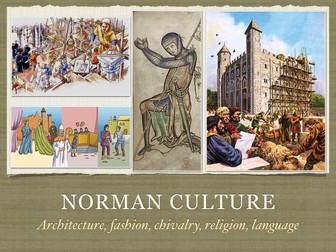
This PowerPoint is based on Edexcel GCSE History Anglo Saxon and Norman England Book. It has many pictures and diagrams to make the content of the lesson more accessible to all ability pupils. This lesson summarise the Norman Culture in England: aristocrats, architecture, fashion, hunting rituals, chivalry, Christian culture, penance, language and attitude to Anglo Saxons.
Ideas and practical activities to create a local history study and support other curriculum areas.
Use your local history as a teaching resource for cross-curricular work covering history, literacy, art, geography and maths; wherever you live and whatever period or geography your local history may include.
Written 2015, with the new national curriculum KS2 in mind but adapts to KS1 and KS3 in places.
Includes five example case studies of projects by schools and museum or heritage sites working together to test out activity responding to the new curriculum, covering these overarching themes:
- Investigating a heritage site (through the ages and a timeline)
- Investigating a local street (in this instance Victorian but transferable to other periods)
- Investigating a historical period (Stone, Bronze and Iron ages)
- Creative engagement with maths (using the art / design of Blackpool Illuminations to cover the full KS1 & 2 maths curriculum)
- Exploring the local town (in this instance a coastal town with a migratory mining history)
Each case study includes
- Description of a topic or activity
- Objectives and outcomes of the activity
- Practical activity suggestions to include in topics / lesson plans
- Top tips
- Links to further resources
Current History links
- the lives of significant individuals in the past who have contributed to national and international achievements
- significant historical events, people and places in their own locality
- changes in Britain from the Stone Age to the Iron Age
- a study of an aspect or theme in British history that extends pupils’ chronological knowledge beyond 1066
- ideas, political power, industry and empire: Britain, 1745-1901
The resource was originally commissioned by Curious Minds and is freely available to download.
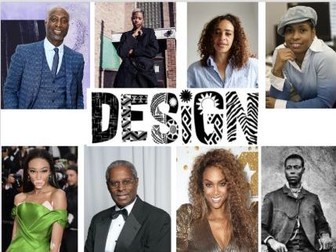
Lesson 2 Design
This lesson aims to examine black designers (fashion, engineering, taxidermy).
The purpose of this unit is celebrate the positive achievements in Black History and Culture, which is lacking in the curriculum.
The lesson is designed with an RS padegogy, but can be adapted to other subjects.
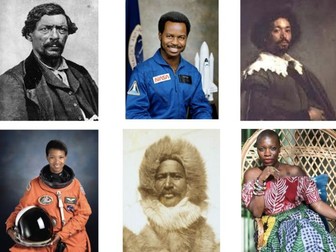
Lesson 1 Explore
This lesson aims to examine black explorers.
The purpose of this unit is celebrate the positive achievements in Black History and Culture, which is lacking in the curriculum.
The lesson is designed with an RS padegogy, but can be adapted to other subjects.
As it is almost impossible to cover breadth at KS3, I have designed these cultural capital homework tasks. Women’s history captures different time periods to give students a more in-depth look of the lives of women.
This resource is free. I have also designed others, just look at my shop to find out more.