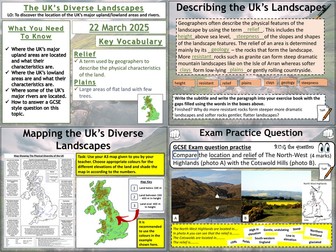
AQA GCSE Geography lesson for the 2016 specification Unit 1C. In this lesson we look at the Uk’s diverse landsacpes. It is the first lesson in Section C: The Physical Landscapes of the UK.
We start with a collection of photos of different landscapes in the UK to highlight the diversity of landscapes we have. We then complete a short cloze exercise paragraph on the different landscapes in the UK. The main task of the lesson involves using an atlas to complete the map on the A3 worksheet. Firstly the students colour the map according to the relief using colouring by numbers. They then locate the major upland / lowland areas of the UK using the descriptions in the boxes and their atlas. They can also locate some of the major rivers. There are also some extension questions using the information in the boxes. They then answer a 4-mark practice question using photos. There is some guidance on structure and points to use to help the students with this.
Hope this saves you some valuable planning time.
https://www.tes.com/teaching-resources/shop/markthegeographer
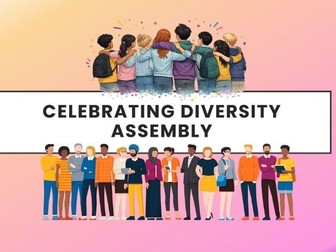
A powerful and engaging assembly designed to help students understand, respect and celebrate diversity in modern Britain.
This professionally designed resource moves beyond simple definitions, encouraging students to reflect on identity, challenge stereotypes, develop empathy and consider how they can help create a more inclusive school community.
Perfect for PSHE, SMSC, tutor time, Diversity Week, Equality & Inclusion events, Anti-Bullying Week, or whole-school pastoral programmes.
What’s included:
40+ professionally designed PowerPoint slides
High-quality visuals and embedded video links
Discussion and paired talk activities
Interactive myth-busting tasks
Reflection questions
Follow-up tutor time activity
Referenced statistics and factual content
Ready-to-use with minimal preparation
Topics covered:
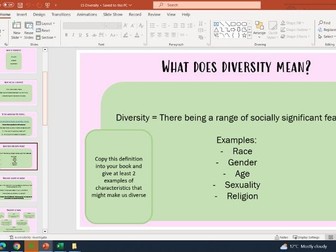
What diversity means
Diversity in modern Britain
Race, religion, disability and hidden diversity
Neurodiversity and invisible differences
Bias, stereotypes and assumptions
Exclusion, belonging and inclusion
Respecting different beliefs
Practical ways to celebrate diversity
Please also visit my TES Assembly Store where over 100 assemblies are available on a huge range of topics.
Edexcel A-level
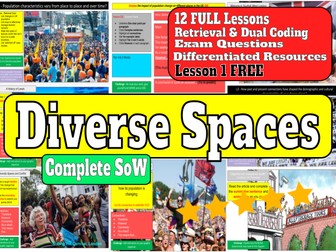
Topic 4B: Diverse Spaces
Free - Lesson 1: https://www.tes.com/teaching-resource/resource-12667081
This SoW has been created to meet the teaching requirements of Topic 4B: Diverse Places, which is a component of the Geography Edexcel A-level course.
This SoW is designed in detail and is both differentiated and engaging, and allows you to move pupils through content efficiently. As a result, lessons take around two hours to deliver and hit the required components of the syllabus (see syllabus codes).
Made to a high standard and constructed using current research, both dual coding and retrieval practices are at the heart of this unit.
A colour scheme also runs throughout to ease both your delivery and students comprehension.
This resource is a part of a scheme that covers the entire A-level topic (Diverse Places), which can be viewed using the link below:
SoW: Diverse Places
L1: How do population structures vary from place to place and over time?
L2: Population characteristics vary from place to place and over time?
L3: How past and present connections have shaped the demographic and cultural characteristics of your chosen places?
L4: Why are Urban Places are Seen Differently by Different Groups of People?
L5: Rural Places are Seen Differently by Different Groups People?
L6: Why is there is a range of ways to evaluate how people view their living spaces?
L7: Why is the UK’s Culture and Society so Diverse?
L8: Why does Social Segigation Exist and What Factors Affect it?
L9: How can Changes to Diverse Places Lead to Tensions?
L10: How are Cultural Issues Managed in Diverse Spaces?
L11: What are the Varying Success Criteria for Managing Diverse Urban Areas?
L12: What are the Varying Success Criteria for Managing Diverse Rural Areas?
I’m happy to answer any questions you may have prior to purchase and any feedback is of course welcome…
thegeographyshoporiginal@gmail.com
Best FREE Resources (The Geography Shop)
https://www.tes.com/teaching-resource/-12899088 (Climate Change SoW)
https://www.tes.com/teaching-resource/-12899440 (Development SoW)
https://www.tes.com/teaching-resource/-12638984 (Waste SoW)
https://www.tes.com/teaching-resource/-12451443 (Britain Globalisation SoW)
https://www.tes.com/teaching-resource/-12741793 (Local Area Investigation SoW)
https://www.tes.com/teaching-resources/bundler/12949461 (Cambridge International)
https://www.tes.com/teaching-resource/-12922653 (Israel & Palestine)
https://www.tes.com/teaching-resource/resource-12485457 (What is Geography?)
I hope you find this SoW useful. If you have, I have created a series of resources.
You can check them out here.
https://www.tes.com/teaching-resources/shop/TheGeographyShopOriginal
This engaging and inclusive lesson helps pupils develop a clear understanding of diversity, equality, and respect, encouraging them to celebrate differences and recognise the value of every individual within a community.
The lesson begins with a thought-provoking Think-Pair-Share starter, where pupils explore their initial ideas about diversity, activating prior knowledge and promoting discussion from the outset . Pupils are then guided to define diversity and understand why it is important to treat everyone equally, regardless of their identity.
Through a range of relatable and practical examples, learners explore diversity in everyday life, including culture, language, food, and traditions. The lesson encourages curiosity and openness by suggesting meaningful ways pupils can experience diversity, such as trying foods from different countries or learning new languages.
A key strength of this lesson is its focus on inclusion and real-life application, helping pupils recognise how differences can positively contribute to their classroom and wider community. A reflective task challenges pupils to consider how diversity benefits others, promoting empathy and deeper thinking.
The lesson concludes with a purposeful plenary that reinforces the idea that our differences make us stronger, helping pupils leave with a positive and respectful mindset.
What’s included:
Fully editable PowerPoint lesson
Clear WALT and WILF
Interactive Think-Pair-Share starter
Practical examples of diversity in everyday life
Discussion and reflection tasks
Challenge question to deepen understanding
Plenary for consolidation
Key skills covered:
Understanding diversity and inclusion
Respecting differences
Speaking and listening skills
Critical thinking and reflection
Building empathy and awareness
Perfect for:
KS1 / KS2 PSHE lessons
British Values (Mutual Respect & Tolerance)
Classroom discussions on inclusion and equality
Promoting a positive and inclusive classroom culture
A fully amendable 15 question Culture Day quiz. This will provide some simple fun and learning during form time. We use this quiz during form time on our school culture day to celebrate diversity in our school.
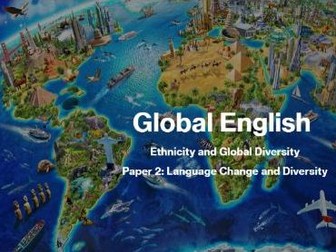
This PowerPoint is a ready-to-use, exam-focused guide for Language Change and Diversity (Paper 2). It includes 102 slides, covering 14 lessons (6 weeks).
It explores:
Origins & Spread of English – From Anglo-Saxon roots to global dominance.
Global Englishes – Case studies like Singlish, Denglisch, and Franglais.
Key Theories & Models – Kachru’s Three Circles, McArthur’s Circle, Strevens’ Map.
Language Attitudes – Prescriptivism vs Descriptivism, Aitchison’s metaphors.
English as a Lingua Franca – Features, code-switching, and global communication.
Debates & Future Trends – Linguistic imperialism, Globish, Multicultural London English.
Includes interactive tasks, videos, essay scaffolds, and a knowledge organiser—perfect for engaging students and hitting AO2.
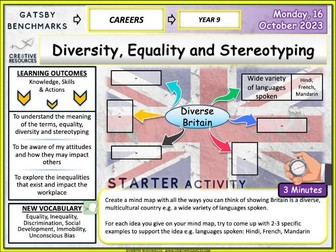
Equality, Diversity and Stereotyping - Careers Education and CDI Framework. 1-2 hour Lesson. Editable 25 slide PowerPoint Lesson, Lesson Assessment, Student Resources, Signposting to extra support services.
Learning Objectives
To understand the meaning of the terms equality, diversity and stereotyping
To be aware of my attitudes and how they impact on others
To explore the inequalities that exist that impact the workplace
Some Key Terms Covered
Equality, Inequality, Discrimination, Social development, immobility, unconscious bias
Careers (Assessment) Objectives
I can define stereotyping and equality
I can evaluate how unconscious bias can impact our choices and the workplace
I understand the diverse and complex nature of British identity
✰✰✰✰✰✰✰✰✰✰✰✰✰✰✰✰✰✰✰✰✰✰✰✰✰✰✰✰✰✰✰✰✰✰✰✰✰✰
Each Lesson Pack Contains:
☞ 1 Fully Editable PowerPoint (Learning Outcomes, Confidence Checkers, Assessment of Learning, Variety of Tasks, Video Embedded URL Clips, Engaging Premium Quality Slides, Extra Support Websites, Challenging & Thoughtful Questioning)
☞ Most lessons include a Worksheet
☞ Assessment Opportunity (Confidence Checker)
☞ Teacher Notes (On some slides)
Check out some more of our most popular resources:
☞ MISOGYNY ANDREW TATE + TOXIC MASCULINITY UNIT
☞ Masculinity + Misogyny Explored (Ks4)
☞ Boys to men - Masculinity (Ks3)
☞ PSHE Masculinity + Men (Ks5)
☞ What is Toxic Masculinity? (Ks3)
❀❀❀❀❀❀❀❀❀❀❀❀❀❀❀❀❀❀❀❀❀❀❀❀❀❀❀❀❀❀❀❀❀❀❀❀❀❀❀❀❀❀❀❀❀❀❀❀❀❀
⇨ KS4 Relationships and Sex Education Unit
⇨ Y11 Staying Safe (Parties, Online and Drugs) Unit Bundle
⇨ KS4 Drugs Education Unit Bundle
⇨ Women’s Health Unit Unit Bundle
⇨ Contraception and STI Unit Y9’s Bundle
⇨ Law Crime and Society Unit Bundle
⇨ Extremism + Radicalisation + Terrorism Unit Bundle
⇨ An introduction to Politics for KS3 Students
In this bundle: all three parts of the topic: Les aspects positifs d'une société diverse.
PART1: L'enrichissement du a la mixité ethnique
PART2: Diversité, tolerance et respect
PART3: Diversité- un apprentissage pour la vie
Each part includes
a PPT (approx. 30 slides with answer slides)
Reading, Listening, Speaking and Writing activities
video comprehension activities
statistic discussions
Translation French to English and English to French with markscheme
a link to an online vocab course and a test linked to the course
activities are exam style and differentiated
Each part are priced £3
Click on preview to see what is included in each of the .zip folder
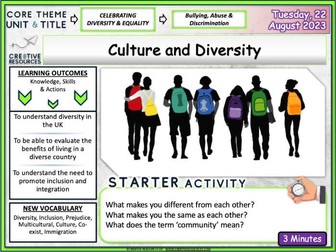
Culture and Diversity in Britain PSHE Lesson (1 Hour+) . Editable 19+ slide PowerPoint Lesson, Lesson Assessment, Student Resources, Signposting to extra support services. Bonus Mindfulness Activity and much more.
Learning objectives
To understand diversity in the UK
To be able to evaluate the benefits of living in a diverse country
To understand the need to promote inclusion and integration
NEW VOCABULARY
Diversity, Inclusion, Prejudice, Multicultural, Culture, Co-exist, Immigration
PSHE (Assessment) Objectives
I can explain how diverse Britain is
I can identify how migration has impacted the UK population
I can explain how communities can improve integration
Each Lesson Pack Contains:
☞ 1 Fully Editable PowerPoint (Learning Outcomes, Confidence Checkers, Assessment of Learning, Variety of Tasks, Video Embedded URL Clips, Engaging Premium Quality Slides, Extra Support Websites, Challenging & Thoughtful Questioning)
☞ Some lessons may include a Worksheet
☞ Assessment Opportunity (Confidence Checker)
☞ Teacher Notes (On some slides)
☞ Homework
☞ Teacher notes
☞ Mapped against Latest DfE Guidance, PSHE Association & Character Education Guidance from DfE.
⟴ PSHE Association Themes
⟴ Statutory Health and or RSE
⟴ Be Ofsted and DfE PSHE ready with our resources!
Product Code: RSE/C8/LS/NEW
Why not check out some of our latest PSHE super bundles below:
Personal Finance as a young adult
Online Safety + Staying Safe
Y12 Survival Kit - Personal Safety
Y11 Survival Kit - Revision + Exam Stress
British Values Explored Bundle
PSHE - Debating Topical Issues
Society, Body Image + Peer Pressure
Finance Risk + Online Safety
A powerpoint filled with key information about linguists, an in-depth analysis of data sets and key theories. This powerpoint has a focus on every topic students need to know for Paper 2 of the AQA A Level English Language Exam.
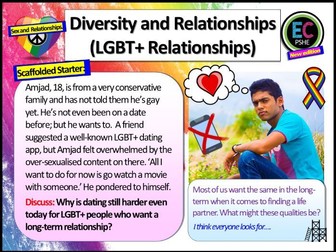
NEW 2026 DfE RSHE GUIDELINES COMPLIANT (see lesson plan included for details)- This lesson focuses on what all good relationships have in common and how, no matter our sexuality, we’re all seeking the same universal qualities in a good, long-term partner.
The lesson also examines the additional challenges some members of the LGBT+ community have to face in order to achieve this, such as (depending on a person’s background), cultural, family or religious expectations. There is also a focus on how dating apps (and those tailored to LGBT+ individuals in particular) don’t always prioritise long-term relationship seekers and why this causes further issues for those after a committed relationship. Best suited to UKS3 or KS4.
All editable for your setting, lesson will last around one hour. Includes detailed lesson plan.
This lesson is taken from the new EC Publishing Complete 2026 PSHE Package which can be found at the EC Publishing website. Everything is editable and easy to pick up and run with and includes future DfE updates too.
You can contact us at info@ecpublishing.co.uk
Who are EC Resources?
EC Resources are the top TES PSHE providers and are a group of teachers who work together to create easy to use, high quality and editable lessons and units of work. We have created lessons for The Children’s Commissioner, The Bank of England, The British Legion, MACS Charity, Tes, LikeToBe Careers, the Criminal Cases Review Commission (UK Gov) and have also completed PSHE and Citizenship commissions for schools across the UK.
Please visit our Tes store https://www.tes.com/teaching-resources/shop/EC_Resources for everything PSHE, RSE, RE and Citizenship.
Check out our PSHE Packages on Tes here:
Complete KS3 PSHE and RSE
Complete KS4 PSHE and RSE
Complete KS5 PSHE and RSE
One Year of Citizenship and British Values
Complete KS3 RE
Complete Careers and Employability
AQA Citizenship GCSE Mega Pack
Teaching PSHE, RE or Citizenship GCSE next year? Why not join our Citizenship and PSHE teachers Facebook group, with 12,000 other teachers, for guidance, advice and resource sharing.
bbx3
Careers and Stereotypes - 2 hour lesson suitable for KS2 or lower KS3 which serves as an introduction to careers and also allows students to challenge stereotypes and any unconscious prejudices they may hold about which types of jobs best suit certain people. Students will investigate numerous different career paths and assess which suits their skills and abilities best, completing a personal skills and qualities assessment before exploring the different types of opportunities open to them.
They will also explore the stereotypes and biases we can inadvertently hold and investigate how we can challenge such misconceptions, through clip tasks, literacy, creative and card sort activities.
The lesson has been left editable and is filled with engaging, well differentiated and fun activities. It is designed to be ‘no prep’, so you can just pick it up and use it, although it is still adaptable should you wish to.
Who are EC Resources?
EC Resources are the top TES PSHE providers and are a group of teachers who work together to create easy to use, high quality and editable lessons and units of work. We have created lessons for The bank of England, The Children’s Commissioner, The Bank of England, MACS Charity, Tes, LikeToBe Careers, the Criminal Cases Review Commission (UK Gov) and have also completed PSHE and Citizenship commissions for schools across the UK.
You can contact us at info@ecpublishing.co.uk
Teaching PSHE, RE or Citizenship GCSE next year? Why not join our Citizenship and PSHE teachers Facebook group, with 7000 other teachers, for guidance, advice and resource sharing.
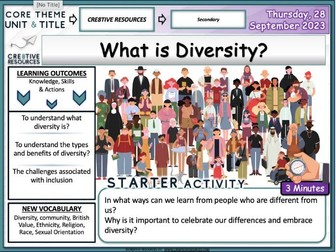
What is Diversity? . A fully-resourced lesson (1 hour +) which can be used by teachers to deliver a detailed workshop / session on the importance of this topic.
Learning Outcomes:
To define the terms diversity, and multiculturalism.
I can evaluate the benefits of living in a multicultural society
To evaluate the challenges associated with inclusion
Key terms
Diversity, community, British Value, Ethnicity, Religion, Race, Sexual Orientation
Each Lesson Pack Contains:
1 Fully Editable Careers PowerPoint (Learning Outcomes, Confidence Checkers, Assessment of Learning, Variety of Tasks, Video Embedded URL Clips, Engaging Premium Quality Slides, Extra Support Websites, Challenging & Thoughtful Questioning)
Assessment Opportunity (Confidence Checker)
The lesson includes a detailed PowerPoint, variety of student facing tasks and comprehension tasks These resources have been designed to be engaging, informative and pick up and teach.
Why not check out some of our latest super bundles below:
Personal Finance as a young Adult
Online Safety + Staying Safe
Y12 Survival Kit - Personal Safety
Y11 Survival Kit - Revision + Exam Stress
British Values Explored Bundle
Society, Body Image + Peer Pressure
Finance Risk + Online Safety
7 hour PSHE / SMSC unit on prejudice and diversity covering the PSHE Association’s KS4 guidelines on values education for 2018-19. Originally created for KS4 but easily editable for any secondary school class too. This unit covers:
British Values, Extremism, Hate Crime, Justice, Community, Diversity and Stereotypes, Racism, Misogyny and LGBT+ Discrimination
Includes: 7 x 1 hour Powerpoints, differentiated worksheets for all tasks, clips with question activities, group tasks, fun paired activities, literacy focus tasks, measurable, colour-coded LOs to three levels of challenge throughout - everything you need to teach an engaging PSHE unit.
More PSHE lessons for KS3, KS4 and KS5 can be found here.
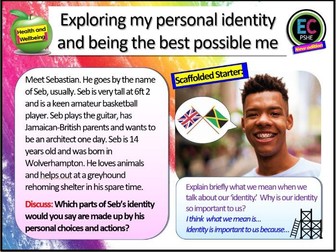
NEW RSHE 2026 GUIDANCE COMPLIANT 2 HOURS - Diversity, Culture, Equality + Identity, covering British Values, community cohesion and more - a lesson investigating what we mean by our identities - from our nationalities and social identities and how we are all equal in Britain, to our cultural, gender and personal identities (hobbies and interests). Created for new RSHE guidance (see lesson plan included).
Students explore the environmental and inherited factors which shape their identities, create a personal identity display and complete debate, clip, analysis tasks and more. All editable, plenty to get through. Perfect for PSHE, Citizenship, Tutor Time or British Values for KS3 or as a recap / drop-down focus for KS4.
for more, new resources for KS1 - KS5 on all PSHE / RSE topics, from vaping, relationships and sex education, personal safety, alcohol and danger, drugs, finance, careers, health and wellbeing, living in the wider world, equality, diversity and stereotyping, British Values, masculinity, racism, gender, mental health and much more.
Taken from the 2026 EC Publishing Complete KS3 KS4 PSHE Package (available online at the PSHE EC Publishing website).
Who are EC Resources?
EC Resources are the top TES PSHE providers and are a group of teachers who work together to create easy to use, high quality and editable lessons and units of work. We have created lessons for The Children’s Commissioner, The Bank of England, The British Legion, MACS Charity, Tes, LikeToBe Careers, the Criminal Cases Review Commission (UK Gov) and have also completed PSHE and Citizenship commissions for schools across the UK.
Please visit my Tes store https://www.tes.com/teaching-resources/shop/EC_Resources for everything PSHE, RSE, RE and Citizenship.
You can contact us at info@ecpublishing.co.uk
THIS LESSON IS FROM THE EC COMPLETE SECONDARY KS3 KS4 PSHE PACKAGE 2026
This contains all the new DfE RSHE 2026 topics - AI deepfakes, sextortion, chatbots, brain development, coercive control, online misogyny, harmful behaviour online and so much more.
Who are EC Resources?
EC Resources are the top TES PSHE providers and are a group of teachers who work together to create easy to use, high quality and editable lessons and units of work. We have created lessons for The Children’s Commissioner, The Bank of England, The British Legion, MACS Charity, Tes, LikeToBe Careers, the Criminal Cases Review Commission (UK Gov) and have also completed PSHE and Citizenship commissions for schools across the UK.
We also offer a Complete KS3 RE Package
Teaching PSHE, RE or Citizenship GCSE next year? Why not join our Citizenship and PSHE teachers Facebook group, with 12,000 other teachers, for guidance, advice and resource sharing.
Assembly Description: Equality, Diversity, and Inclusion (EDI)
This assembly focuses on the vital principles of equality, diversity, and inclusion (EDI) within our school community. It aims to educate students on the importance of treating everyone fairly, valuing our differences, and creating an inclusive environment where everyone feels welcome and respected.
Content Overview:
Understanding Equality: Discussing the importance of ensuring equal opportunities and fair treatment for all, regardless of background or identity.
Celebrating Diversity: Highlighting the richness that diverse cultures, perspectives, and experiences bring to our community.
Fostering Inclusion: Exploring ways to create a supportive and welcoming environment for everyone, challenging exclusion and discrimination.
Relevance to PSHE Lessons:
This assembly is an excellent complement to PSHE (Personal, Social, Health, and Economic) education lessons. It reinforces key PSHE themes such as respect for others, understanding diversity, and promoting social inclusion. By integrating these principles into the assembly, students can better understand and apply them in their daily lives, fostering a more empathetic and cohesive school community.
Link to OFSTED Requirements:
The assembly aligns with OFSTED’s requirements for promoting the spiritual, moral, social, and cultural (SMSC) development of pupils. It supports the following OFSTED criteria:
Promoting Equality and Diversity: Encouraging respect for all people and challenging discriminatory behaviour.
Fostering Good Relationships: Helping students develop positive relationships and a sense of belonging within the school community.
Preventing Bullying: Addressing issues of bullying and discrimination, and promoting a safe and supportive environment for all students.
By addressing these key areas, the assembly not only enhances students’ understanding of EDI but also contributes to the school’s overall effectiveness in meeting OFSTED standards.
This assembly is a valuable opportunity to reinforce the principles of equality, diversity, and inclusion within our school. It supports PSHE education and aligns with OFSTED requirements, helping to create a respectful, inclusive, and supportive school environment for all.
Help children see themselves reflected in the stories they read with this engaging Find Yourself in a Book reading display. Designed to celebrate diversity and representation, this display encourages pupils to explore books featuring a wide range of characters, backgrounds, experiences and identities.
This resource includes:
Find Yourself in a Book display title
Two large child illustrations to form the "o"s in book
Wood-effect display border
A range of diverse character labels, including deaf, adopted, split household, Polish and many more
Book recommendations list to accompany each character label
For my own display, I kept the backing paper and border neutral to allow the books and character labels to stand out. The title was displayed across the top and bottom of the board, creating a clear focus for the theme. Books featuring diverse characters were suspended from string across the display, creating an eye-catching feature that encouraged children to browse and engage with the texts. Character labels were attached to relevant books to highlight different forms of representation and help pupils discover stories they could connect with. I regularly changed the books on display to introduce new characters, experiences and perspectives, keeping the display fresh and encouraging children to broaden their reading choices.
I made up this powerpoint initially during service on Racial Justice Sunday.
The letters of the word D-i-v-e-r-s-i-t-y spell out the meaning of diversity.
This would make a beautiful assembly in any school or gathering here in our multicultural Britain. It also celebrates our differences in age as well as abilities.
It will encourage children and adults to value each other because we all have different talents to share with one another.
It could also be used during one of the topics in PSHE/SEAL.


 Quick View