This is a ready to go session for an external AQA GCSE Football moderation. It can be easily adapted to meet Edexcel specifications or broken down and taught as individual lessons to any age range.
This session meets all AQA specifications and demonstrates the required skills in isolation, under pressure and in competitive situations.
Each drill has a description and diagram to help understand and visualize how to set up and conduct the session.
Please leave a review and comment how I can improve my resources, thank you!
Designed to aid secondary school PE teachers in giving non participants a productive worksheet to complete if they are unable/it is not relevant for them to coach/umpire during the lesson. The worksheet is generic for any activity and will develop the analytical skills of the pupil. The worksheet will ask the pupil to explore the lesson objectives, the warm up, the coaching points of the skill being taught and to analyse two students of differing abilities. Furthermore, there is a differentiated additional task of designing a new drill/activity with options to increase/decrease the difficulty of the exercise.
** An Ofsted inspector was very impressed with the content of the sheet when questioning a non participant in my group and stated 'an excellent and challenging PE resource for all capabilities' . **
Furthermore, we all have students who like to make up excuses/convince their parents they are too ill for PE so hand you a note to be excused. When they realise there is writing involved in PE each time they manage to be excused from participating they may decide that taking part in the lesson is the a more sensible option! Which is what an outstanding PE teacher should want- all their students to be actively involved if possible.
PE Road Map Physical Education Roadmap Editable Version
Easy to edit to suit your curriculum.
Looks professional - great for staff, students and parents.
This 74 page revision guide will provide revision material which is presented in a clear, concise, but not too condensed format, appropriate for international students sitting the Cambridge IGCSE PE examination.
They may be used for study and homework throughout the year but are predominantly intended as student revision. Suitable for all students, it will stretch those of a lower ability while challenging and providing a wealth of exam practice for students of higher ability.
Visual and EAL learners will be supported by the diagrams and figures that are used to illustrate all concepts, ranging from the elementary to the complex. Each section/topic contains past exam questions, with the answers for each question in the back of the booklet along with a glossary of key terms.
The guide contains the following:
Unit 1
Skill
Motivation and Mental Preparation
Skeleton and Joints
Muscles and Tendons
Circulatory and Respiratory Systems
Fitness
Physique
Drugs
Unit 2
Health
Diet
Games: Safe Practice
Injuries
Exercise and Training
Unit 3
Leisure and Recreation
Facilities, Participation, Excellence
Global Events
Media
Access to Sport
Exam Question Answers
Glossary
Resource includes PowerPoint presention and differentiated worksheets for a 1 hour lesson, following the AQA specification.
Chapter 3 - Physical Training
Lesson 1 - Relationship between health and fitness
Lesson 2 - Components of Fitness - Health Related
Lesson 3 - Components of Fitness - Skill Related
Lesson 4 - Fitness Testing - Part 1
Lesson 5 - Fitness Testing - Part 2
Lesson 6 - Use of Data
Lesson 7 - Principles of Training
Lesson 8 - Methods of Training
Lesson 9 - Training seasons and injury prevention
Practical - Physical Training Lessons
A level PE: Scientific principles 2.2 Thresholds and measuring intensity.
Presentation slides for the Component 1 - Scientific Principles
2.2: Preparation and training: Thresholds and measuring intensity
The presentation includes:
The energy continuum
Functional thresholds
Measuring intensity:
1 rep max
Work-rest ratios
Target Heart rate
Karvonen formula
Rate of perceived exertion
Borg Scale
Vo2 max
Power meters
Blood lactate
GPS
Background of the presentation may need changing as it was originally a Google Slide.
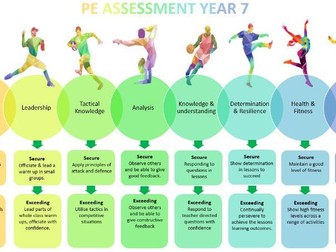
This excel document that enables you to add marks for each component together to gain a final grade for the new 9-1 qualification (2016 spec). Enter your own class' details, with names, target grades, RoH and of course their marks and let the document do the rest.
The document also has a 'print out' sheet where you can either pick any student from the drop-down list and print just one results page or print the whole class' with just one click.
A massive time saver and a fantastic resource for parents evenings with the student-friendly print out sheet.
Email- C.stephen2622@gmail.com
Twitter- @CStephen2622
Cambridge GCSE and IGCSE Physical Education (PE)
Practice questions and mark-schemes - Whole course / all chapters / topics
51 Individual quizzies covering emtire syllabus
Over 250 questions covering entire syllabus in detail
Organised by chapter
1 - 5 mark questions for each subtopic.
Anatomy and physiology
Muscular skeletal system
Respiratory system
Circulatory system
Energy systems and recovery
Simple biomechanics
Health, fitness and training
Health and well-being
Training
Skill acquisition and psychology
Skills and skill acquisition
Psychology
Social, Cultural and ethical influences
Social and cultural influences
Ethics and other issues
Questions are derived from past paper exams and may be used alongside the official Cambridge text-book.
For revision or use during lessons.
Includes both short and long answer questions.
This resource gives students the opportunity to apply their knowledge of every single learning objective in the Cambridge syllabus in detail.
PowerPoint presentation containing all lessons for second year of A-Level course. Topics from the spec includes:
Deviance in Sport (Drugs, Violence, Gambling)
Routes to Sporting Excellence in the UK
Commercialism, the media and it’s impact on contemporary sport.
Links to all videos on the final slide . A01, A02 and A03 themed questions throughout including synoptic links to other assessed topics.
Visually aesthetic slides aligned with thought provoking themes throughout.
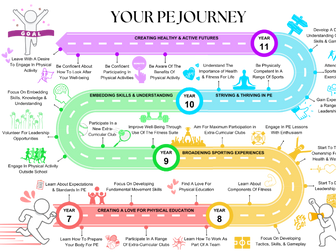
This PE curriculum map is for Year 7 to Year 11. It is in line with the National pillars of the PE curriculum. It is PDF and can be blown up to be displayed as large posters or used on your PE curriculum boards.
Completed visual curriculum mapping documents for Btec sport at both level 2 and 3. Also roadmap for Btec first sport unit 1 (exam) Also editable templates in powerpoint to edit for your own use.
An Editable PPT slide Mapping out the KS3, KS4 Core Games and OCR Cambridge National Sport Science in Physcial Education. Used as display poster, pupil friendly,
Over 40 benefits of PE to make your display boards look awesome!
Take a look at the example display in the preview! :)
Editable PowerPoint and PDF file included. Can also be shared via Google Slides.
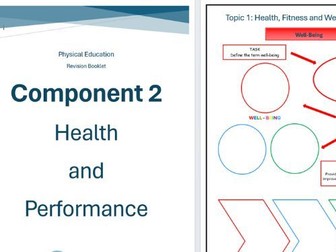
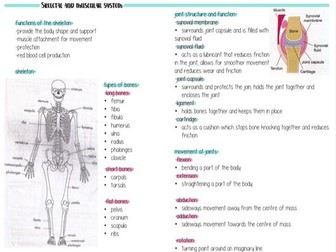
7 page revision sheet for AQA Physical Education GCSE
Musculoskeletal system
Types of Bones
Skeletal system
Synovial Joints
The Heart
Cardiac Cycle
Types of Blood Vessel
Information on sheet is taken from BBC Bitesize and GCSEPod videos - Exam questions taken from AQA sample exam papers - information is not my own.
GCSE Physical Education Powerpoints to help teachers deliver a variety of syllabus to students in preparation for exams. Folders covering Applied Anatomy and Physiology, Movement Analysis, Physical, Emotional and Social Health, Sport Psychology and Socio-Cultural Influences. End of unit tests with answers to aid assessment and progress of students.
Powerpoints can be edited to suit your needs.
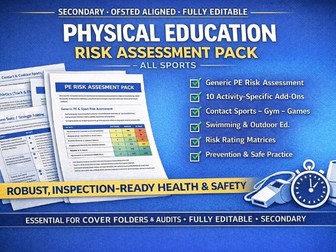
11 Sports PE Risk Assessments
Risk assessments are a critical component of ensuring safety in sports and physical education (PE). These assessments involve identifying potential hazards, evaluating the risks associated with them, and implementing measures to reduce or eliminate those risks.
Key Components of a PE Risk Assessment:
Identifying Hazards: Analyzing the environment, equipment, and activities to pinpoint potential dangers.
Evaluating Risks: Determining the likelihood and severity of harm from identified hazards.
Preventative Measures: Introducing controls such as proper equipment checks, appropriate training, and clear safety guidelines.
Monitoring and Reviewing: Continuously observing practices and revising assessments to adapt to changes.
A well-conducted risk assessment ensures a safer environment for participants and reduces the chances of injury or accidents during physical activities. By fostering awareness and preparation, educators can focus on providing engaging and productive PE sessions.
Best FREE Resources (Upside Learning)
FREE - Computer Safety - https://www.tes.com/teaching-resource/-13121810
FREE - Coraline Neil Gaiman (Lesson 1) - https://www.tes.com/teaching-resource/resource-13108829
FREE - Gothic Literature (Lesson 1) - https://www.tes.com/teaching-resource/-13109342
FREE - Physics IGCSE (Lesson 1) - https://www.tes.com/teaching-resource/-13118154
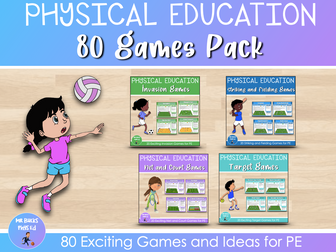
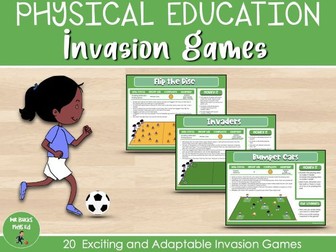
This PE Target Games pack provides you with 20 exciting and engaging games and skill stations. Each activity is expertly designed to increase student proficiency, engagement and skill for many types of target games, students will propel balls and aim for targets in various ways. All these games are tried and tested, and will be a sure fire hit with your students.
Within each game is ways to modify the activity, what equipment you will need and a Q&A section. Also included is a peer assessment sheet that students can use to assess their throwing skills
2 sided A3 mind map for pupil revision
Covers:
Systems of the body - cardiovascular, muscular, skeletal and respiratory
Health and skill related components of fitness
Healthy active lifestyle
Risk and Challenge
Individual Differences
Activity Levels
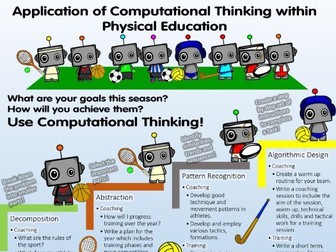
Download your own copy of my popular poster as featured on my twitter account!
Poster includes a wide range of ideas on how to incorporate computational thinking within PE lessons.
I have included both PNG and JPEG versions.
Computational Thinking is a skill set that can be used across the curriculum, not just within computer science! The logical approach to solving a problem means that it’s application can be used to develop and improve students ability to deal with difficult problems in a more rational way. The aim of my posters is to make you realise that many of the brilliant tasks that teachers facilitate week in, week out actually include computational thinking. It’s just a matter of making it more explicit!
Update: Now saved in high resolution 1440x2560
Please leave a review!
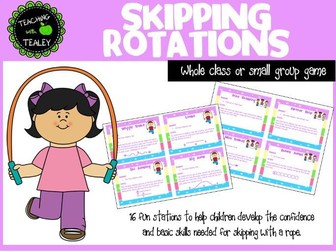
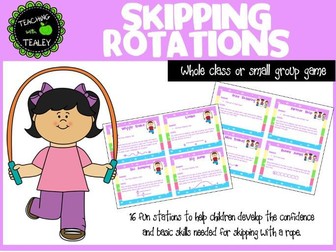
To celebrate the opening of my store please have a look at my Skipping rotations freebie. Includes the first four activities from my skipping rotations resource.
A fun way to help young children develop the skills and confidence necessary to skip with a rope.
Happy Skipping