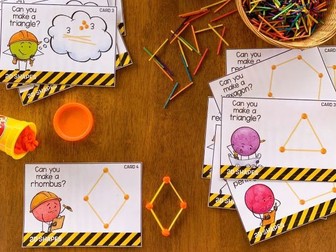
Spark creativity and critical thinking with this Pack of 2D Shape STEM Challenge Cards! These hands-on activity cards invite students to build a variety of 2D shapes using balls, sticks, or other creative materials. With accompanying recording sheets, students reflect on their designs, identify key attributes, and strengthen their understanding of shapes.
Perfect for STEM centers, small group work, or independent exploration, this resource combines geometry with problem-solving in a fun, interactive way.
Shapes included – square, triangle, rhombus, rectangle, trapezoid, pentagon, hexagon, octagon, kite, trapezium and parallelogram.
What’s Included -
2D Shape STEM Challenge Cards (2 different types of cards): Each card features a specific shape (e.g., triangle, square, hexagon) for students to construct with tactile materials.
2D Shape STEM Slides: Suitable for classroom display on your electronic whiteboard (PowerPoint + Google Slides versions)
Recording Sheets: Students document their creations, noting shape attributes like sides and vertices.
Poster prompts: Two different larger format posters to prompt your students.
Print Ready + Editable Versions: Choose from a ready to print PDF or choose your own language or fonts and edit in PowerPoint or Google Slides.
Key Features -
Hands-On STEM Learning: Encourages students to explore geometry through building and problem-solving.
**Reinforces Shape Recognition: **Helps students internalize 2D shape properties by constructing and recording them.
Develops Fine Motor Skills: Manipulating small parts like toothpicks and playdough enhances hand-eye coordination.
Versatile Use: Perfect for STEM centers, math lessons, small group challenges, or early finisher activities.
This 2D Shape STEM Challenge Pack helps students connect math concepts to real-world problem-solving, making geometry engaging and meaningful.
Why You’ll Love It -
Encourages Creativity and Collaboration: Students can work independently or in pairs to complete the challenges.
Supports Multiple Learning Styles: Combines hands-on activities with visual and written components.
**Teacher-Friendly: **Easy to prep and perfect for reuse—just print and go!
Make geometry exciting with these 2D Shape STEM Challenge Cards!
File type –
Ready to print PDF + editable PowerPoint and Google Slides versions
IMPORTANT THINGS TO KNOW BEFORE YOU PURCHASE THIS RESOURCE…
All of our resources are downloadable digital files that you will be able to access immediately after purchase.
What programs do I need to open and use this product?
I recommend using Adobe Acrobat Reader to open any PDF files. Adobe Acrobat Reader is a free program and can be downloaded here.
Ensuring your software is up to date can help to avoid any compatibility issues.
Balloon Rocket STEM Challenge (9‑Point Engineering Graph)
A hands‑on STEM challenge where learners build and test two different balloon rockets to explore force and motion. Students compare how far each rocket travels using the 9‑Point Engineering Graph, sketch their designs, and record how they built each version. This activity is low‑prep, highly engaging, and ideal for primary classrooms, homeschool settings, STEM centres, or makerspace stations.
WHAT’S INCLUDED:
• 3‑page STEM Challenge set: Cover Page, Instructions Page, Activity Page
• Full 9‑Point Engineering Graph for comparing two balloon rocket designs
• Clear, consistent directions designed for real classrooms
• Kid‑friendly layout that supports independent exploration
• Printable PDF (A4/Letter compatible)
TEACHER BENEFITS:
• Low‑prep activity using simple, affordable materials
• Consistent layout across all 9‑point engineering challenges
• Supports independent exploration and student‑led problem‑solving
• Flexible for whole‑class lessons, small‑group rotations, or STEM centres
• Ideal for quick engineering challenges or early finishers
LEARNING CONCEPTS:
• Engineering design process
• Planning, sketching, and comparing two designs
• Forces and motion (thrust, direction, friction)
• Testing and recording performance
• Early data collection and observation skills
HOW IT WORKS:
Students build two different balloon rockets, test how far each one travels along a string, and record their results using the 9‑Point Engineering Graph. They sketch each design, note how they built their rockets, and compare how the flight distance changed between the two trials. The challenge naturally scales: younger learners build simple rockets, while older learners experiment with balloon size, angle, and friction to improve performance.
PRINTING & PREP:
• Print pages single‑sided
• Provide simple materials such as balloons, straws, tape, and string
• Set up a clear space for launching and measuring distance
• Encourage students to sketch, label, and compare their two designs
• Adult supervision required for launching activities
AGE RANGE:
Suitable for ages 5–11 (Primary). Younger learners can participate with support.
PERFECT FOR:
• Classroom STEM centres
• Early finishers
• Makerspace stations
• Homeschool STEM time
• After‑school clubs
• Family STEM nights
FILE DETAILS:
• PDF format (non‑editable)
• Instant digital download
• No physical item shipped
Enhance your EYFS and KS1 construction area with this engaging and educational set of Famous Buildings Display Posters. They are designed to spark creativity, promote cultural awareness and support early years geography learning.
This downloadable PDF resource includes:
20 posters featuring iconic buildings from around the world
Each poster framed in a bold builder’s tape-style border for a construction-themed look
Building names written in a child-friendly font for easy reading
A matching display title poster to complete your classroom display
These colourful posters are perfect for:
Inspiring children’s construction play and model building
Supporting early years architecture and world landmarks topics
Decorating your role-play, STEM or construction zone
Creating a flipbook or classroom inspiration book to explore independently
Use this versatile early years classroom resource to promote creative thinking, fine motor skills, and an appreciation for famous buildings and global architecture.
Perfect for teachers, childminders, and early years practitioners looking to create a stimulating and inspiring learning environment.
You might also be interested in:
• Construction Cards – Human & Physical www.tes.com/teaching-resource/construction-cards-human-and-physical-features-12569843
• Transport Construction Cards https://www.tes.com/teaching-resource/transport-construction-cards-13014427
• Houses and Homes Construction Cards https://www.tes.com/teaching-resource/houses-and-homes-construction-cards-13089795
Want the complete construction area?
• EYFS & KS1 Construction Zone: Real-World Engineering & STEM Display Pack
https://www.tes.com/teaching-resource/construction-area-display-bundle-13310089
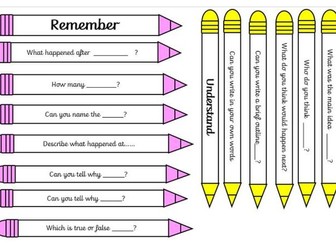
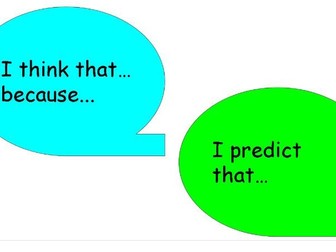
Pencil shape question stems that can be used by children and by staff. Great for display in classrooms and as an activity for children to complete in order to reflect on their learning.
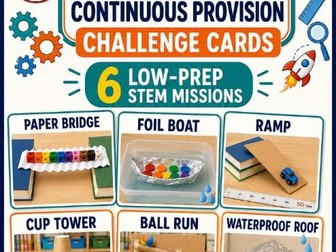
Year 1 STEM Continuous Provision Cards
Description:
Bring purposeful, hands-on STEM learning into your Year 1 classroom with six colourful, low-preparation continuous provision challenge cards.
Each child-friendly mission encourages pupils to build, test, explore and improve their ideas using familiar classroom and recycled resources.
The pack includes:
Paper Bridge Challenge
Foil Boat Challenge
Ramp Challenge
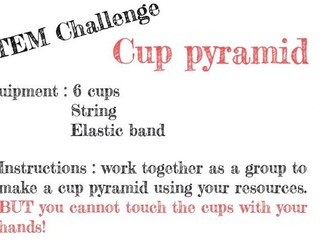
Cup Tower Challenge
Ball Run Challenge
Waterproof Roof Challenge
Every card includes a clear mission, testing prompts, additional challenges and useful STEM vocabulary. Children develop problem-solving, teamwork, creativity, reasoning and early engineering skills while learning independently.
Perfect for continuous provision, STEM areas, morning activities, science and DT lessons, early finishers and enrichment sessions. Simply print, laminate and display alongside the suggested materials.
An engaging, practical and time-saving resource from Little Learning Lane.
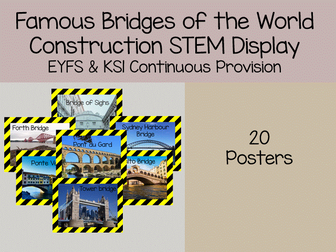
Inspire Young Engineers with These Famous Bridges Display Posters – Perfect for EYFS and KS1 Classrooms.
Bring your construction or STEM area to life with this vibrant set of Famous Bridges Display Posters. Designed to captivate curious minds, these posters encourage imaginative play, spark early engineering interest, and support early years geography and design learning.
This downloadable PDF resource includes:
20 high-quality posters featuring famous bridges from around the world
Each poster bordered with a bold, construction-themed builder’s tape design
Bridge names presented in a clear, child-friendly font for easy recognition
A matching display title poster to tie your construction area together
These colourful posters are ideal for:
Inspiring bridge-building and engineering-themed play
Enhancing geography, transport, and architecture learning topics
Decorating STEM corners, construction zones, or small world play areas
Creating an exploration book or visual inspiration wall for independent learning
Use this engaging classroom display to promote critical thinking, fine motor skills, and an appreciation for global engineering feats — from suspension bridges to drawbridges!
Perfect for teachers, childminders, and early years practitioners looking to build a stimulating, play-based learning environment rooted in real-world structures.
You might also be interested in:
https://www.tes.com/teaching-resource/famous-buildings-of-the-world-construction-area-display-13264489
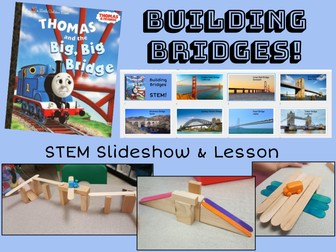
STEM Building Bridges lesson - Great for Kindergarten & elementary.
This pack contains:
Teacher directions & guide
Slideshow in PDF & Powerpoint - can also be used as task cards
Two drawing extension sheets in PDF
This slideshow contains various photos of bridges from around the world. Show these bridges to your students along with the examples, then let creativity take over.
Great read aloud lesson - Thomas & The Big Big Bridge.
Need basic materials to start.
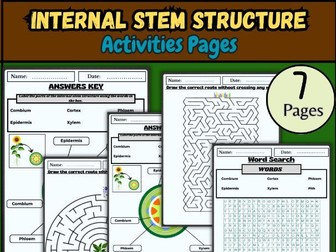
Introduce students to the internal structure of a plant stem with this interactive and visual worksheet set! Perfect for grades 3–6, this resource teaches essential vocabulary such as epidermis, cortex, phloem, xylem, cambium, and pith.
This no-prep activity includes diagram labeling, a word search, coloring pages, and a maze to support a range of learning styles. It’s ideal for science centers, classroom lessons, sub plans, or homeschooling.
What’s Included:
Internal stem diagram with labeling task
Word bank and answer key
Coloring page of stem cross-section
Word search with key plant terms + solution
Maze activity + solution
Space for name and date on each worksheet
Skills Targeted:
Plant anatomy and structure
Understanding the function of vascular tissues (xylem & phloem)
Science vocabulary development
Labeling scientific diagrams
Fine motor and visual learning
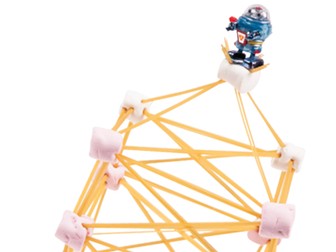
In this race against the clock students work as a team to build the highest tower possible out of dried spaghetti and marshmallows.
The objective of this lesson is to explore structures and investigate what methods of building can make the tallest and strongest structure. By testing their prototype buildings, students will also have the opportunity to rebuild and alter their designs to improve them, giving an insight into the real-life processes of testing, redevelopment and prototyping that engineers and scientists use.
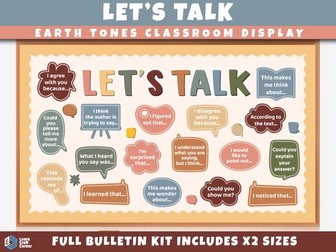
Encourage confident, respectful and purposeful classroom discussion with this Let’s Talk classroom display. Designed to support oracy, speaking and listening, pupil participation and collaborative learning, this resource provides pupils with useful sentence stems to help them share ideas, respond to others, ask questions, explain their thinking and develop classroom conversations.
The display uses a modern earth-tone colour palette and can be arranged to suit different classroom spaces, making it a practical and attractive addition to your classroom environment.
The individual elements can be printed, cut out and arranged to create a display that works with your available wall or display-board space.
What’s Included
This resource includes:
A large LET’S TALK display title
18 discussion sentence stems
Speech and thought bubble elements
6 different coordinating border designs
A4 version
A3 version
Printable PDF files
Individual display elements that can be arranged and combined to suit your classroom
Discussion Sentence Stems
The sentence stems encourage pupils to:
Agree or disagree respectfully
Explain and justify their thinking
Ask for clarification
Build on another pupil’s ideas
Make connections
Share observations
Explain what they have learned
Ask questions
Express their thoughts and reactions
Refer to information from a text
Encourage further discussion
Consider different viewpoints
The stems include prompts such as:
“I agree with you because…”
“This makes me think about…”
“Could you please tell me more about…”
“I figured out that…”
“I disagree with you because…”
“According to the text…”
“I noticed that…”
“What I heard you say was…”
“I’m surprised that…”
“I learned that…”
“This makes me wonder about…”
“Could you explain your answer?”
“This reminds me of…”
Ideal For
Classroom displays
Oracy development
Speaking and listening
Classroom discussions
Group discussions
Collaborative learning
Reading discussions
English lessons
Literacy activities
Critical thinking
Pupil participation
Independent learning
Partner work
Group work
Classroom routines
Developing confident speakers
A3 & A4 Sizes Included
Both A3 and A4 versions are included, giving you flexibility when creating your classroom display.
Use the A3 pieces for a larger, more prominent display or choose the A4 pieces for a smaller classroom wall or display board.
The individual pieces can be mixed and matched to create a display that suits your available space.
Earth-Tone Classroom Display
The warm, neutral earth-tone colour palette gives the display a modern and calming appearance and makes it easy to coordinate with a range of classroom themes and décor.
Easy to Use
Simply:
Print the pages you need.
Cut out the display elements.
Arrange them on your classroom wall or display board.
Add your own pupil work or discussion prompts around the display if desired.
For a more durable display, print on card and laminate before cutting.
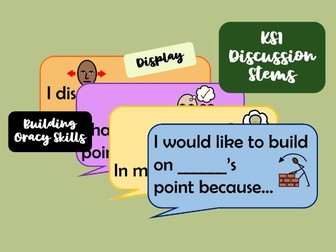
I have used these discussion bubbles to aid communication and partner talk in a wide range of lessons.
Contains symbols from Widgit Inprint 3 software.
3 bubbles - giving a new opinion
3 bubbles - agreeing
3 bubbles - disagreeing
3 bubbles - building/questioning an opinion
Kindergarten STEM. Kindergarten kids will love these brilliant and simple STEM activities!
Here are some FUN lessons and activities for doing STEM in kindergarten!
This Kindergarten STEM includes:
#1 - seven lessons plans
#2 - stem activities
#3 - stem printables
#4 - extension activities
Please see the thumbnails and preview for this resource before purchasing this product.
@Little Tots Learning
This is intended for use by one teacher in one classroom. It is not to be redistributed to an entire school or district. It may not be redistributed or sold online.
Enjoy!
Thanks for taking the time to stop by my store!
Ms. Blajic
Follow Little Tots Learning
 Quick View

 Quick View
 Quick View
 Quick View
 Quick View
 Quick View
 Quick View
 Quick View
 Quick View
 Quick View
 Quick View
 Quick View
 Quick View
 Quick View
 Quick View
 Quick View
 Quick View
 Quick View