Ofsted School Inspection Toolkit Update Briefing PowerPoint for School Leaders. Fully Aligned to 2025 Ofsted School Inspection Toolkit.
Navigate the biggest changes to school inspections in years with this comprehensive briefing presentation. Perfect for headteachers, SLT members, and school leaders preparing their teams for the new Ofsted framework launching November 2025.
What’s included in this free Ofsted update presentation for staff:
*Complete timeline of when changes take effect
*New 5-point grading system and report card system explained
*8 evaluation areas broken down for staff
*Inspection process changes, including no more deep dives and case sampling method
Practical preparation steps for school leaders and staff with discussion prompts and reflection activities
This ready-to-present PowerPoint saves you hours of preparation time whilst ensuring your team understands exactly what’s changing and when. Designed specifically for whole-school INSET sessions, staff meeting, leadership briefings or departmental meetings.
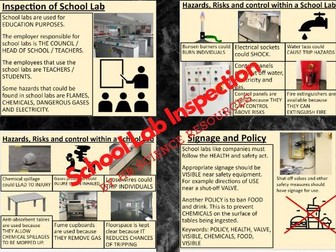
Created for BTEC Applied Science Nationals - Unit 4 Assignment A.
By the end of the lesson learners will be able to:
Identify hazards within a school lab.
Describe how these hazards are controlled.
Explain why these precautions are necessary.
These lesson plans on circumference of a circle, area of a circle, algebraic fractions, stem & leaf plot, probability, sample space, straight line graph and linear equation were used for an outstanding lesson during the last school inspection.
They are engaging and activity based lesson with GL CAT4 strategies and personalisation according individual students ability.
In line with the new Education Inspection Framework and OFSTED Inspector’s Toolkit, this comprehensive SEF document is designed to help school leader’s evaluate their school’s data using auditing tools and the school’s IDSR.
For a supporting audit document, please see the link below:
https://www.tes.com/teaching-resource/resource-13416520
A template school improvement plan linked to these documents is coming soon.
Ofsted inspection can feel daunting when you’re a school business manager, especially if you’re new to the role or haven’t experienced an inspection under the current framework.
Designed specifically for school business managers, this focused preparation pack translates the 2026 School Inspection Toolkit into practical guidance about your role during inspection. You’ll understand when and how you’ll engage with inspectors, what questions they’re likely to explore and how to demonstrate the excellent operational work you’re already doing to ensure resources support the school’s priorities, statutory compliance is maintained and operational systems enable the school to function effectively.
You’ll get:
School Business Manager Inspection Role Guidance – clear explanation of when you’ll be involved during inspection, what happens during focused leadership meetings and document reviews (particularly the single central record if this is your responsibility), and what inspectors want to understand from you
Example Ofsted School Business Manager Questions – realistic questions you might be asked during inspection conversations, helping you practise articulating your approach and identify any areas to strengthen
Further supporting documents – including a leader action checklist to build your inspection knowledge, an inspection readiness tool to evaluate your current practice against toolkit statements, and editable grade descriptor grids highlighting leadership and governance (and where resource management and compliance connect) across the framework
This example RSE policy is the most up to date for Primary schools in-line with expectations for inspection by Ofsted and ISI
RSE Policy
Introduction
This policy outlines the provision of Relationships and Sex Education (RSE) at Primary Schools, in accordance with the 2014 National Curriculum and statutory guidance.
It is designed to ensure compliance with national requirements and inspectorate expectations, including Ofsted’s Education Inspection Framework (EIF).
The policy sets out the aims, statutory duties, curriculum coverage, implementation strategies, assessment approaches, and procedures for monitoring and review, with a commitment to providing high-quality, inclusive, and safeguarding-focused RSE for all pupils.
ETI Inspection Checklists
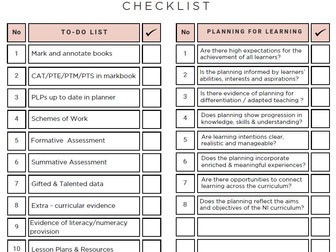
This product is a digital download that includes comprehensive checklists designed to help teachers and heads of departments prepare for school inspections by the Education and Training Inspectorate (ETI). It provides a structured approach to ensure all necessary documentation and practices are in order.
For Teachers:
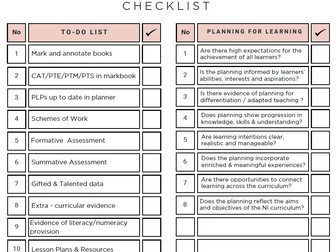
The teacher checklist covers key areas that are often the focus of ETI inspections, including:
Documentation and Planning: Includes items such as marking and annotating books, having up-to-date PLPs (Personal Learning Plans) in a planner, and preparing lesson plans and resources
Assessment: Ensures that both formative and summative assessments are in place
Student Data: Prompts you to have data for gifted and talented students as well as CAT/PTE/PTM/PTS scores in your markbook
Curriculum & Provision: Checks for evidence of literacy/numeracy provision, schemes of work, and extracurricular activities
Teaching and Learning: A set of questions to evaluate the effectiveness of your teaching, such as whether learners understand how they learn , if they are actively engaged, and if differentiation strategies are effectively supporting all students
For Heads of Department:
The Head of Department checklist is broken down into several sections to help you evaluate your department’s readiness:
To-Do List: A checklist for departmental documents like the Departmental Curriculum, Schemes of Work , and Meeting Minutes
Curriculum and Planning Questions: Provides a series of questions to prompt reflection on the curriculum’s focus and how it goes beyond exam specifications , how it provides opportunities for all pupils, including those with SEND , and how it prepares students for life beyond school
Teaching and Learning Questions: A list of questions to consider regarding the quality and consistency of teaching within the department, as well as how feedback systems truly improve student learning
Self-Evaluation and Improvement: Poses critical questions about the department’s ability to use feedback for significant change and its plan for improvement.
Leadership and Management: Helps you assess your leadership approach, including how you empower your team to take ownership of the curriculum and whether staff meetings are a space for meaningful professional dialogue
ETI Core Questions: Includes the five core questions from the ETI, covering the department’s vision , how it monitors how well it and its learners are doing, and how it defines, celebrates, and embeds success for all learners
This resource bundle provides an evidence-informed suite of resources to support schools in addressing misogyny as a safeguarding, cultural and leadership issue. This bundle is aligned with:
Keeping Children Safe in Education (KCSIE 2025)
The UK government’s new Freedom from Violence and Abuse: A Cross-Government Strategy to Build a Safer Society for Women and Girls.
This bundle supports prevention, early intervention and robust leadership and governance oversight.
What’s included in this bundle
Leadership & DSL Safeguarding Toolkit
A comprehensive leadership resource supporting DSLs, senior leaders and those responsible for governance to:
apply safeguarding thresholds confidently
analyse patterns and risk
assure themselves and others through evidence
align practice with the new Ofsted leadership and governance expectations
Staff Safeguarding & Awareness Training (PowerPoint)
A ready-to-use staff training session (45–60 minutes) that:
builds staff confidence in recognising and challenging misogyny
explores online influence and harmful gender narratives
reinforces consistent safeguarding responses
Evidence-Informed Self-Review
A structured self-evaluation tool enabling leaders and governors to:
assess current practice
identify strengths and vulnerabilities
prioritise improvement activity
Who this bundle is for
DSLs and Deputy DSLs
Senior leaders
Pastoral and safeguarding teams
Governors and trustees
Why schools choose this bundle
Covers evaluation, training and leadership oversight in one purchase
Grounded in statutory guidance and national policy
Inspection-ready and governance-focused
Supports planned prevention rather than reactive response
Save £2.50 buy purchasing this bundle instead of these three resources separately.
The full digital bundle - 130 pages or resources, step by step guides, prompt libraries, templates and so much more! Saves you time, stress and allows you to focus on what is most important… your school and the students.
Are you ready to approach your next inspection or internal review with confidence? The AI-Powered Inspection Ready Toolkit is a comprehensive solution designed for school leaders, educators, and administrators to streamline preparation, align with international standards, and elevate teaching and leadership practices.
Estimated Time Saved: a Minimum of 40-60 hours
This comprehensive toolkit integrates AI-powered solutions, allowing seamless coordination of tasks like checklists, lesson observations, CPD planning, and student performance analysis. It reduces the need for manual coordination, extensive report preparation, and redundant data handling. The pack includes over 20 resources to help you along the way.
Core Applications:
Efficiency: Eliminate repetitive tasks with AI-powered tools.
Comprehensive Coverage: Address teaching, governance, stakeholder engagement, and more.
Customizable Templates: Adapt to your school’s specific needs and inspection framework.
Actionable Insights: Real-time dashboards and AI-generated prompts to guide your progress.
Sections Included are Listed Below:
Introduction
Section 1 – AI Empowered Inspection Readiness Checklists
Section 2 - AI Empowered Lesson Observations for Inspection Readiness
Section 3 - AI Empowered CPD for Inspection Readiness
Section 4 - AI Empowered School Improvement for Inspection Readiness
Section 5 - AI Empowered Student Performance Analysis for Inspection Readiness
Section 6 - AI Empowered Evidence Logs for Inspection Readiness
Section 7 - AI Empowered Stakeholder Communication
AI Implementation Guide
Glossary of Terms
AI Tools and Links
Post-Inspection Strategies
Ethics and Data Privacy
Frequently Asked Questions (FAQs)
Resources
The full digital bundle - 130 pages or resources, step by step guides, prompt libraries, templates and so much more! Saves you time, stress and allows you to focus on what is most important… your school and the students.
You get all the individual fiels as well as the full toolkit in this bundle.
Are you ready to approach your next inspection or internal review with confidence? The AI-Powered Inspection Ready Toolkit is a comprehensive solution designed for school leaders, educators, and administrators to streamline preparation, align with international standards, and elevate teaching and leadership practices.
Estimated Time Saved: a Minimum of 40-60 hours
This comprehensive toolkit integrates AI-powered solutions, allowing seamless coordination of tasks like checklists, lesson observations, CPD planning, and student performance analysis. It reduces the need for manual coordination, extensive report preparation, and redundant data handling. The pack includes over 20 resources to help you along the way.
Core Applications:
Efficiency: Eliminate repetitive tasks with AI-powered tools.
Comprehensive Coverage: Address teaching, governance, stakeholder engagement, and more.
Customizable Templates: Adapt to your school’s specific needs and inspection framework.
Actionable Insights: Real-time dashboards and AI-generated prompts to guide your progress.
Sections Included are Listed Below:
Introduction
Section 1 – AI Empowered Inspection Readiness Checklists
Section 2 - AI Empowered Lesson Observations for Inspection Readiness
Section 3 - AI Empowered CPD for Inspection Readiness
Section 4 - AI Empowered School Improvement for Inspection Readiness
Section 5 - AI Empowered Student Performance Analysis for Inspection Readiness
Section 6 - AI Empowered Evidence Logs for Inspection Readiness
Section 7 - AI Empowered Stakeholder Communication
AI Implementation Guide
Glossary of Terms
AI Tools and Links
Post-Inspection Strategies
Ethics and Data Privacy
Frequently Asked Questions (FAQs)
Resources
Fully aligned to the 2025 Ofsted School Inspection Toolkit
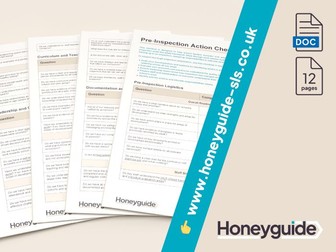
An upcoming Ofsted inspection can feel overwhelming, but starting with the right questions helps you understand where you stand. ThisOfsted Pre-Inspection Action Checklist is designed as a thinking tool to help headteachers and senior leaders consider the inspection preparation process, working through every evaluation area systematically to identify where you’re confident and where you need further exploration and evidence.
Use this checklist in SLT meetings to prompt honest conversations about your school’s readiness. Rather than providing all the answers, it gives you a comprehensive starting point across all eight evaluation areas of the 2025 School Inspection Toolkit, plus other inspection considerations, helping you figure out which areas are strong and which require deeper investigation or additional support.
This resource provides a practical school self-evaluation and audit tool aligned with the Ofsted School Inspection Toolkit for use from September 2026.
It is designed to help school leaders review current provision against the key inspection areas, identify strengths, highlight gaps and agree clear priorities for further development. Each section can be used as part of whole-school self-evaluation, SLT monitoring, governor review, subject or phase leadership discussions, or preparation for school improvement planning.
The audit encourages leaders to consider the evidence available for each area, record what is already in place, link supporting documentation and identify specific next steps. This makes it useful not simply as an inspection-preparation document, but as an ongoing tool for evaluating impact and informing the School Improvement Plan.
It can be completed collaboratively by senior leaders, governors and other relevant leaders to build a shared understanding of current strengths and areas requiring further development.
OFSTED Inspection Checklists
This product is a digital download that includes comprehensive checklists designed to help teachers and heads of departments prepare for school inspections by OFSTED. It provides a structured approach to ensure all necessary documentation and practices are in order.
For Teachers:
The teacher checklist covers key areas that are often the focus of inspections, including:
Documentation and Planning: Includes items such as marking and annotating books, having up-to-date IEPs/PLPs (Personal Learning Plans) in a planner, and preparing lesson plans and resources
Assessment: Ensures that both formative and summative assessments are in place
Student Data: Prompts you to have data for gifted and talented students as well as CAT/PTE/PTM/PTS scores in your markbook
Curriculum & Provision: Checks for evidence of literacy/numeracy provision, schemes of work, and extracurricular activities
Teaching and Learning: A set of questions to evaluate the effectiveness of your teaching, such as whether learners understand how they learn , if they are actively engaged, and if differentiation strategies are effectively supporting all students
For Heads of Department:
The Head of Department checklist is broken down into several sections to help you evaluate your department’s readiness:
To-Do List: A checklist for departmental documents like the Departmental Curriculum, Schemes of Work , and Meeting Minutes
Curriculum and Planning Questions: Provides a series of questions to prompt reflection on the curriculum’s focus and how it goes beyond exam specifications , how it provides opportunities for all pupils, including those with SEND , and how it prepares students for life beyond school
Teaching and Learning Questions: A list of questions to consider regarding the quality and consistency of teaching within the department, as well as how feedback systems truly improve student learning
Self-Evaluation and Improvement: Poses critical questions about the department’s ability to use feedback for significant change and its plan for improvement.
Leadership and Management: Helps you assess your leadership approach, including how you empower your team to take ownership of the curriculum and whether staff meetings are a space for meaningful professional dialogue
OFSTED Questions: Includes possible questions from the OSFTED, covering the department’s vision , how it monitors how well it and its learners are doing, and how it defines, celebrates, and embeds success for all learners.
Stay inspection-ready and ensure your school meets all safeguarding requirements with this comprehensive bundle. Perfect for DSLs, school leaders, and teachers, these editable resources provide everything you need to implement robust safeguarding policies, create a safe learning environment, and train staff effectively.
Strengthen your school’s Spiritual, Moral, Social and Cultural (SMSC) development and British Values provision with this comprehensive management toolkit from the National Quality Mark.
Designed for school leaders, SMSC coordinators and colleagues across subject and year-group teams, the toolkit supports a structured, evidence-informed review of your school’s provision. It helps you recognise effective practice, identify areas for development and agree practical priorities for your school development plan.
What’s included?
Your download includes the full school audit and self-evaluation tool, the school handbook, a review and record sheet, and an accompanying PowerPoint presentation with instructions for using the toolkit.
The handbook supports the review process, while the review and record sheet helps you document findings and next steps. Two versions of the audit tool are included, allowing you to choose between automated scoring and a version that does not require macros.
Eight standards for a whole-school review
The toolkit is organised around eight standards: Safeguarding & Induction; Leadership & Governance; Attendance; Behaviour, including pastoral support; Inclusion; Curriculum; Personal Development; and Developing Teaching & Learning.
Each standard contains clear sub-standards to help your team examine provision in detail. Recommended reference points guide evidence gathering, supporting informed discussion and consistent evaluation.
Four developmental levels—Emerging, Evolving, Established and Exemplary—help you assess current practice, recognise strengths and understand the next steps towards improvement.
Turn evaluation into action
Use the toolkit to build a shared understanding of SMSC and British Values, bring together evidence from across your school and identify strengths and gaps in provision. The structured approach helps your team translate findings into manageable improvement priorities, record agreed actions and review progress over time.
For schools seeking external recognition, the toolkit also supports preparation for validation through the National Quality Mark for SMSC and British Values.
Support and national recognition
Our experienced education consultants can offer personalised guidance on completing the audit and progressing towards national recognition. Further information is available through our website, while our Facebook group provides opportunities to connect with other schools and share effective practice.
Please contact us for details of consultancy support and the external validation process.
Choose the version that suits your school
Version 8.2 — automated scoring
This includes built-in macros that scores automatically in the Word and PDF versions. If you have any problems, then please read the troubleshooting guide a the end. PDF will only work with Adobe Reader.
Version 8.1 — manual scoring
The same functionality as 8.2 but you add up your own scores!
Looking to boost key messages about attendance to parents, carers, families and the community? This digital download bundle of eight attendance posters is an ideal way to remind everyone about the importance of high levels of attendance, including messages around taking holidays in term time, how lateness impacts attendance and what to do if a family is struggling with supporting their child’s attendance. Each poster is in PDF format, so can be printed, sent as part of your regular newsletters and communication, or even displayed on your school website to promote good school attendance.
Further attendance resources can be found on our website.
This toolkit explains what spirituality is for primary schools, how you can develop this, progression in spirituality, practical ideas and photos and numerous resource links.
This document also allows you to complete some self-evaluation of where your school is currently and identify steps forward and is ideal prior to a SIAMS inspection. This document would also be useful for non church schools however.
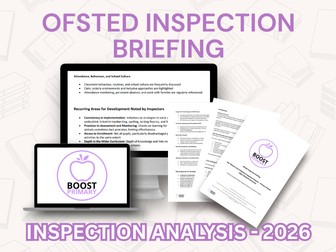
Get early intelligence from 10 primary schools inspected under the 2025 Ofsted framework.
✔ Highlights recurring inspection findings from 10 primary schools under the 2025 Ofsted framework
✔ Covers all key inspection areas: Achievement; Curriculum & Teaching; Early Years; Inclusion; Personal Development & Wellbeing; Attendance & Behaviour; Leadership & Governance
✔ Identifies cross-cutting themes inspectors repeatedly reference, including leadership, curriculum sequencing, early years provision, inclusion, personal development, and behaviour
✔ Flags recurring areas for development noted by inspectors, such as consistency in implementation, assessment precision, access to enrichment, and wider curriculum depth
✔ Gives school leaders, governors, and trustees early insight into inspection focus, helping them spot trends before they become widespread
Want more detail?
The full Primary Ofsted Intelligence Pack builds on this briefing with in depth analysis:
✔ Patterns of strengths and areas of development by inspection category and grade
✔ Cross-school analysis
✔ Clear insight into differences between Expected Standard and Strong Standard schools
✔ Recurring inspection lines of enquiry, showing where focus is most likely to fall
✔ Evidence-based intelligence to support strategic leadership, self-evaluation, and inspection readiness
The full pack gives leaders the complete picture, helping you identify trends early, understand what ‘Expected Standard’ and ‘Strong Standard’ look like under the 2025 framework, and plan improvements confidently - all grounded entirely in published inspection evidence.
If you have recently been inspected by Ofsted and it didn’t go well, my best advice for you is - get in touch with Marell Consulting Limited – we will help you bounce back. We have done it successfully for many schools.
If, however, you prefer to address it on your own, here is a strategy you can follow to quickly recover from a poor inspection outcome. We offer you this because, according to Ofsted inspection statistics, it is more difficult to recover from a poor inspection outcome than it is to get things right the first time.
Hope you find it useful.
This guidance has just been updated (September 2024).


 Quick View