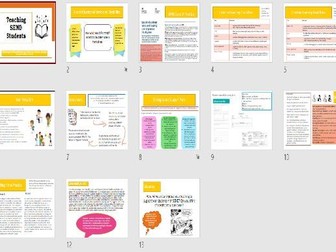
This comprehensive revision and note-taking workbook has been designed to support T-Level Education and Early Years students studying Element 4: Special Educational Needs and Disabilities SEND, fully updated to meet the Generation 2 specifications.
Here are a few activities to support children who are working well below ARE for Year 3. They are designed to be used in the classroom so that children who require support can be included in all or parts of Literacy lessons based on the book Stone Age Boy.
The file included is an updated/new IEP template which is renamed ‘Pupil Learning Passport’. It is used successfully in conjunction with face-to-face parental meetings once per term. We allocated 20-25 minutes each for the Autumn term parental meetings and 10-15 minutes each for the Spring and Summer term meetings, although longer may be needed depending on the nature of the outcomes, progress made as well as the individual circumstances surrounding the pupil .
Pupil Learning Passports (PLPs) can be used for SEND, LAC and disadvantaged pupils.
What does it do?
Outlines personal details and SEND category/categories
Links to SEND ranges
Outlines the pupil’s strengths, achievements and interests ( pupil discussions are held once a year prior to the first parental meeting).
Outlines external agencies involved
Outlines background information (status, medical and external agencies)
Incorporates pupil voice - ‘barriers to learning’ and ‘I learn best when’
States outcomes and learning targets (Autumn, Spring and Summer)
Outlines provision (intervention, resources, strategies and what I can do at home to help
Tracks attainment and progress data
Reviews outcomes
Incorporates parent views
Includes details of transition
Why is it more effective?
One document that is updated each term for one year and the follows the pupil into future year groups
One document that tracks pupil progress for their whole school career from Reception to Y6, or whenever they join your school
In-line with the SEND Code of Practice 2015, incorporating parent and pupil voice and views
Sections are written in conjunction with the pupil
It combines IEPs and Pupil Passports removing the need for two separate documents
Links directly to SEND Provision Map
Saves teachers time having ‘tick box’ options in various sections
All relevant information needed for referrals is in one place
All relevant information in one place to ensure all staff involved with the child is aware of provision, needs, resources and strategies
Acts as a transition document (class to class/teacher to teacher, across Key stages and to new schools)
Overall, it replaces a lot of singular documents and creates one meaningful and multi-purpose document for SEND pupils.
Hello Educators!
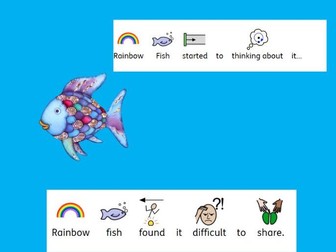
•This is a PPP of the story The Rainbow Fish (with a few changes)
•Curriculum Links: Literacy, PSHE (friendship, sharing, emotions)
•Topic Links: Sea Animals, Under the Sea, Rainbow, Colours, Friendship etc.
•Props you need: Fish, starfish, Octopus, Glitter for the scales, torch for the cave, emotion cards for the emotions.
• Visual board with Widgit symbols is included.
• Word mat file is included.
•Number Visual for the PPP activity (1-12).
•4 extension activities are included in this pack!
-Activity 1: Counting Rainbowfish
-Activity 2: Bingo mats (Vocabulary)
-Activity 3: PPP counting fish (1-5) PMLD and SLD Level
-Activity 4: Connect picture to visual SLD Level
Enjoy and do not forget to follow me:
Instagram: Special_Education_Classroom
Facebook: Special Education Classroom Group and Page
A great and informative PPT to support teachers/relevant staff with SEND. This CPD covers: SEND Code of Practice, common learning difficulties, Strategies, Assessment and Case Studies. It has tasks for teachers to complete to support their understanding and help influence their action.
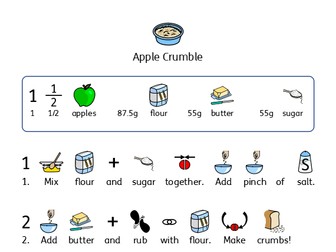
This resource has 10 cooking recipes which are fully written with ingredients and instructions. All these recipes are accessible to students at primary school and/or with special educational needs - they contain affordable ingredients with everyday equipment which can be accessed within a classroom environment with adult support. NO HOBS. They are written with symbol communication software and simplified keyword sentences to encourage students to be independent.
This is suitable for cooking lessons, fine motor exercises, food studies, healthy eating, life skills and preparation for adulthood.
This is a PowerPoint resource to support tutors in teaching the topic SEND or can be given to learners as a standalone resource.
• Can be used to support apprentices in their off the job learning or learners to research as part of their self-study.
• This resource is suitable to train your staff team on the subject.
• Fully editable for customisation to any learner group
• Professionally designed by a Curriculum Quality Manager
• Aligned with current 2025 frameworks and legislation
• Suitable for blended, remote or classroom delivery
• Ready for Ofsted or EQA evidence folders
Great to use as a wider curriculum resource for apprentices and learners.
Please check out our shop for may more resources and if you are looking for a resource on a specific topic, send us a message and we will be happy to help!
You will receive:
1 × Editable Learner PowerPoint
Thank you for your purchase
A set of cards for individual SEN with ideas and pointers for teaching staff/classroom assistants for helping pupils with special educational needs. Includes ADHD/ADD, Dyslexia, Dyspraxia, SEBD, SpLD, ASD, Dyscalculia, Hearing/Visual Impairments and strategies for classroom assistants. Designed to be printed on to coloured card and given to staff to give ideas for strategies to help pupils on the SEN register and for achieving Education Plan targets and can be used for evidence gathering. Editable and can be customised for your own school use.
This resource is in a powerpoint format. The purpose of this powerpoint is to showcase best practice of Special educational needs within a primary school.
This powerpoint is a scaffold for teachers to use -there are gaps in the powerpoint to add your own pictures , the name of the school and emblem of the school. This can be used to show external profesionals and share with school to showcase SEN in the school.
30 + slides included
The key sections are the changes in SEN and the Code of Practice, different stages of SEN, daily support for SEN pupils, interventions and provisions in place and support for statemented children.
Checklist and assessment strategies for determining the ICT requirements for students and children with Special Education Needs (SEN). Assessing SEN ICT capability.
Student Case Study Template & Guide To Help Writing a Case Study
- SEND Special Educational Needs
Fantastic Tool for ALL teachers to provide commentary in regards to student progress
Ideal for OFSTED preparation
Excellent when used for students with special educational needs
Whole School Resource
Great to analyse progress and arrange relevant intervention
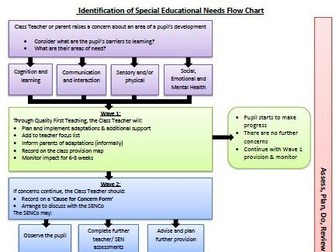
Are you a new SENCo or newly in post and need to develop high quality SEN provision? A vital step is an effective route for teachers to identify special educational needs within their class. This flow chart will allow you to strategically guide teachers to identify special needs within their classroom and across your school.
A spreadsheet with tabs for all necessary information on SEND for whole school, in one place. Tabs included are basic pupil information, provision, individual target tracker, school subject target tracker, access arrangements
Empower Special Needs Education: A Comprehensive and Engaging PowerPoint Resource
Are you an educator, parent, or administrator dedicated to supporting individuals with special needs?
This comprehensive PowerPoint presentation offers a visually appealing and interactive resource to enhance your understanding and practice.
Here’s what sets it apart:
Extensive coverage: Over 100 slides covering a wide range of special needs topics, including:
Inclusive Education
Collaboration with Parents/Homeschools
Identifying and Programming for Diverse Learners
Classroom Management & Differentiation Strategies
Specific learning needs (e.g., EBD, ID, ADHD, Autism Spectrum Disorders, Sensory Impairments, Speech/Language Disorders, Gifted/Talented)
Engaging format: Each slide is visually stimulating and interactive, promoting knowledge retention and audience engagement.
Dual functionality: Can be used as a presentation tool or printed as a reference handbook.
Benefits:
Save valuable preparation time with this ready-made resource.
Deepen your understanding of diverse special needs topics.
Enhance your instructional practices with engaging visuals and effective strategies.
Empower students with special needs by fostering an inclusive learning environment.
5 SEN RESOURCES:
A Speech, Language and Communication Needs Information Booklet.
Speech and Language - Pronunciation Screening Form & Booklet.
A Personal Target / Rewards Chart.
A Dyslexia Friendly Reading and Writing Activity Book.
A Dyslexia Screening Form.
This resource is a must for any teachers, teaching assistants or those working with special educational needs children. PECS is a form of communication for those that are autistic, mute or choose not to speak. This resource informs about how to use PECS and the importance of it.
Ideal for all schools to use as it is a system that can transition with the children into adulthood so that they can verbally communicate with the world.
Distance learners with long-term health problems face a number of difficulties in their studies. These include severe fatigue, problems of manual dexterity, academic and social isolation, together with a need for better interactive communication with support agencies (Debenham, 1996a). It was expected that the use of computer-mediated communication (CMC) could provide a possible way to tackle all four problems described above.