A 'one-side-of-A4' guide, with a description of Visual Impairment (VI) and classroom strategies, designed for secondary school subject teachers of students with this condition.
Advice and information on Visual Impairment for SENCOs and teachers. Written by an experienced SENCO, working across all phases from EYC to Sixth Form, the Visual Impairment Advice sheet includes information on:
What is Visual Impairment
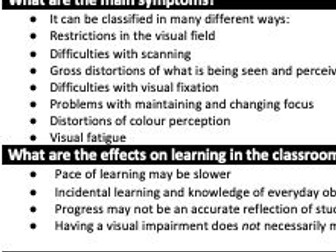
What are the main symptoms
What strategies can I use to help students with Visual Impairment
Where can I find more information
One of a series of SEND Advice leaflets from the SENDbank
This resource is editable so can be amended to suit your setting.
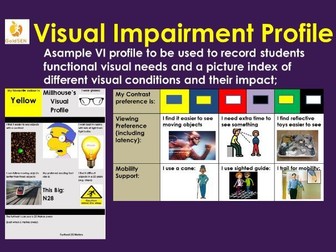
This resource is a profile creator for students who are visually impaired. Included is a framework for making your own VI profile and a picture guide that could be shared with staff working with students who are visually impaired.
This resource would be useful for Qualified Teachers of the Visually Impaired (QTVI) and/or a SENCO.
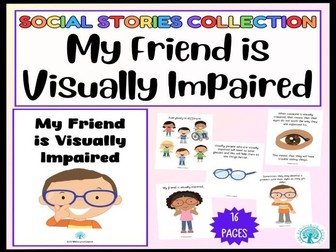
This social story is designed to help children understand what it means to be visually impaired or blind and how it may affect a friend who experiences vision loss. Using simple, compassionate language and engaging illustrations, it fosters empathy, support, and inclusivity.
A valuable resource for parents, teachers, and caregivers, this story helps children understand and support their peers who are visually impaired or blind, promoting a more inclusive and compassionate environment.
Why Is This Social Story Helpful?
Social stories use a gentle and reassuring tone to teach children about social situations in a way that’s easy to understand. They are particularly useful for:
• Children who struggle to grasp social concepts.
• Learning social skills, social cues, and appropriate responses.
• Providing guidance on expectations, emotions, and problem-solving.
• Supporting autistic children who may find social interactions challenging and benefit from clear, structured explanations.
How to Use This Story Effectively
• Create a focused environment - Read the story in a quiet space with minimal distractions.
• Read it regularly - Start by reading it twice, then revisit it often to reinforce learning.
• Incorporate it into daily routines - Use the story as part of a structured schedule.
• Use it when needed - If the child struggles with apologising, read the story at relevant moments (without making it feel like a punishment).
• Encourage and praise - Keep the experience positive, reinforcing good behavior with encouragement.
Durability & Reusability
For long-term use, consider laminating and binding the pages or placing them in a display book. This allows for repeated reading and reinforcement, making the lesson more effective over time.
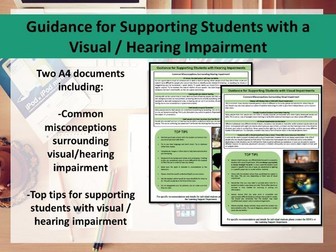
Two A4 documents including:
-Common misconceptions surrounding visual/hearing impairment
-Top tips for supporting students with visual / hearing impairment
Contains very useful information for any staff member (teacher/ support staff etc) working with a student with visual / hearing impairment.
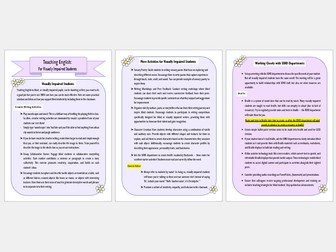
A comprehensive list of practical solutions for English teachers with blind and visually impaired students.
This resource comprises of 3 pages.
Activties for creative writing.
Guidance on best practice.
Suggestions for school and SEND.
This is a brief introduction to some of the issues that affect people with a visual impairment. I used it to deliver a disability awareness workshop for staff at a University, but it may be equally useful for raising staff awareness of the challenges faced by a person with a visual impairment.
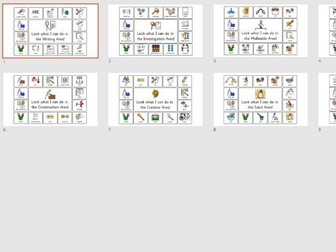
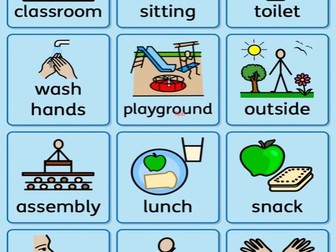
Support smooth transitions, reduce anxiety, and boost independence with this Now and Next Visual W i d git Support Pack – ideal for mainstream classrooms, SEND settings, and home learning.
This pack includes clear, easy-to-understand visual symbols designed to help children know what is happening now and what is coming next. Perfect for pupils with autism, communication needs, or those who benefit from structured routines.
What is Included:
Ready-to-print Now and Next boards
A selection of Widget symbol cards covering common classroom activities, routines, and subjects
Blank symbol squares so you can adapt the pack for individual pupils
Simple guidance on printing, laminating, and using the boards effectively
Benefits:
Supports children who are non-verbal or have limited language
Reduces uncertainty and promotes calm transitions
Encourages independence and visual processing
Can be used in whole-class, small-group, or 1:1 support
How to Use:
Print and laminate the boards and symbols for durability.
Use Velcro dots or strips to attach symbols to the boards.
Place the current activity under Now and the upcoming activity under Next.
Swap symbols throughout the day to keep pupils informed.
Format: P D F download ready to print and use immediately.
W i d git Symbols W i d git Software Ltd 2 0 0 2 - 2 0 2 5
w w w.w i d git.com used under license
I have created these templates for a higher-tier student who requires 36 bold font size (the maximum for GCSE).
The A4 templates work for the majority of questions including straight line graphs, equations of circles and vectors and so I’ve hardly needed the A3 versions. The grids are the same size as provided in modified Edexcel GCSE papers for students requiring 36 bold.
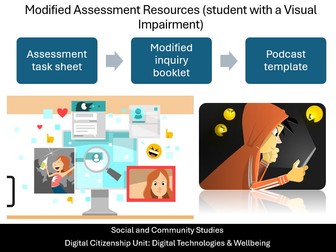
A modified scaffolding for a student with a visual impairment. Instead of creating a brochure, this student was asked to write a script for a podcast.
An example intro and conclusion for a podcast.
This student was able to use speech to text software to gather their thoughts. They had access to a Teacher Aide to help engage with the scaffolding.
Resources designed for the new senior Social and Community Studies syllabus (implemented in QLD in 2024). Topic: Digital Citizenship. The end of term assessment for this unit was a product (Information Booklet / Pamphlet / Brochure).
The content would also be useful more broadly for students in other states and countries with an interest in online safety. Additional resources for this unit are also available in my store – Aussie_Resources.
What size font should you use for visually impaired students?
And does the choice of font itself matter?
Even more importantly, how far back in the classroom can students actually read what you write on the whiteboard?
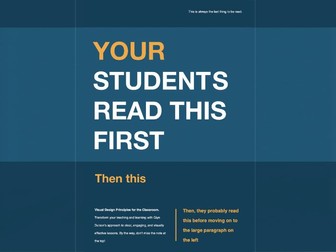
This 30-page booklet explores the challenges visually impaired students face when reading classroom materials, along with the simple, practical adjustments teachers can make in response. These include choosing the correct fonts, colour combinations, and page layouts. Each recommendation is underpinned by the science and theory behind visual perception and readability, drawing on research from leading experts in the design of educational materials for visually impaired learners.
Written by Glyn Dulson, a teacher of graphic design with over 22 years’ experience and a former professional graphic designer.
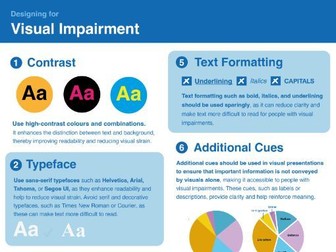
This visual guide is designed to be printed and shared across your workplace or organisation. It highlights key principles for creating clearer, more effective visual communication for individuals with Visual Impairment.
Whether you’re supporting staff or students, this handy reference sheet brings together practical, easy-to-follow tips to help ensure your communication materials are accessible, engaging, and easy to understand.
This PowerPoint assembly is suitable for pupils from Years 6-9. It shows how the system of Braille originated by using touch to 'read'. It includes a link to the story of Louis Braille himself. When I gave this assembly, I also had a copy of some text which a friend had typed on a Braille typewriter, which pupils had to decipher.
Many times people have struggled to consider how they can adopt Assessment for Learning techniques in a class with visually impaired learners. This overview provides the context and suggestions for methods that you may wish to use in your own classrooms.
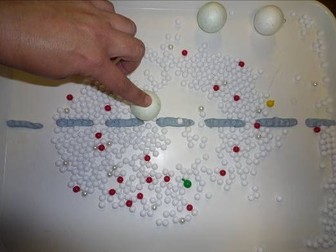
This is a help sheet for teachers and learning support staff of blind and visually impaired students. There are several ideas for biological models and several ideas for modifying practical equipment to allow tactile access.
A 4 page PEC document of basic/essential visual communication symbols to be used on lanyards for working with children in EYFS, SEN, EFL, Behavioural or non- verbal students. Great to be hole punched on a lanyard or cut out for carry around use.


 Quick View
 Quick View
 Quick View
 Quick View
 Quick View
 Quick View
 Quick View
 Quick View
 Quick View
 Quick View
 Quick View
 Quick View