Introduction to comedy scheme of work.Quick View
cdungar1

Introduction to comedy scheme of work.

(0)
An excellent KS3 resource for drama on introduction to comedy with a complete and ready to go six lesson SOW which includes all additional worksheets. If you purchase this scheme of work, you get access to six lesson powerpoints with around 80 to 100 slides over the complete SOW that help students to access and succeed at the six core outcomes which are designed for this module. In this six lesson SOW students will learn about: Lesson one: In this lesson students learn to understand what comedy is as a genre and the style of comedy known as deadpan. Lesson two: In this lesson students learn to understand another style of comedy known as Commedia Dell’Arte from the 16th century. Lesson three: In this lesson students learn to develop our knowledge and ability to convey the physicality of the main characters in Commedia Dell’Arte who are the merchants and the lovers when creating an improvisation inspired by the comedy art form. Lesson four: In this lesson students learn to consider how to create successful physical comedy through the use of slapstick. Lesson five: In this lesson students learn to consider how to create successful comedy through the use of improvisational or stand-up comedy. Lesson six: In this lesson students complete a summative assessment on one style of comedy for their end of unit assessment for this module.
Comedy - A Scheme of WorkQuick View
resources4drama

Comedy - A Scheme of Work

(0)
“Dying is easy. Comedy is difficult”. But like everything else it can be done more successfully when analysed and practised and this scheme will help incalculably. So here, across 10/11 sixty minute lessons, running to 30+ pages and 8,000+ words, you will find a scheme of work looking at: Black (Dark) Comedy, Stand-up, Improvisation, Slapstick, Sketch Shows and Sit Coms. All of this is tied up with an end of unit assessment. All the support links and sheets are included and lessons are planned in timed sections. This is suitable for Key Stage 3 (or for Key Stage 4 who have little drama experience, or for ex-curricular or Drama Club projects). Download the sample from the link in second image for a complete lesson.
Melodrama Scheme of WorkQuick View
nikita-b

Melodrama Scheme of Work

(0)
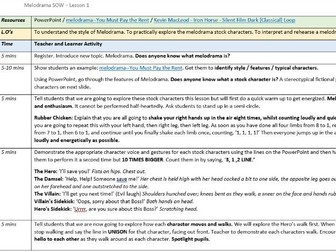
This resource was designed for KS3. It includes 6 x 1 hour detailed lesson plans and PowerPoints, along with several scripts, all editable on Word. This Melodrama scheme of work covers the main Melodrama Features such as stereotypes, comedy, asides and audience participation. Lesson 1: Stock Characters Lesson 2: Improvisation and Script Work Lesson 3: Script Work Lesson 4: Devising based on a Given Scenario Lesson 5: Devising based on a Given Scenario Lesson 6: Devising based on a Given Scenario
Shakespeare - Writing Your Own ComedyQuick View
EnglishGCSEcouk

Shakespeare - Writing Your Own Comedy

(0)
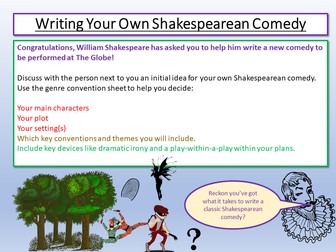
As students analyze Shakespeare comedy, they work in groups to create their own Shakespearean comedy - using genre conventions including themes, plot, setting, titles, types of character and more .Students are provided with detailed examples including a whole example play to help them, and detailed planning sheets so they can craft their comedies together in groups. Students then prepare and perform a scene from their own play, judging its success on class success criteria. A really engaging lesson for students of all ages. Fully differentiated throughout. Check out our English Shop for loads more free and inexpensive KS3, KS4, KS5, Literacy and whole school resources. AQA English Language Paper 1 and Paper 2 Knowledge Organisers AQA English Language Paper 1 Section A package AQA English Language Paper 1 Sections A and B package AQA English Language Paper 1 package AQA English Language Paper 2 Question 5 package AQA English Language Paper 1 Question 5 package AQA English Language Paper 2 Section A package AQA English Language and English Literature revision package An Inspector Calls whole scheme package An Inspector Calls revision package Macbeth whole scheme package Macbeth revision package A Christmas Carol whole scheme package A Christmas Carol revision package Jekyll and Hyde whole scheme package Jekyll and Hyde revision package Romeo and Juliet whole scheme package Power and Conflict poetry comparing poems package Power and Conflict poetry whole scheme package Love and Relationships poetry whole scheme package Unseen Poetry whole scheme package Or check out some Citizenship GCSE, RE, PSHE + RSE resources at EC Resources
Comedy Scheme of Work KS2/KS3Quick View
emdeeley

Comedy Scheme of Work KS2/KS3

(0)
A fully resourced 6 week scheme of work covering different aspects of comedy. All lessons come with a PowerPoint presentation and worksheet resources. Topics covered include: slapstick comedy, satire, sarcasm, parody, juxtaposition, hyperbole, review writing, modern humour, how comedy has developed over the years. Could easily be adapted for KS2 or KS3 students.
Comedy Goes Wrong Scheme of Work (Inspired by Mischief Theatre)Quick View
mrgdramastore

Comedy Goes Wrong Scheme of Work (Inspired by Mischief Theatre)

(1)
This 6 lesson scheme of work uses Mischief Theatre as an inspiration for creating comedy. It explores how to create drama that goes wrong, using a range of Dramatic skills and techniques. Designed for KS3, particularly year 7 & year 8, this scheme of work includes: 6 lessons, 6 PowerPoints, 6 KUBAT learning objectives, all resources and an easy assessment resource. The lesson plans and assessment are in an editable format so it can be tailored to your students and your department. *This is for designed educational purposes only and you will find links to external websites. Although every effort has been made to ensure these links are accurate, up to date and relevant, I cannot take responsibility for pages maintained by external providers. *
Year 8 Drama – Comedy Scheme of Work (6 Lessons)Quick View
lily_carter

Year 8 Drama – Comedy Scheme of Work (6 Lessons)

(0)
Year 8 Drama – Comedy Scheme of Work (6 Lessons) A fully resourced Year 8 Comedy unit designed to help students explore a range of comedic performance styles through practical drama activities. This engaging scheme of work introduces students to farce, slapstick, wordplay and melodrama, helping them understand how actors create humour through voice, movement and timing. Year 8 Comedy Across 6 structured lessons, students experiment with physical comedy, verbal humour and exaggerated characterisation before planning and performing their own comic scene. What’s Included Ready-to-teach PowerPoints for every lesson Clear lesson objectives, activities and success criteria Practical drama games and ensemble activities Devising tasks exploring different comedy styles Final assessment task with peer and self-reflection Learning Outcomes Students will: Explore different styles of comedy including farce, slapstick, melodrama and wordplay Develop physical comedy skills using mime, exaggerated reactions and comic timing Understand how vocal delivery, pause and pace create humour Use stock characters and stereotypes in melodramatic scenes Devise and perform a structured comedy performance using multiple comedic styles Final Outcome Students work in groups to create and perform a 2–3 minute comedy scene, combining at least two different comedy styles (such as slapstick and wordplay or melodrama and farce). Perfect For KS3 Drama / Year 8 Performing Arts Teaching comedy styles and performance techniques Developing confidence, creativity and ensemble work This lively and practical unit helps students understand how comedy works on stage, while giving them opportunities to experiment with physical theatre, exaggerated characters and comic storytelling.
Year 9 Comedy & Tragedy SchemesQuick View
chloetdevos

Year 9 Comedy & Tragedy Schemes

(0)
Schemes of work for comedy & tragedy as well as lessons Perfect to be taken as a skeleton and adapted to suit any KS3 group Includes SOW for Comedy SOW for Tragedy Includes study of slapstick, melodrama, parody, tragicomedy, antigone, Greek chorus, Shakespeare. Created for use with Yr 9
Melodrama - Full scheme of work Year 9Quick View
dramallamaperformingarts

Melodrama - Full scheme of work Year 9

(0)
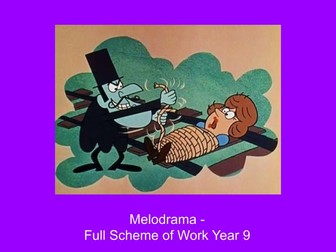
This scheme of work and 6 lesson plans explores the genre of Melodrama, starting with the silent movie. By the end of the topic, students have performed a scene in 3’s in the style of melodrama, concentrating on physical elements and vocalisation. The scheme encourages students to explore Physical comedy, Stock characters, Tableau and Narration, whilst concentrating on creating and presenting a character, as well as exploring the use of script, scenario and contextual information. Each lesson in this 6-lesson plan also includes a full break down of practical exercises and activities as well as 2 scripts and links to online video resources, to aid students learning. Enjoy!
Mischief theatre scheme of work.Quick View
cdungar1

Mischief theatre scheme of work.

(0)
An excellent KS3 resource for drama on Mischief theatre with a complete and ready to go six lesson SOW which includes all additional worksheets. If you purchase this scheme of work you get access to six lesson powerpoints with around 80 to 100 slides over the complete SOW that help students to access and succeed at the six core outcomes which are designed for this module. In this six lesson SOW students will learn about: Lesson one: In this lesson students learn to understand who Mischief theatre are and how they create and devise their style of theatre known as ridiculous escapism through examining their play ‘The play that goes wrong’. Lesson two: In this lesson students learn to continue to examine ‘The play that goes wrong’ by Mischief theatre. Lesson three: In this lesson students learn to understand how Mischief theatre created and devised their style of theatre known as ridiculous escapism through examining their play ‘The Christmas Carol goes wrong’. Lesson four: In this lesson students learn to continue to examine ‘The Christmas Carol goes wrong’ by Mischief theatre. Lesson five: In this lesson students learn to understanding how Mischief theatre created and devised their style of theatre known as ridiculous escapism through examining their play ‘The comedy about spies’. Lesson six: In this lesson students learn to be using either ‘The play that goes wrong’, ‘The Christmas Carol goes wrong’ or ‘The comedy about spies’ by Mischief theatre for an assessment.
Stage combat scheme of work.Quick View
cdungar1

Stage combat scheme of work.

(0)
An excellent KS3 resource for drama on stage combat with a complete and ready to go six lesson SOW which includes all additional worksheets. In this six lesson SOW students will learn about: Lesson one: In this lesson students learn about the origins of stage combat, the five rules of this art form and how to create an effective pull of the hair and slap to the face while placing these moves into an improvisation. Lesson two: In this lesson students learn how to create an effective punch to the face and how to stage fall to the floor while placing these moves into an improvisation. Lesson three: In this lesson students learn how to create an effective kick to the groan and how to drop kick to the torso on the stage while placing these moves into an improvisation. Lesson four: In this lesson students learn to experiment with different stage combat moves in different types of drama such as comedy and tragedy to judge whether they are effective or not for an audience. Lesson five: In this lesson students learn to experiment with different stage combat moves in different types of drama such as farce and melodrama to judge whether they are effective or not for an audience. Lesson six: In this lesson students complete a summative assessment on one of the genres of drama and their ability to apply stage combat movements to that type of drama.
Improvisation skills scheme of work.Quick View
cdungar1

Improvisation skills scheme of work.

(0)
An excellent KS3 resource for drama on improvisation skills with a complete and ready to go six lesson SOW which includes all additional worksheets. If you purchase this scheme of work you get access to six lesson powerpoints with around 80 to 100 slides over the complete SOW that help students to access and succeed at the six core outcomes which are designed for this module. In this six lesson SOW students will learn about: Lesson one: In this lesson students learn to use improvisation to create comedy on the stage while using our physical and vocal skills in an over exaggerated manner to communicate a cooking show and an operating theatre. Lesson two: In this lesson students learn to use improvisation to create tension on the stage while using mirroring, choral work, emotion lines and mime to communicate a mission impossible scenario. Lesson three: In this lesson students learn to use improvisation to create a dramatic atmosphere on the stage while using our body language, facial expressions and gestures to communicate a mission impossible scenario. Lesson four: In this lesson students learn to create a whole class piece of drama which is based in a bank to encourage a precise representation of a character through improvisation. Lesson five: In this lesson students learn to create a whole class piece of drama which is based in a five-star hotel to encourage a precise representation of a character through improvisation. Lesson six: In this lesson students complete a summative assessment on a whole class piece of drama which is based in a shopping centre to encourage a precise representation of a character through improvisation.
Commedia Dell'Arte scheme of work.Quick View
cdungar1

Commedia Dell'Arte scheme of work.

(0)
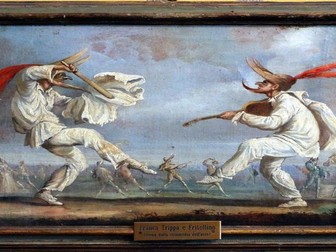
An excellent KS3 resource for drama on Commedia Dell’Arte with a complete and ready to go six lesson SOW which includes all additional worksheets. If you purchase this scheme of work you get access to six lesson powerpoints with around 80 to 100 slides over the complete SOW that help students to access and succeed at the six core outcomes which are designed for this module. In this six lesson SOW students will learn about: Lesson one: In this lesson students learn to understand the artistic movement of Commedia Dell’Arte through understanding the eight main characters associated with this style of performance. Lesson two: In this lesson students learn to convey the physicality of the main characters in Commedia Dell’Arte who are the old men and the servants and then create an improvisation inspired by the comedy art form. Lesson three: In this lesson students learn to convey the physicality of the main characters in Commedia Dell’Arte who are the merchants and the lovers and then create an improvisation inspired by the comedy art form. Lesson four: In this lesson students learn to understand and create a performance based around the main character of the Lazzi from Commedia Dell’Arte. Lesson five: In this lesson students learn to rehearse an improvisation and a Lazzi based on Commedia Dell’Arte ready for a performance in the next lesson. Lesson six: In this lesson students complete a summative assessment via an improvisation based on Commedia Dell’Arte together with a Lazzi for this assessment piece.
Drama Scheme of Work Bundle!Quick View
mrgdramastore

Drama Scheme of Work Bundle!

4 Resources
SAVE £3! Get four KS3 Drama Scheme’s of Work for £25! Comedy Goes Wrong Physical Theatre Melodrama Social Media All schemes of work include: 6x lessons 6x PowerPoints Resources Assessment
The Big Scheme of Work BundleQuick View
mrgdramastore

The Big Scheme of Work Bundle

5 Resources
The Big Scheme of Work Bundle includes: Melodrama SoW Comedy Goes Wrong SoW Physical Theatre SoW Social Media SoW Verbatim Devising SoW Save £5 when bought as a bundle - 13% saving!!!
A Midsummer Night’s Dream – Complete KS2/KS3 English SchemeQuick View
TheCleverClassroom

A Midsummer Night’s Dream – Complete KS2/KS3 English Scheme

(0)
Introduce your students to the enchanting world of Shakespeare with this fully resourced scheme of work based on A Midsummer Night’s Dream. Designed for upper KS2 or lower KS3, this unit makes Shakespeare accessible, engaging, and enjoyable through a wide range of creative and analytical activities. This scheme includes: A complete PowerPoint presentation guiding each lesson Grammar and vocabulary tasks woven throughout the unit Comprehension and recall activities to support understanding of plot, character, and language Creative writing opportunities inspired by the play’s magical themes and characters Group work and drama-based tasks to bring scenes to life All worksheets, extracts, and resources included as downloadable files Whether you’re exploring Shakespearean language, building vocabulary, or encouraging imaginative responses, this scheme offers a flexible and engaging approach to one of Shakespeare’s most beloved comedies.
Heroes and Villains : Scheme of WorkQuick View
laurajholder

Heroes and Villains : Scheme of Work

(34)
This unit is designed to create a (roughly) chronological journey through heroes and villains, from the mythical Medusa through to the modern day Olympic heroes, the unit asks pupils to justify what makes a hero or villain, and why. Each week has a text focus and exposes pupils to a wide range of English skills with a focus on both reading and writing, and many opportunities for speaking and listening through group work. There is a focus on analysing language through close interpretations of quotes. There are also multiple opportunities for assessment.
Dystopian Futures Scheme of WorkQuick View
Best_Newcomer_2009

Dystopian Futures Scheme of Work

(1)
A variety of whole lessons reading lesser-known dystopian literature and tying these in with students' creative writing of a dystopian narrative. There is also a practice reading comprehension and a final reading comprehension assessment. This scheme of work is designed for middle to top set students at GCSE level. I found all the students really engaged with the topic and already knew loads of dystopian works of literature, films and computer games, so had to stretch them to read lesser known works. I've tried as far as possible to make this relevant to their interests and to be representative of a range of backgrounds instead of just the classic "dead, white males". My students really enjoyed this unit of work and I hope yours do too! Contains: Structuring narratives in interesting ways (very useful for getting A*s) Analysing and writing speech in ways that show originality and flair (as well as accuracy of punctuation) Creating original dystopian worlds Creating original dystopian characters Close analysis of individual words and basic PEE reading answers Improving and extending vocabulary Recognising satire and comedy in film and literature (Idiocracy and Harrison Vonnegut) because, frankly, all this dystopian stuff could get a bit depressing otherwise! A detailed and thorough comprehension of a (student-friendly version) of Stephen King's The End of the Whole Mess with optional scaffolding which should build towards GCSE style detailed essays covering plot summaries, close analysis, evaluation of word choice, structure, messages, themes, conventions, language features and more.