Create a practical and inclusive times tables display for your classroom!
This printable classroom display helps pupils build familiarity and fluency with their times tables while providing a useful visual reference throughout the school day.
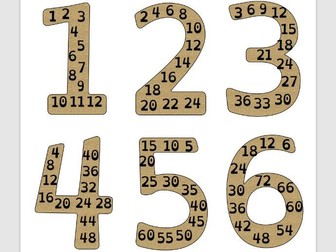
Each large number contains the multiples for its corresponding times table - for example, the number 3 displays 3, 6, 9, 12 and onwards up to 36.
What’s included:
Numbers 1-12
Times tables up to 12x12
OpenDyslexia font
Neutral hessian-style design
one large number per A4 page
Perfect for KS2 classrooms, maths working walls and learning displays, particularly for pupils developing their multiplication fluency in preparation for the Year 4 Multiplication Check.
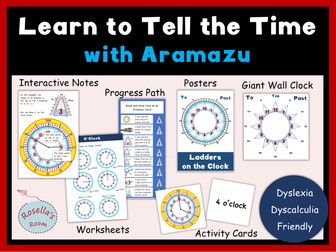
The Aramazu method of learning to tell the time on an analogue clock was originally developed for primary school children. This collection of resources adapts the Aramazu approach to appeal to secondary school students. I have used this approach successfully to teach 16-18 year old students with dyslexia and dyscalculia how to tell the time.
The resources included in this package are:
A Student Progress Tracker
I glue this in my student’s books. The tracker shows 8 levels that the students have to move up in order to reach the target. Students start at the bottom (level 1) and once each level is completed, we highlight it. The goal is to reach level 8. The progress path is shown both in words and pictures so all my students can access the information.
An Illustrated Set of Notes
These can be used as a interactive teaching resource or as handouts for students.
Flash Cards / Match Pairs Cards
The Aramazu clocks can be used as flash cards or together with the word cards as a matching activity.
A Giant Aramazu Wall Clock
Perfect for kinaesthetic and visual learners, a printable giant Aramazu wall clock for students to practise showing the time on.
I’ve also included a few worksheets and posters to support learning.
The end goal is for students to be able to tell the time to 5 minute intervals on an Aramazu clock. Once students have mastered this, you can then use the ‘Goodbye Aramazu’ resource to support students with the transition to reading a ‘typical’ analogue clock:
https://www.tes.com/teaching-resource/learn-to-tell-the-time-goodbye-aramazu-12084255
This booklet gives information about dyslexia and how teachers and teaching assistants can support student's within the classroom. The booklet includes:
- A quiz to show understanding
- Explains what dyslexia is and why its important to identify
- How it effects reading and writing, amongst other information
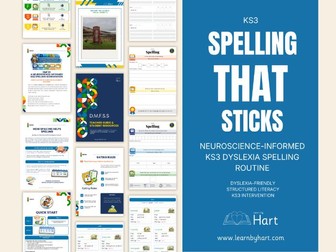
Support KS3 students with dyslexia to build secure, lasting spelling memory using this neuroscience-informed intervention pack, grounded in orthographic mapping, morphology, and spaced retrieval practice.
D.M.F.S.S is a compact, repeatable five-step spelling routine — Decode–Map, Morph–Build, Fluency–Time, Syntax/Semantics, Space–Revisit — designed to reduce fragile spellings by linking sounds to letters, breaking words into meaningful parts, and revisiting them at structured intervals (D+1, D+3, D+7, D+14). This pack gives teachers and SENCOs everything needed to run a full 10-week programme with KS3 dyslexic learners.
What’s Inside
A 21 page PDF (including cover/back page) containing the following:
DMFSS Routine Overview – Introduction to all five steps with classroom rationale, grounded in orthographic mapping research.
Quick Start & Materials Guide – At-a-glance setup guide covering student and teacher materials needed to begin.
How Spacing Helps Spelling – Accessible teacher-facing explanation of spaced retrieval practice and why the 1–3–7–14 interval pattern is particularly effective for dyslexic learners.
Gating Rules – A mastery guide ensuring accuracy precedes fluency and unstable words return to Decode–Map before progressing.
Day One Routine Visual – Colour-coded session overview with time allocations for each step, suitable for display at the front of the classroom.
Day 1 Student Spelling Sheets (x2) – A3-ready printable worksheets guiding students through all five routine steps, from phoneme segmentation to spaced write-from-memory.
Student Book Slips – Tear-off weekly tracking slips with spelling list and D+1/D+3/D+7/D+14 check columns for student self-monitoring.
10-Week KS3 Spelling Word Lists with Rationale – 10 morphologically grouped lists built around high-frequency Latin and Greek roots (struct, spect, port, dict, photo, graph, tele, -ible/-able, chron, inter), with an explanation of why this approach reduces cognitive overload.
Morphology Word Cards – Lists 1–10 (60 words) – Illustrated cards for all 60 programme words, each showing the full prefix/base/suffix breakdown and word type.
How to Use
Use as a structured 10-week KS3 intervention in small group or SENCO-led sessions, or draw on individual components to supplement existing spelling provision. Print and laminate the Day 1 sheets for repeated use with whiteboard markers. The Book Slips and spaced retrieval schedule make it straightforward to embed check-ins into tutor time or lesson starters with minimal additional planning.
Grade Levels: KS3
File Format: PDF (printable and projectable)
Note: This is a digital download only.
Did you know one in five students exhibit traits of dyslexia? Enhance your staff’s understanding of dyslexia with this visually engaging, research-based presentation. The Understanding Dyslexia PowerPoint (31 Slides) is designed for professional development sessions, providing educators with the knowledge and tools to identify and support students with dyslexia effectively.
What’s Included:
Visual Insights: Eye-opening visuals that illustrate how dyslexia affects reading and comprehension, helping you see the world through a dyslexic learner’s eyes.
Real-World Scenarios: A look into the daily struggles and triumphs of a student with dyslexia, fostering empathy and understanding.
Research-Driven Content: Explore foundational concepts like the Simple View of Reading, Scarborough’s Reading Rope, and key aspects of dyslexia diagnosis and intervention.
Actionable Strategies: Implement practical, evidence-based techniques such as phonics interventions, multi-sensory activities, and scaffolded comprehension support.
Interactive Applications: Engage participants with reflective activities, including crafting lesson plans tailored to struggling readers.
Empower your teaching and create a supportive learning environment for all students with this impactful resource.
Dyslexia toolkit aims to help subject teachers, form tutors and teaching assistants to support dyslexic students in the mainstream classroom at key stage 3 and key stage 4. Whatever your role in supporting students with dyslexia, this toolkit will give you understanding, tangible ideas and practical strategies to enable young people to realise their full potential.
What’s included?
This 56-page toolkit includes:
information about neurodiversity, the strengths of neurodivergent people and some of the challenges they face
information about dyslexia and how to identify it in the classroom
a CPD PowerPoint for staff training, parents’ evenings and senior leadership meetings
advice on avoiding sensory overload
games to develop learners’ short-term and working memory
templates for sentence starters, task maps and writing planners to reduce the load on learners’ working memory
guidance on chunking tasks into manageable steps to help students to process information
dyslexia strategies for reading
writing strategies for students with dyslexia
information about the link between a weak working memory and spelling difficulties, plus dyslexia spelling strategies
strategies for supporting students with dyslexia in the maths classroom
top tips on harnessing dyslexic strengths such as empathy and problem solving
How does it support dyslexic students?
Dyslexia toolkit offers dyslexia-friendly strategies that can be used with the whole class so that neurodivergent learners are not put on the spot. There are also approaches that can be carried out in small groups, and suggestions for how dyslexic students can support their classmates, fostering a supportive learning environment and helping young people to feel empowered. Information and activities are provided to raise awareness of what it feels like to have dyslexia, and ways are suggested of playing to dyslexic learners’ strengths.
The toolkit includes tick lists for learners to articulate their own areas of challenge and learning preferences, and it provides printable resources to help students to plan written tasks. There is also a step-by-step guide for students to reading for comprehension and an overview of pros and cons of assistive technology such as electronic readers.
About the writer
Dyslexia toolkit was written by Dr Helen Ross, a leading voice on dyslexia within UK education. She is an experienced public speaker, international consultant and researcher, and contributor to a wide range of publications; Helen is also dyslexic.
She supports families, teachers and organisations to better understand the implications of dyslexia, neurodiversity and special educational needs and disabilities (SEND).
In this toolkit, Helen draws on her experiences as a classroom teacher, SENDCo and dyslexia expert to help you to understand what dyslexia is, which aspects of learning can be affected by dyslexia and what you can do to support dyslexic learners.
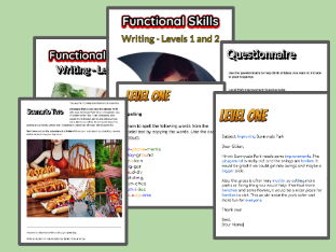
This dyslexia friendly, functional skills writing workbook includes a structured approach to improve writing by using model answers, questionnaires, plans and colour-coded spelling of key words. The questions are focused on improving a park and reviewing a visit to an amusement park.
Each section begins with typical writing questions on the Functional Skills (AQA) Paper.
To engage students, questionnaires and discussion questions are provided to help students develop their ideas. This will also support the speaking and listening element of the exam.
There are colour coded words to aid the spelling and reading of key words related to the questions. This is aimed to support students with additional needs and has proved an effective way to support dyslexics due to the visual elements involved.
There are two model answers - one aimed at Level One and another at Level Two. This is provided to differentiate for those who show progress in their writing.
A scheme accompanies this unit and provides additional ideas to support teaching.
This is an invaluable resource to deliver the writing element of the Functional Skills exam.
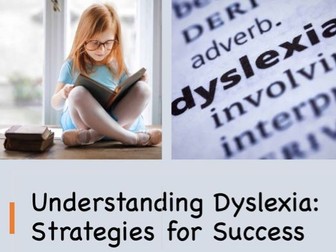
Understanding Dyslexia: Strategies for Support and Success
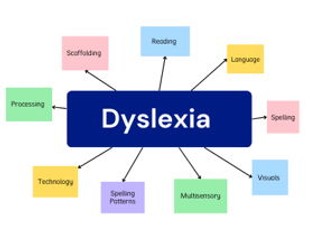
This presentation will explore the fundamentals of dyslexia, including its definition, characteristics, and signs. We will discuss how dyslexia affects learning, particularly in spelling and working memory, and provide practical strategies for creating a dyslexia-friendly classroom. Attendees will gain insights into multisensory teaching techniques, differentiation for writing, and useful desktop aids that support dyslexic learners. Whether you’re an educator, parent, or advocate, this session will offer valuable tools and resources to foster an inclusive and supportive learning environment.
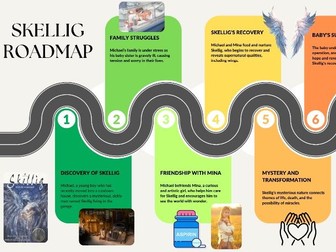
This Year 7 English curriculum resource will help pupils gain an overview of the plot of Skellig. It is partiuclarly useful for pupils with Dyslexia who need this visual and clear resource. When printed (go A3!) it can be annotated on using the second sheet with lines on. Easy for bullet points to be used so pupils can remember what has happened each lesson. The images help memory retention and the text is easy to read. It is great to refer to throughout the teaching of the book.
Assembly used to raise awareness of dyslexia to primary and secondary school children. This assembly has been created by a SENDCO of multiple schools and an Inclusion Coordinator of a Multi-Academy Trust.
I have used this PowerPoint multiple times in assembelies to schools and children have responded really well to it.
This asssembly covers:
What do we already know about dyslexia?
What is dyslexia?
How many people does dyslexia affect?
What causes dyslexia?
How does dyslexia affect people? (With example images, sentences and videos)
Case studies of dyslexia affecting children
A video link to a Newsround special on ‘My Dyslexic Mind’
Successful and famous people with dyslexia and examples of how it helped them
A video link to ‘See dyslexia differently’
An opportunity for questions
This set of resources developed by ‘British Dyslexia Association’, can offer support to teachers working with children with dyslexia. This resource provides information on how dyslexia affects musicians and how those with the familiar traits need to create strategies to help them through their problems.
This set of resources developed by ‘British Dyslexia Association’, can offer support to teachers working with children with dyslexia. This resource provides a list of books that deal with the subject of dyslexia.
Dyslexia checklist created for learner walks to check in class practice.
Useful for those doing observations, or for teachers who want to check their dyslexia practice for each lesson.
For teachers wanting to check if their classroom is dyslexia friendly please see my checklist available too.
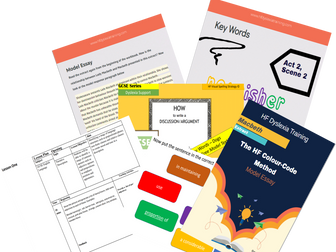
The bundle includes model answers for GCSE Language writing and a dyslexia-friendly, Macbeth response.
The workbooks include spelling activities using the colour code method, sentence and vocabulary work based on model texts.
The pdf booklets are ideal to support struggling readers and writers and also provide ideas and strategies for teachers to plan their own lessons.
The bundle will save you £10!
Dyslexia friendly classroom handbook
Contents:
What is Dyslexia?
What are the characteristics?
Strategies for support:
Seating
Organisation
Classroom routines/Writing on board
Writing
Worksheets
Reading
Presenting/giving instructions
Study strategies
Spelling/handwriting
Confidence building
Additional strategies
Examples
Multi-sensory methods
Dyslexia friendly classroom checklist
Useful resources
Please note, the dyslexia friendly classroom is available for sale separately so please do not purchase it as it is included in this guide.
Dyslexia friendly ppt
Includes key information to go with the dyslexia friendly classroom guide - also available to purchase as a bundle with this ppt.
Dyslexia checklist
Checklist for teachers to see if their classroom is dyslexia friendly.


 Quick View