


This powerpoint fully covers the following criteria –
30.1 Arenes
Learning outcomes
Candidates should be able to:
-
describe the chemistry of arenes as exemplified by the following reactions of benzene and methylbenzene:
(a) substitution reactions with Cl₂ and with Br₂ in the presence of a catalyst, AlCl₃ or AlBr₃, to form halogenoarenes (aryl halides)
(b) nitration with a mixture of concentrated HNO₃ and concentrated H₂SO₄ at a temperature between 25°C and 60°C
© Friedel–Crafts alkylation by CH₃Cl and AlCl₃ and heat
(d) Friedel–Crafts acylation by CH₃COCl and AlCl₃ and heat
(e) complete oxidation of the side-chain using hot alkaline KMnO₄ and then dilute acid to give a benzoic acid
(f) hydrogenation of the benzene ring using H₂ and Pt/Ni catalyst and heat to form a cyclohexane ring -
describe the mechanism of electrophilic substitution in arenes:
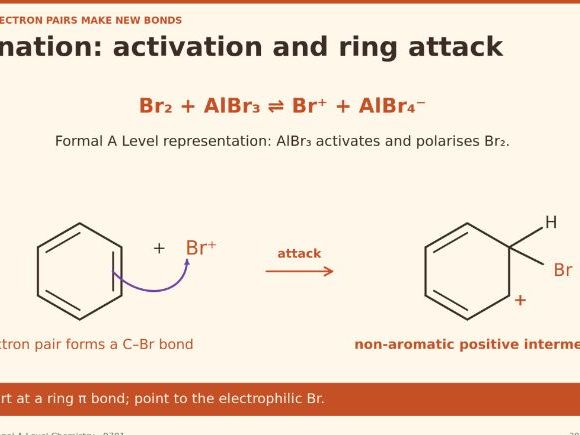
(a) as exemplified by the formation of nitrobenzene and bromobenzene
(b) with regards to the effect of delocalisation (aromatic stabilisation) of electrons in arenes to explain the predomination of substitution over addition -
predict whether halogenation will occur in the side-chain or in the aromatic ring in arenes depending on reaction conditions
-
describe that in the electrophilic substitution of arenes, different substituents direct to different ring positions (limited to the directing effects of –NH₂, –OH, –R, –NO₂, –COOH and –COR)
Thank you sincerely for your support
Something went wrong, please try again later.
This resource hasn't been reviewed yet
To ensure quality for our reviews, only customers who have purchased this resource can review it
Report this resourceto let us know if it violates our terms and conditions.
Our customer service team will review your report and will be in touch.
£5.00