


AI Chatbots and Prompting – Two Engaging Lessons for KS2 / KS3
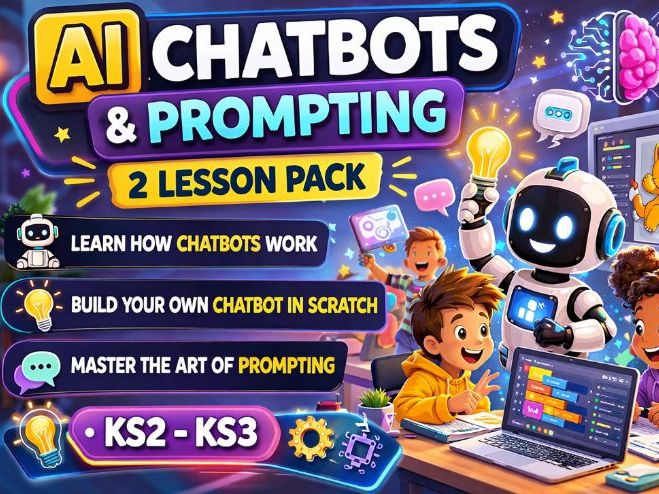
This resource includes two engaging and easy-to-deliver lessons introducing students to Artificial Intelligence, chatbots, and prompting. The lessons are designed primarily for Key Stage 2 (ages 9–12) but can also be used effectively with Key Stage 3 students, particularly Year 7.
They work well as stand-alone lessons, enrichment activities, computing lessons, or quick lesson fillers when introducing students to modern AI concepts.
The lessons are designed to be interactive, visual, and discussion-based, helping students understand how AI systems work while encouraging creativity and critical thinking.
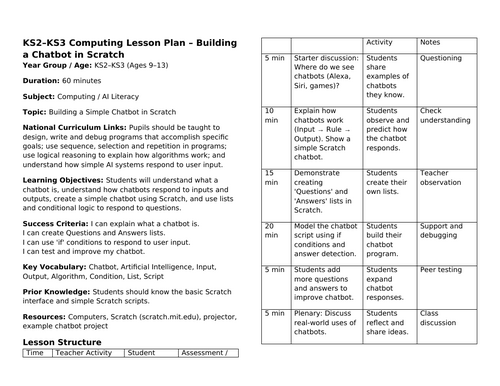
Lesson 1: Understanding Chatbots and Building Your Own Chatbot
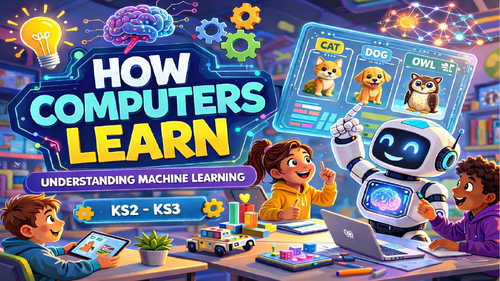
This lesson introduces students to the concept of Artificial Intelligence and machine learning in a simple and engaging way. Students explore how computers learn from data and how chatbots can respond to questions.
Through guided activities, students learn that computers recognise patterns by studying many examples and then use this information to make predictions. The lesson then moves into the exciting task of creating a simple chatbot using Scratch.
Students will:
- Learn how computers learn from data
- Understand what machine learning is in simple terms
- Explore how chatbots answer questions
- Design questions and responses for a chatbot
- Build a simple chatbot using Scratch logic
- Test and improve their chatbot with a partner
The lesson concludes with a discussion about where chatbots are used in real life, such as in customer support, games, hospitals, and online services.
Lesson - Building my own Chatbot
This activity encourages students to think about how technology can help people and how AI systems are programmed to interact with users.
Lesson 2: Prompting – How to Talk to AI
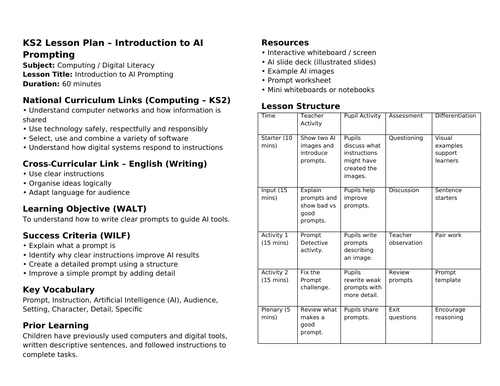
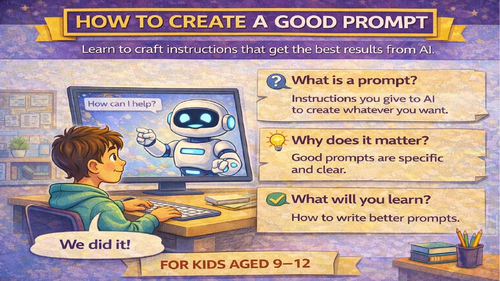
The second lesson introduces students to the concept of prompting, which is the process of giving instructions to AI in order to get useful results.
Students learn that the quality of the output from AI depends on the quality of the instructions given to it. Through examples, they explore the difference between vague prompts and detailed prompts.
Students will:
Learn what a prompt is
Understand why clear instructions matter when using AI
Compare weak prompts with strong prompts
Learn the structure of a good prompt
Practice improving prompts by adding details
Complete a fun Prompt Detective challenge where they analyse images and write prompts to recreate them
These activities help students develop communication, problem-solving, and digital literacy skills, which are increasingly important in a world where AI tools are becoming more common.
Something went wrong, please try again later.
This resource hasn't been reviewed yet
To ensure quality for our reviews, only customers who have purchased this resource can review it
Report this resourceto let us know if it violates our terms and conditions.
Our customer service team will review your report and will be in touch.
£2.99