


AQA A-level Economics lesson on oligopoly, concentration ratios and interdependence.
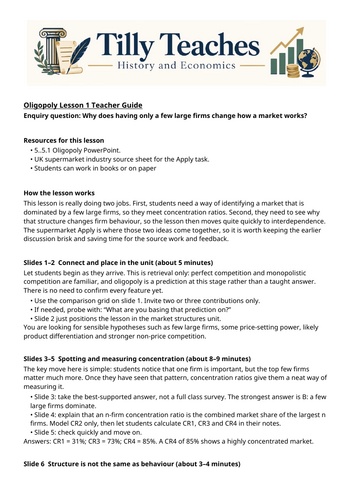
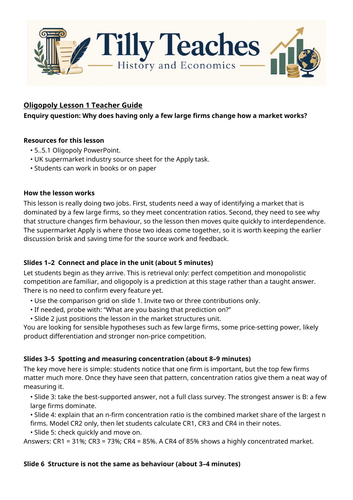
This enquiry-led lesson introduces oligopoly by starting with something students can see before giving them the formal economics. Students first examine market-share data and decide whether the market is dominated by one firm or by a small group of large firms. They are then introduced to concentration ratios as a way of measuring market structure and calculate CR1, CR3 and CR4 themselves.
The lesson then deliberately challenges the idea that a high concentration ratio automatically means weak competition. Students compare two markets with the same CR4 but very different patterns of firm behaviour, helping them distinguish market structure from how firms actually compete.
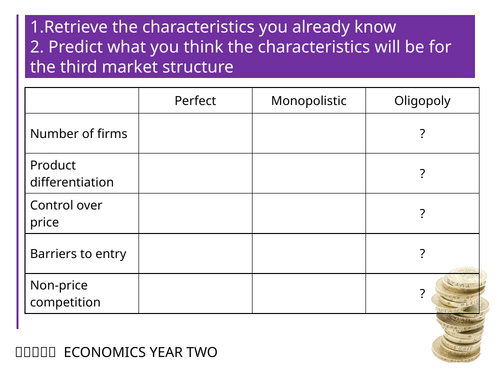
A simple price-cut scenario then develops the key idea of interdependence. Students see how one large firm’s decision triggers responses from rivals and how those responses affect the success of the original decision. This allows the formal definition of oligopoly to emerge from the behaviour they have just analysed rather than being introduced as a list of characteristics to memorise.
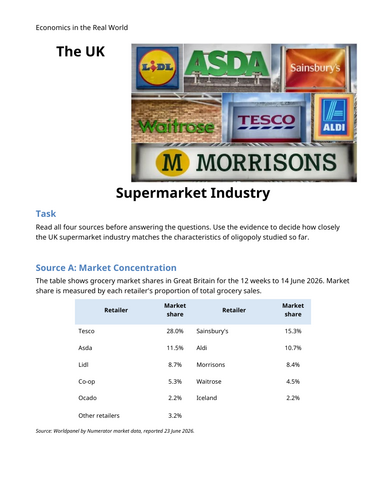
The lesson finishes with an applied case study of the UK supermarket industry, where students use real market-share and competitive-behaviour evidence to test how closely the market fits the oligopoly model. The emphasis is on explaining evidence and making a supported judgement, not simply spotting features.
The resource includes the PowerPoint, supermarket source task and concise teacher guide. It is designed for a 60-minute lesson, with the main Apply task protected so students have time to use the model independently and discuss their reasoning afterwards.
Something went wrong, please try again later.
This resource hasn't been reviewed yet
To ensure quality for our reviews, only customers who have purchased this resource can review it
Report this resourceto let us know if it violates our terms and conditions.
Our customer service team will review your report and will be in touch.
£1.00