AQA GCSE Sociology: Research Methods Unit
Resource Bundle



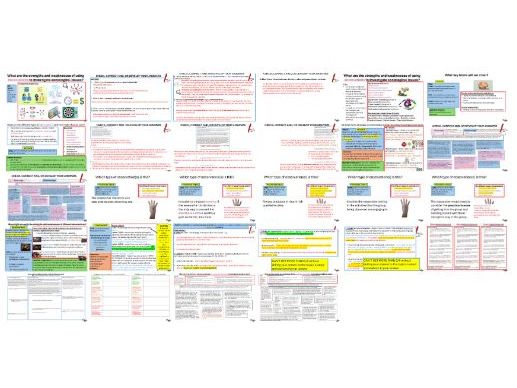
L1 - AQA GCSE Sociology Research Methods: The research process – Research design, aims, hypotheses and pilot studies
•Detailed lesson with lots of scaffolding based on adaptive teaching that helps students describe what is meant by a research design, hypothesis, research questions, aims and a pilot study, explain how sociologists begin their research (the first two stages of the research process) and assess the usefulness of these stages.
•Covers the following key terms: Sociological research, Research process, Research design, Research questions, Research aims, Hypothesis, A pilot study, Response rate (extension), Participants (extension)
•Makes references to the following key terms students might know: Social processes – Domestic violence
•DO NOW starter: ranking the stages of the research process
•Includes a teaching to all activity
•Hands-on activity where students draft and pilot their own survey
•Covers the following pilot studies of pilot studies and research design: O’Reilly (Costa del Sol) and Zebiri (British Muslim converts)
•Includes 2 marker linking pilot studies to domestic violence detailed scaffolding and student friendly markscheme.
•INCLUDES KEY TERM SHEET WITH DEFINITIONS FOR THE LESSON
•ANSWERS TO SOME ACTIVITIES
•RESOURCES CAN BE FOUND AT THE END OF PPT
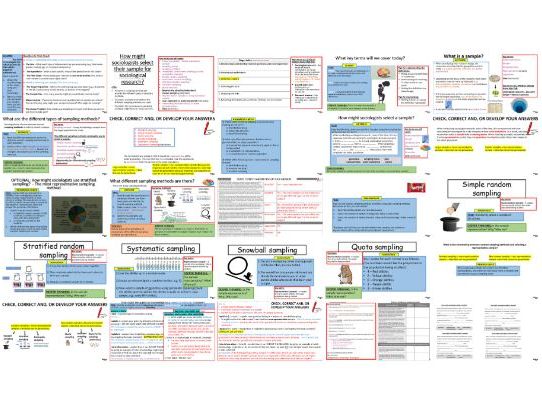
L2 - AQA GCSE Sociology - Research Methods: How might sociologist select their sample?
•Detailed lesson with lots of scaffolding based on adaptive teaching that helps students define a sampling method and identify the different types of sampling methods, explain and demonstrate how the different sampling methods are used, and explain the consequences sampling methods might have on social research.
•Covers the following key terms: Target population/Wider population, Sample, Sampling frame, Sampling method, Probability (or random sampling) vs Non-probability sampling, Simple random sampling, Systematic random sampling, Stratified random sampling, Snowball sampling, Quota sampling, Representative vs unrepresentative sample, Generalise/Generalisability. Opportunity sampling (extension), Cluster sampling (extension), Over-represent/Under-represent (extension), Data (extension)
•Makes reference to the following key terms students might know to promote a spiral curriculum: Sociological research – Research design – Research process – [Social] processes – Stages in the research process – Aims – Hypotheses – Pilot study
•Includes a Do Now retrieval activity recapping the research process from last lesson
•Includes a Think-Pair-Share key terms activity
•Includes a hands-on Skittles demonstration where students practise each sampling method
•INCLUDES A 4 MARKER WITH SUCCESS CRITERIA AND A MODEL ANSWER
•ANSWERS TO MOST ACTIVITIES INCLUDED
•INCLUDES KEY TERM SHEET WITH DEFINITIONS FOR THE LESSON
•RESOURCES CAN BE FOUND AT THE END OF THE PPT
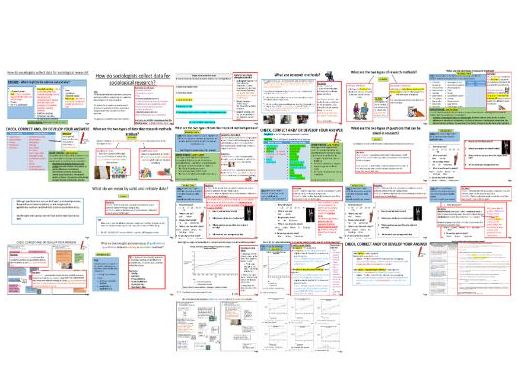
L3 -AQA GCSE Sociology Research Methods: Primary vs secondary methods & quantitative vs qualitative data
•Detailed lesson with lots of scaffolding based on adaptive teaching that helps students identify the difference between primary and secondary methods, quantitative and qualitative data and open and closed questions, and explain their strengths and weaknesses.
•Covers the following key terms: Research methods, Sociological research, Data, Primary methods, Secondary methods, Qualitative data, Quantitative data, Closed question, Open question, Validity, Reliability, Mixed method approach, Triangulation, Research process (extension) and Standardisation (extension)
•Makes reference to the following key terms students might know to promote a spiral curriculum: [Social] process – Sampling methods (snowball, stratified, systematic, simple random) – Pilot study – Aims – Hypothesis – Research design – Ethical vs practical issues (informed consent, privacy, harm to participants, cost)
•Starter (Do Now) activity recaps sampling methods, the research process and ethical and practical issues.
•Students apply their knowledge to an 2-marker using success criteria
•Teaching to all activity included
INCLUDES KEY TERM SHEET WITH DEFINITIONS FOR THE LESSON
•ANSWERS TO ALL ACTIVITIES INCLUDED
•RESOURCES CAN BE FOUND AT THE END OF PPT
L4 - AQA GCSE Sociology Research Methods: Research design – Practical, Ethical and Theoretical (PET) issues
•Detailed lesson with lots of scaffolding based on adaptive teaching that helps students define and identify the practical, ethical and theoretical (PET) advantages and disadvantages of social research, explain how PET issues might influence a researcher’s research design and analyse the impact this might have.
•Covers the following key terms: Practical issues, Ethical issues, Theoretical issues, Anonymity, Confidentiality, Informed consent, Covert vs overt research, Pseudonym (extension)
•Makes reference to the following key terms students might know to promote a spiral curriculum: Validity – Reliability – Representativeness – Generalisability – Quantitative vs Qualitative methods –Primary vs Secondary methods - Mixed method approach and Findings (of research)
•Covers the following key bodies, laws: British Sociological Association (extension), Data Protection Act (1998) (extension)
•Starter activity recaps validity and reliability.
•INCLUDES A 4 MARKER research methods question (2022) with success criteria, sentence starters and a model answer mark scheme.
•ANSWERS TO MAIN ACTIVITIES INCLUDED
•INCLUDES KEY TERM SHEET WITH DEFINITIONS FOR THE LESSON
•RESOURCES CAN BE FOUND AT THE END OF PPT
L5 - AQA GCSE Sociology - Research Methods: Questionnaires (incl. postal questionnaires & EXAM TECHNIQUE PRACTICE)
•Detailed lesson with lots of scaffolding based on adaptive teaching that helps students identify the main features of questionnaires and postalquestionnaires, describe when it is appropriate to use them, explain their practical, ethical and theoretical strengths and weaknesses, and apply this knowledge to an exam-style question.
•Covers the following key terms: Questionnaires, Postal questionnaires, Online questionnaire, Respondent, Response rate, Variable (extension).
•Makes reference to the following key terms students might know to promote a spiral curriculum: Quantitative vs Qualitative data – Reliable vs Valid – Practical issues – Ethical issues – Theoretical issues – Positivism vs Interpretivism – Sample size – Representative sample – Generalise findings – Social surveys – Pre-determined – Closed questions – Open questions – Primary vs Secondary methods – Data – Sample – Sample frame.
•Starter activity: key word bingo recapping research methods terms from previous lessons.
•Includes a Think–Pair–Share key term activity with tips for understanding and memorising definitions.
•Includes colour-coded strengths and weaknesses sorting tasks with extension and deeper thinking challenges.
•Includes a 4-marker with success criteria, a mark scheme, a model answer and a peer-assessment activity to help students understand how they gain marks for research methods 4 markers (includes SIX EXAMPLE ANSWERS to do this).
•ANSWERS TO ALL ACTIVITIES INCLUDED.
•INCLUDES KEY TERM SHEET WITH DEFINITIONS FOR THE LESSON.
•RESOURCES CAN BE FOUND AT THE END OF THE PPT.
L6 - AQA GCSE Sociology Research Methods: Interviews – Structured, Unstructured & Group (incl. Focus groups)
•Detailed lesson with lots of scaffolding based on adaptive teaching that helps students identify the different types of interviews and their features, explain their practical, ethical and theoretical strengths and weaknesses and apply this knowledge to 4-mark exam questions.
•Covers the following key terms: Interview, Structured interview, Unstructured interview, Semi-structured interview, Group interviews, Focus groups, Interviewer bias/effect, Interview schedule, Interviewer, Interviewee, Telephone interviews, Response rate
•Makes reference to the following key terms students might know to promote a spiral curriculum: Questionnaires – Primary methods – Quantitative vs Qualitative data – Open vs Closed questions – Practical, Ethical and Theoretical (PET) issues – Validity – Reliability – Representativeness – Generalisability – Standardisation – Feminism
•Do Now retrieval starter recaps questionnaires
•Includes a Think–Pair–Share key term activity with a key term sheet and tips for memorising definitions
•Includes three short videos (semi-structured interviews, unstructured interviews and focus groups)
•Includes interview schedule progress checks and a stand-up/sit-down true or false check
•Includes a source-based task on interviewer bias
•INCLUDES A 4-MARKER WITH SUCCESS CRITERIA AND A FULL MARK SCHEME
•ANSWERS TO MOST ACTIVITIES INCLUDED
•INCLUDES KEY TERM SHEET WITH DEFINITIONS FOR THE LESSON
•Resources can be found at the end of the PPT
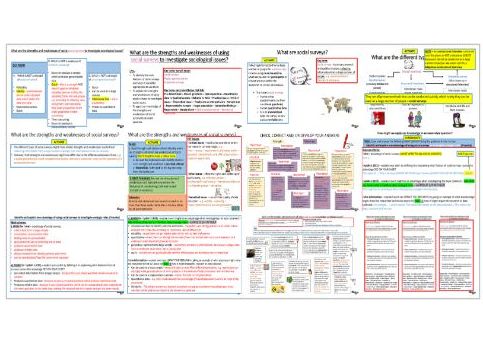
L7 - AQA GCSE Sociology - Research methods: Social surveys
•Detailed lesson with lots of scaffolding based on adaptive teaching that helps students identify the main features of social surveys and when it would be appropriate to use them, explain the strengths and weaknesses of using social surveys to investigate sociological issues, and apply this knowledge to an exam question.
•Covers the different types of social surveys: questionnaires (including online and postal), telephone surveys and structured interviews.
•Covers the following key terms: Social surveys
•Makes reference to the following key terms students might know to promote a spiral curriculum: Pre-determined – Closed questions – Open questions – Quantitative data vs Qualitative data – Reliable vs Valid – Practical issues – Ethical issues – Theoretical issues – Positivism vs Interpretivism – Sample size – Representative sample – Wider population – Generalise findings – Respondent – Standardised – Online questionnaire – Structured interviews - Postal questionnaires - Telephone surveys
•DO NOW retrieval starter recapping questionnaires, structured interviews and sampling methods (answers included).
•INCLUDES A 4 MARKER with success criteria, sentence starters and a mark scheme.
•ANSWERS TO MAIN ACTIVITIES INCLUDED
•INCLUDES KEY TERM SHEET WITH DEFINITIONS FOR THE LESSON
•RESOURCES CAN BE FOUND AT THE END OF PPT
L8 - AQA GCSE Sociology Research Methods: Observations – Participant vs Non-participant & Covert vs Overt Observation
Detailed lesson with lots of scaffolding based on adaptive teaching that helps students identify the different types of observation and their main features, explain the strengths and weaknesses of using them to investigate sociological issues, and apply this knowledge to an exam question.
Covers the following key terms: Observation, Participant observation, Non-participant observation, Covert observation, Overt observation, Hawthorne/Observer effect. Observation schedule (extension), Structured observation (extension) and Unstructured observation (extension).
Covers the following studies: Korczynski (pop music in a factory), Ward (drug-sellers in rave culture), and Williams, Dunning and Murphy (football hooligans abroad).
Makes reference to the following key terms students might know to promote a spiral curriculum: Pre-determined – Closed questions – Open questions – Quantitative data vs Qualitative data – Reliable vs Valid – Practical issues – Ethical issues – Theoretical issues – Sample size – Representative sample – Generalise findings – Respondent – Standardised – Covert vs overt research
Do Now retrieval starter recaps interviews, social surveys, sampling, questionnaires and PET issues from earlier in the research methods unit.
Includes a Think-Pair-Share key term activity and case-study extract tasks.
Includes hands-up progress check questions.
Includes an applied research scenario (alcohol-related violence in London’s night-time leisure areas).
INCLUDES A 4 MARKER WITH SUCCESS CRITERIA AND MARK SCHEME
ANSWERS TO MOST ACTIVITIES INCLUDED
INCLUDES KEY TERM SHEET WITH DEFINITIONS FOR THE LESSON
Resources can be found at the end of the PPT
L9 - AQA GCSE Sociology: Research Methods- Longitudinal studies
•Detailed lesson with lots of scaffolding based on adaptive teaching that helps students describe a longitudinal study, explain the advantages and disadvantages of using longitudinal studies to investigate sociological issues, and apply their knowledge to exam questions.
•Covers the following key terms: Longitudinal study, Cohort, Cross-sectional study (extension), Attrition rate (extension) and Panel (extension)
•Examples of longitudinal studies covered: The Up Series (Michael Apted) and the Millennium Cohort Study (MCS)
•Makes reference to the following key terms students should know to promote a spiral curriculum: Sample – Sampling frame - Representative sample – Generalise – Research method – Structured interviews – Unstructured interviews – Group interviews – Focus groups – Questionnaires – Social surveys – Observations
•Do Now retrieval starter recapping sampling methods, with answers
•Fill-in-the-gap activity on longitudinal studies, with answers
•True or false progress check, with answers
•Five video links on The Up Series as activities
•INCLUDES A 4 MARKER with success criteria, mark scheme and a modelled teacher example
•INCLUDES A 2 MARKER (Item A) with mark scheme and three student responses with examiner commentary
•ANSWERS TO MAIN ACTIVITIES INCLUDED
•INCLUDES KEY TERM SHEET WITH DEFINITIONS FOR THE LESSON
•RESOURCES CAN BE FOUND AT THE END OF THE PPT
L10- AQA GCSE Sociology - Research Methods - Ethnography
•Detailed lesson with lots of scaffolding based on adaptive teaching that helps students describe what ethnography is as a research method and its main features, explain the strengths and weaknesses of using ethnographic research to study sociological issues and topics, and apply this knowledge to an exam-style question.
•Covers the following key terms: Ethnography
•Covers the following sociologists: Margaret Mead (ethnographic research in Samoa).
•Makes reference to the following key terms students might know to promote a spiral curriculum: Valid – Reliable – Representative sample – Generalise – Sample – Practical – Ethical – Theoretical – Data – Pseudonyms – Privacy – Confidentiality – Informed consent – Quantitative vs qualitative data – Triangulation – Mixed method approach
•Do Now retrieval starter recapping research methods key terms (practical and ethical issues, sampling, qualitative vs quantitative data).
•Includes an information sheet and worksheet on ethnography: gap fill, sentence completion, ethnography vs longitudinal research and an applied study of an anti-school subculture.
•Includes a triangulation recap and a ‘yes or no’ check activity.
•Includes a 4-mark exam question (Families context) with success criteria, sentence starters and a mark scheme.
•ANSWERS TO MAIN ACTIVITIES INCLUDED
•INCLUDES A KEY TERM SHEET WITH DEFINITIONS FOR THE LESSON
•RESOURCES CAN BE FOUND AT THE END OF THE PPT
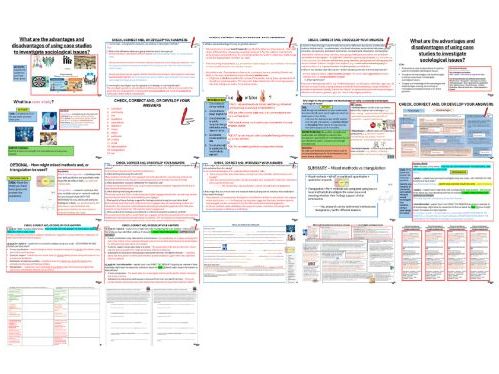
L11 - AQA GCSE Sociology- Research Methods - Case studies
Detailed lesson with lots of scaffolding based on adaptive teaching that helps students describe a case study and how it might be used to investigate sociological issues. It also covers the advantages and disadvantages of using a case study, and applying this knowledge to an exam question.
Covers the following key terms: Case study
Makes reference to the following key terms students might know to promote a spiral curriculum: Mixed methods – Triangulation – Secondary vs primary methods and data – Data – Quantitative vs qualitative data – Ethical issues – Practical issues – Validity – Reliability – Representativeness – Target population – Sample
Retrieval starter activity on longitudinal studies, group interviews vs focus groups, ethnography, standardisation and non-random sampling.
Includes a fill-in-the-gap activity and a true or false progress check
Includes an optional mixed methods and triangulation activity based on a student engagement study
Includes a 4-mark exam question with success criteria and a model answer
ANSWERS TO ALL ACTIVITIES INCLUDED
INCLUDES KEY TERM SHEET WITH DEFINITIONS FOR THE LESSON
Resources can be found at the end of the PPT
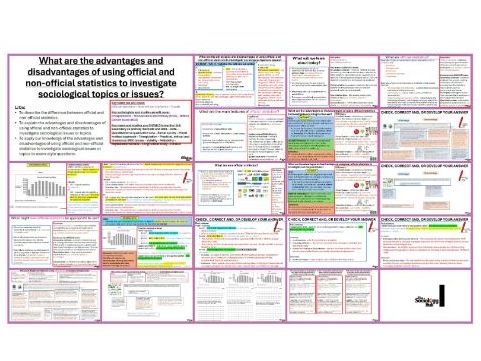
L12 - AQA GCSE Sociology Research methods: Secondary data - Official and non-official statistics
•Detailed lesson with lots of scaffolding based on adaptive teaching that helps students describe the difference between official and non-official statistics, explain the advantages and disadvantages of using them to investigate sociological issues or topics, and apply this knowledge to exam-style questions.
•Covers the following key terms: Official statistics, Non-official statistics, Trends
•Makes reference to the following key terms students might know to promote a spiral curriculum: Secondary vs primary methods and data – Data – Quantitative vs qualitative data – Social survey – Mixed method approach – Triangulation – Practical, ethical and theoretical (PET) issues – Validity – Reliability – Representativeness – Longitudinal study – Census
•DO NOW retrieval starter recaps research methods from previous lessons (odd one out)
•Includes a 2-marker progress check with success criteria and a modelled answer
•Includes 4-marker exam question (Item A – divorce statistics) with success criteria, an extension 4-marker and a full mark scheme
•ANSWERS TO MOST ACTIVITIES INCLUDED
•INCLUDES KEY TERM SHEET WITH DEFINITIONS FOR THE LESSON
RESOURCES CAN BE FOUND AT THE END OF PPT
L13 - AQA GCSE Sociology Research Methods: Secondary Qualitative data - Content analysis and documents
•Detailed lesson with lots of scaffolding based on adaptive teaching that helps students define documents and content analysis, describe how content analysis is used, explain the strengths and weaknesses of documents and content analysis, and apply their knowledge to an exam-style question.
•Covers the following key terms: Documents, Personal document, Historical documents, Public documents, Content analysis
•Makes reference to the following key terms students might know to promote a spiral curriculum: Secondary qualitative data – Secondary quantitative data – Qualitative data – Quantitative data – Contemporary – Gender – Gender roles – Gender socialisation – Agency of socialisation – Agents of socialisation – Official statistics – Non-official statistics – Practical, ethical and theoretical (PET) issues – Validity – Reliability – Representativeness – Generalisability – Researcher bias – Gender stereotypes
•NO STARTER ACTIVITY
•Includes a research activity where students act as sociologists and carry out their own content analysis of a video advert, using a coding table to investigate how prevalent gender stereotypes are and turning qualitative content into quantitative data.
•Includes a Think–Pair–Share key term activity and progress checks (document types; true or false).
•Includes a 4-mark exam question with success criteria and a mark scheme.
•ANSWERS TO MOST ACTIVITIES INCLUDED
•INCLUDES KEY TERM SHEET WITH DEFINITIONS FOR THE LESSON
•RESOURCES CAN BE FOUND AT THE END OF THE PPT
Something went wrong, please try again later.
This resource hasn't been reviewed yet
To ensure quality for our reviews, only customers who have purchased this resource can review it
Report this resourceto let us know if it violates our terms and conditions.
Our customer service team will review your report and will be in touch.