



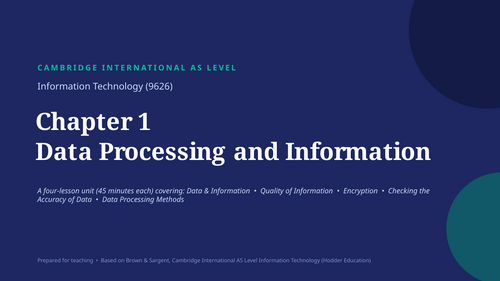
Chapter 1 explains the difference between data (raw facts with no meaning) and information (data processed and given context). Data can come from direct sources, collected first-hand for a purpose, or indirect sources, collected by someone else. Information quality depends on accuracy, relevance, age, level of detail and completeness. To keep data safe, encryption scrambles it into ciphertext. Symmetric encryption uses one shared key, and asymmetric uses a public and a private key. Protocols such as SSL/TLS secure data sent online through HTTPS. Data accuracy is checked in two ways. Validation (presence, range, type, length, format, check digit, lookup and consistency checks) makes sure data is sensible. Verification (visual check, double entry, parity check, checksum, hash and control totals) makes sure it was entered or transferred correctly. Data that passes both checks can still be wrong. Finally, data is processed in one of three ways. Batch processing groups data and processes it later, for example payroll updating a master file from a transaction file. Online processing handles each transaction as it happens, for example ticket booking. Real-time processing responds instantly using sensors and feedback, for example central heating or traffic lights.
Something went wrong, please try again later.
This resource hasn't been reviewed yet
To ensure quality for our reviews, only customers who have purchased this resource can review it
Report this resourceto let us know if it violates our terms and conditions.
Our customer service team will review your report and will be in touch.
£7.00