


Edexcel International A Level Chemistry benzene lesson covering structure, delocalised bonding and resistance to bromination, with exam questions. All this and more covered in this comprehensive lesson with questions and answers! This is a Year 13 A level lesson for Edexcel International Unit 5 – WCH15, but it can also be used for all UK exam boards. All the slides in this lesson are fully animated and include answers to every mini plenary question and exam question.
Slide 1 - Title and 5-minute starter. The starter is a grid of four questions entitled ‘last week, last lesson, today’s learning and future learning’. Use this generic slide for all your lessons by simply changing the questions and the answers each time.
Slide 2 - Lesson objectives (see thumbnail image)
Slide 3 – video about August Kekule’s dream which led to his model for Benzene
Slide 4 – the meaning of the term aromatic is explained on this slide
Slide 5 – explanation of the Kekulé model of benzene, explaining the arrangement of th carbon atoms and the name of benzene in this model (cyclohexa-1,3,5-triene)
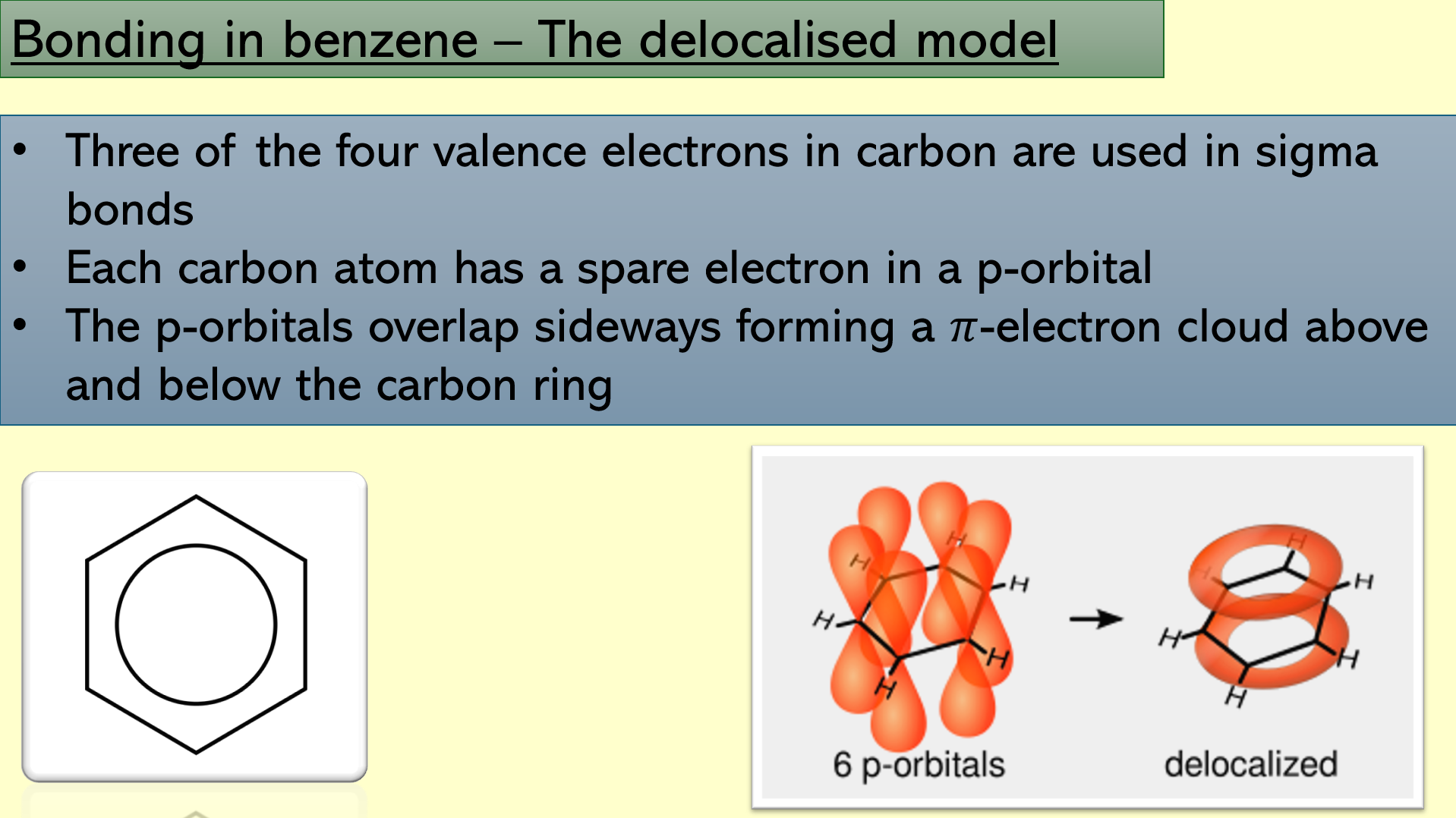
Slide 6 – introduction to the delocalised model of benzene. The formation of the pi electron cloud is carefully explained
Slide 7 – what the circle represents in benzene is carefully explained
Slide 8 – the total number of sigma bonds in benzene is illustrated with a well-crafted animation
Slide 9 – the total number of electrons in the delocalised system is illustrated with an animation
Slide 10 – an important concept in science is reiterated to students on this slide: new experimental evidence can lead to a theory being changed or replaced
Slides 11 – 12: benzene does not decolourise bromine water. The full implications of this on benzene’s structure is explained
Slide 13 – identical bond length in benzene. The full implications of this on benzene’s structure is explained
Slides 14 – 17: benzene’s enthalpy change of hydrogenation is less negative than expected. The full implications of this on benzene’s structure is explained. Slides 15 and 16 are hidden so that the energy level diagrams can be printed for students
Slides 18 – 19: dibromobenzene has three isomers, not four! The full implications of this on benzene’s structure is explained
Slides 20 – 22: benzene’s infrared spectrum is very different to cycloalkenes. The full implications of this on benzene’s structure is explained
Slide 23 - learning pit stop questions to test students’ understanding so far. Answers animate on the screen when you click
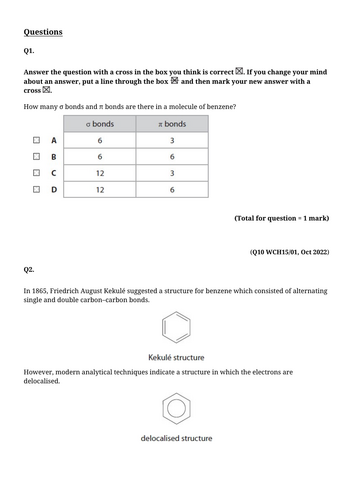
Slides 24 – 29: exam questions with mark scheme answers included with this resource
Please consider leaving a review! This really helps promote our store! Thanks!
Something went wrong, please try again later.
This resource hasn't been reviewed yet
To ensure quality for our reviews, only customers who have purchased this resource can review it
Report this resourceto let us know if it violates our terms and conditions.
Our customer service team will review your report and will be in touch.
£3.50