


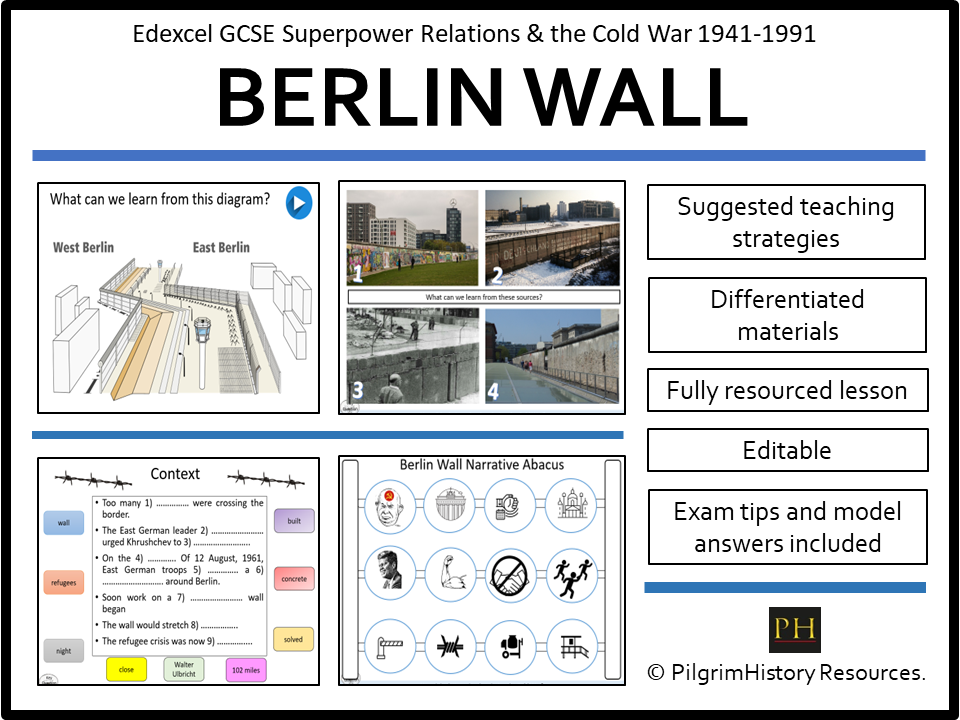
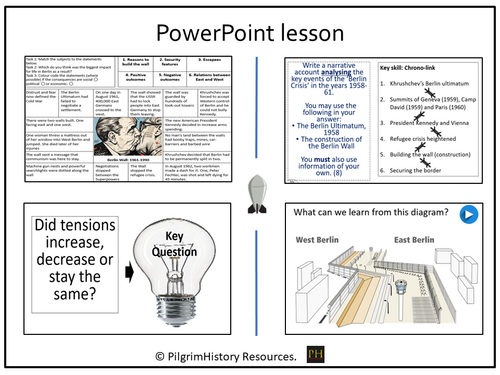
The aim of this lesson is to examine the causes and consequences of the building of the Berlin Wall in 1961 and assess its impact on superpower relations during the Cold War.
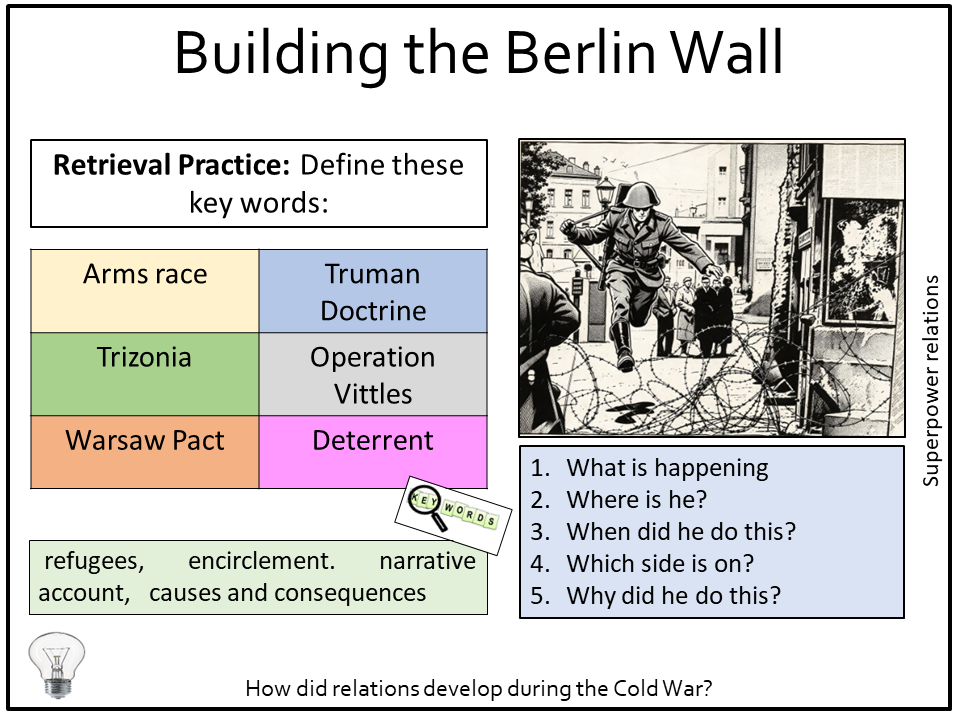
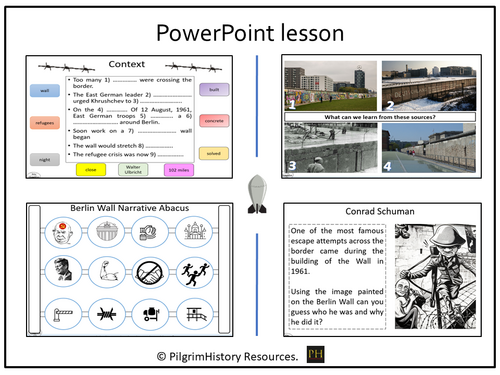
Students begin by investigating why people such as Conrad Schumann were desperate to escape to West Berlin. They then examine how Khrushchev’s Berlin Ultimatum and the continuing movement of people from East to West contributed to the decision to build the Berlin Wall to prevent further escapes.
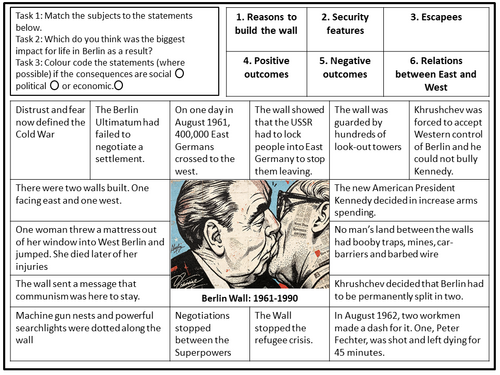
Through source analysis and a thinking quilt activity, students consider the social, political and economic impact of the Berlin Wall and how it affected the people of Berlin and wider Cold War relations.
A narrative abacus activity, using images to help establish the sequence of events, prepares students for a GCSE exam question on the reasons why Khrushchev built the Berlin Wall in 1961. Prompts and guidance are provided to help students organise events chronologically and explain how they link together.
The lesson is enquiry based, with a key question using a lightbulb introduced at the start and revisited throughout this and subsequent lessons to show the progress of learning.
It comes in PowerPoint format if there is a wish to adapt and change.
Any reviews would be gratefully received.
Something went wrong, please try again later.
This resource hasn't been reviewed yet
To ensure quality for our reviews, only customers who have purchased this resource can review it
Report this resourceto let us know if it violates our terms and conditions.
Our customer service team will review your report and will be in touch.
£3.50