


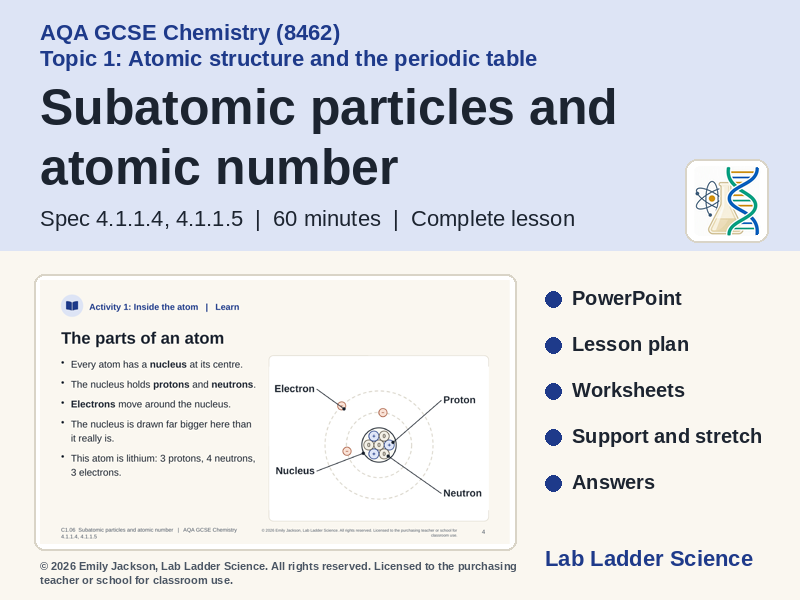
Subatomic particles and atomic number for AQA GCSE Chemistry 4.1.1.4 and 4.1.1.5. Differentiated PowerPoint, editable worksheets and full answers.
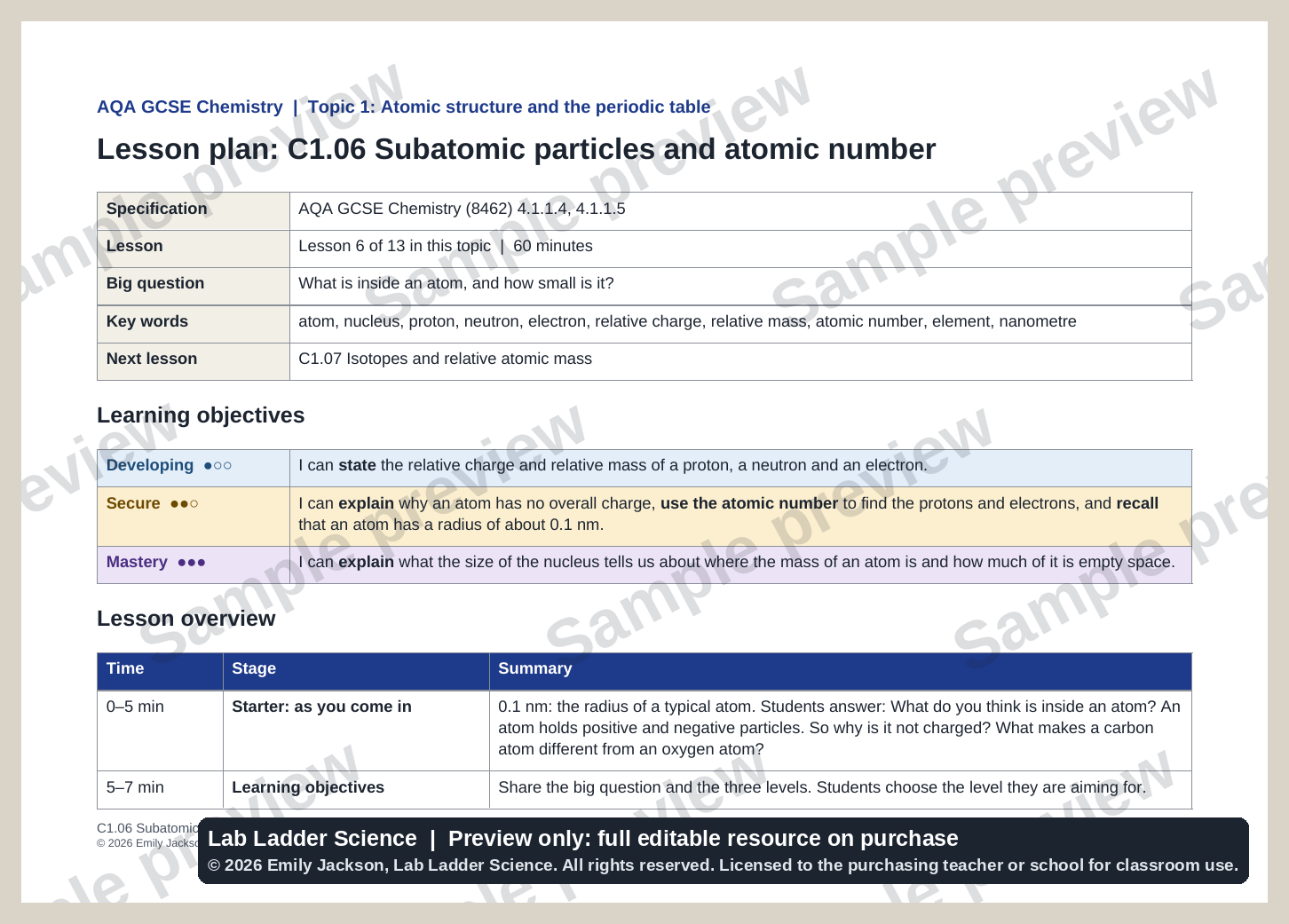
This is a complete lesson on subatomic particles and atomic number for AQA GCSE Chemistry (8462), covering specification points 4.1.1.4 and 4.1.1.5. It is the sixth lesson in Topic 1: Atomic structure and the periodic table, and it is designed to last 60 minutes. Mass number, isotopes and relative atomic mass are left to the next lesson in the series, so this lesson can be taught as a clean single hour.
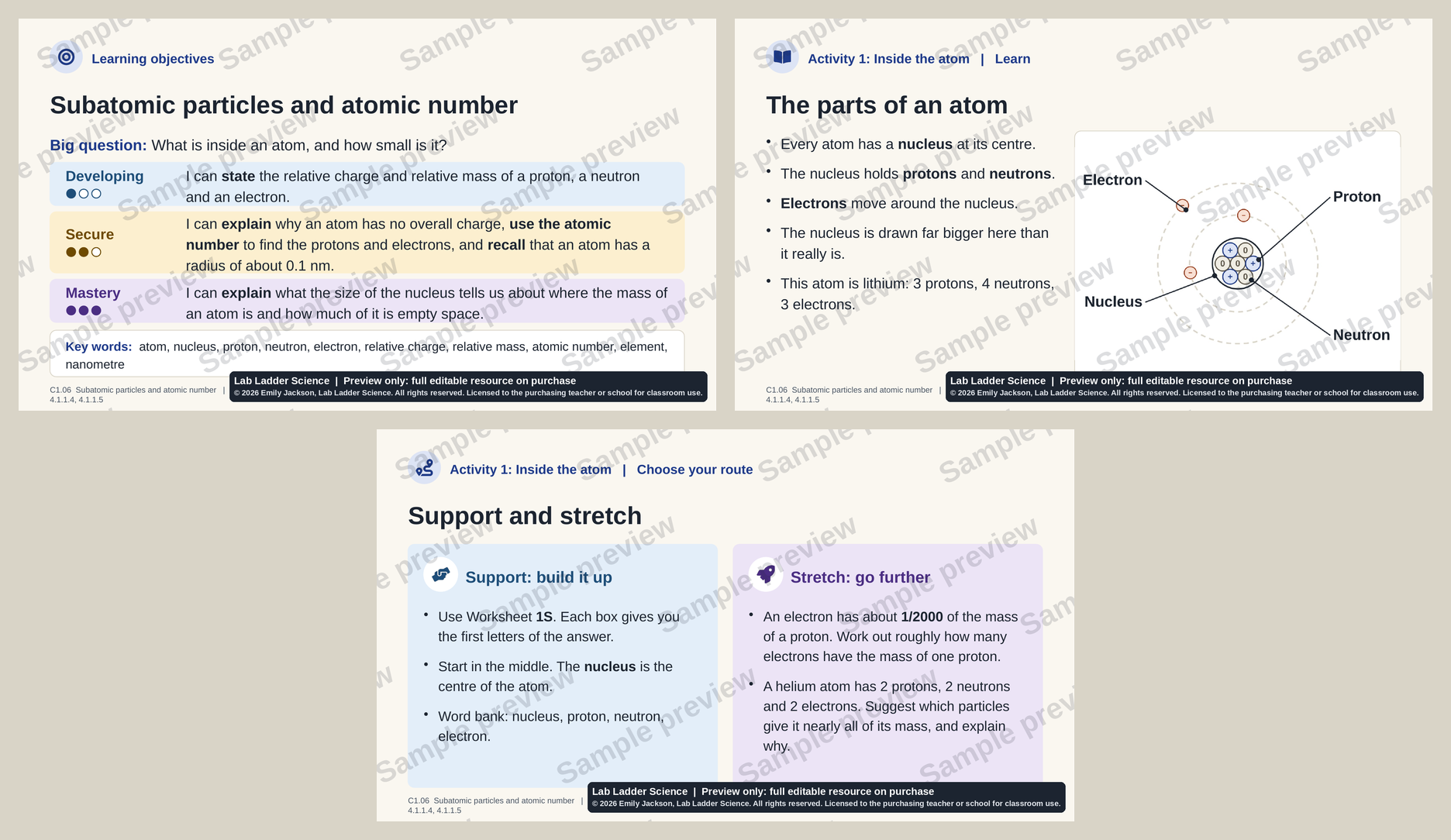
Students name the three particles in an atom and say where each one sits, recall the relative charge and relative mass of a proton, a neutron and an electron, explain why an atom has no overall electrical charge, use the atomic number to work out the number of protons and electrons, and relate the size and scale of an atom and its nucleus to objects in the physical world.
The previous lesson covers developing the model of the atom, and the next lesson covers isotopes and relative atomic mass.
Includes:
- PowerPoint lesson (30 slides) with full teacher notes on every slide: timings, answers, misconceptions and questioning prompts.
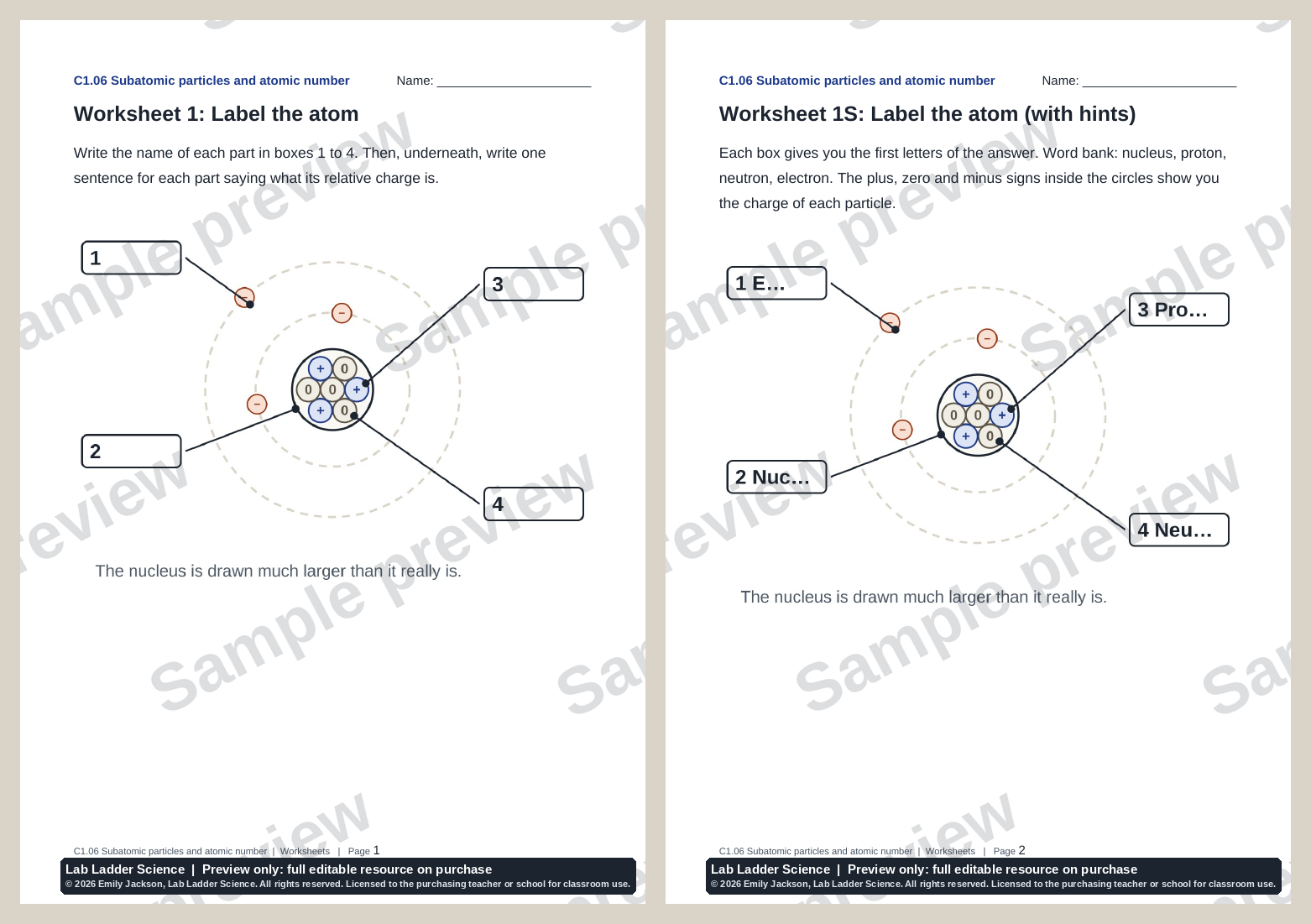
- Editable Word worksheets: label the atom (core and support versions), an eight-pair card sort, an atomic number table (core and support versions) and an exam-style question sheet.
- Word lesson plan with objectives, a timed lesson overview, preparation notes, activity detail with support, stretch and answers, the plenary, common misconceptions and inclusive practice notes.
Every activity offers support and stretch that all students can choose, so no one is singled out. Support includes first-letter hints on the labelling diagram, a word bank, a completed example row, given atomic numbers and sentence starters. Stretch tasks ask students to work out how many electrons have the mass of one proton, to explain why chemists use protons rather than electrons to identify an element, and to estimate how many atoms fit across a pin head using standard form.
The slides follow the British Dyslexia Association Style Guide: Arial at a large size, a soft cream background, bold rather than italics for emphasis, left-aligned text and plain English. Levels of challenge never rely on colour alone, every slide has a proper title for screen readers, and every diagram has alt text. The particles in the diagrams are marked with plus, zero and minus signs as well as colour, so colour never carries the meaning on its own.
How you could use it:
- Teach it as a full lesson on atomic structure in Year 9 or Year 10, after the history of the model of the atom.
- Use it as a ready-made cover lesson: the teacher notes explain every step and every answer.
- Use the stand back quizzes and the exit ticket for retrieval practice before mocks.
- Set the exam-style question sheet as homework, or use the worksheets on their own for revision.
Something went wrong, please try again later.
This resource hasn't been reviewed yet
To ensure quality for our reviews, only customers who have purchased this resource can review it
Report this resourceto let us know if it violates our terms and conditions.
Our customer service team will review your report and will be in touch.
£5.00