


How to Read the Bible: Literal, Inspired & Liberal Interpretation
Edexcel GCSE Religious Studies (9–1) – Catholic Christianity
Section 3: Sources of Wisdom & Authority (3.1–3.2)
A clear, structured and thought-provoking lesson exploring different Christian approaches to interpreting the Bible — and the official Catholic position.
This lesson helps students confidently understand the difference between literalist, inspired and liberal interpretations, while grounding learning in the Catechism of the Catholic Church (CCC 106–107) and 2 Timothy 3:16.
What Students Learn
• What “inerrant” means and why it matters
• The difference between literal, inspired and liberal readings
• Why Catholics accept evolution but still believe the Bible teaches truth
• How context, genre, language and history affect interpretation
• Why the Church plays a key role in guiding interpretation
Activities Included
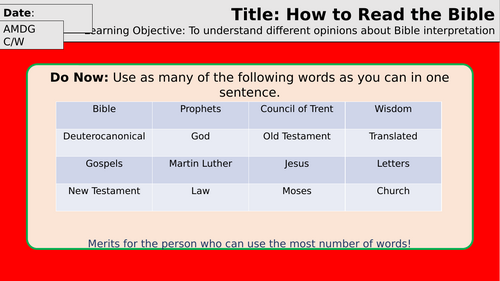
• Competitive vocabulary “Do Now” starter
• Literary forms recap (Law, Prophets, Gospels, Letters, Apocalyptic)
• Mini-whiteboard opinion task (Person A, B, C viewpoints)
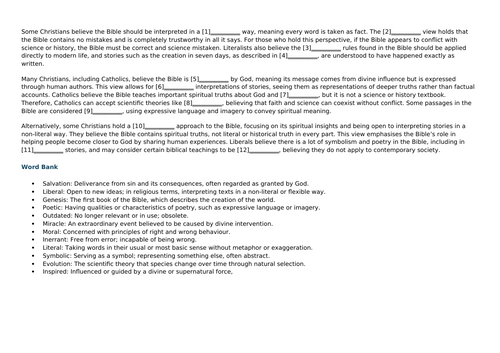
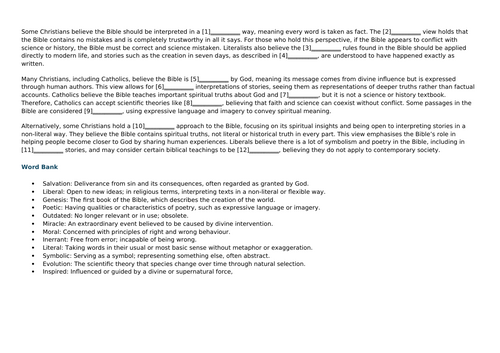
• Structured cloze task with differentiated word bank
• Exam-style 5-mark question with model answer
• Peer assessment guidance
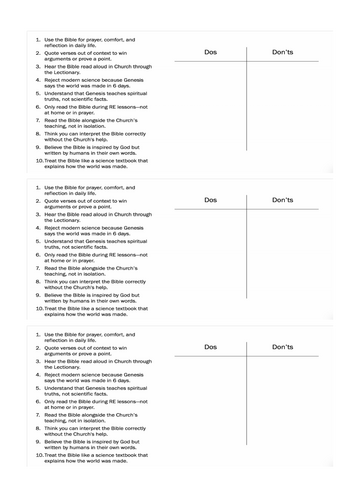
• “Dos and Don’ts” reflection task to consolidate Catholic teaching
Exam Focus
Includes a fully scaffolded 5-mark “Explain two…” question requiring reference to a Source of Wisdom and Authority, with model paragraph responses and bonus mark guidance.
Students practise:
- Accurate use of specialist terminology
- Embedding SOWA (CCC 106–107)
- Clear AO1 explanation
Something went wrong, please try again later.
This resource hasn't been reviewed yet
To ensure quality for our reviews, only customers who have purchased this resource can review it
Report this resourceto let us know if it violates our terms and conditions.
Our customer service team will review your report and will be in touch.
£5.00