


The aim of this lesson is to investigate how people living in the Channel Islands survived during the Second World War under the only German occupation of British soil.
Students begin by exploring why the British Government made the decision to leave the Channel Islands undefended in 1940 and consider the experiences and emotions of islanders who suddenly found themselves living under German occupation.
Using a range of historical evidence, including written accounts, survivor testimony, photographs and video footage, students investigate how islanders adapted to life under German rule. They explore the challenges faced by civilians, including rationing, censorship, curfews, restrictions on everyday life and the difficult decisions people had to make in order to survive.
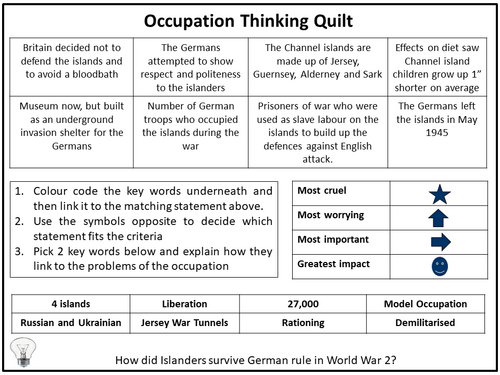
Through a Thinking Quilt activity and source analysis tasks, students examine whether the German occupation was genuinely a “model occupation” as the Nazis claimed, or whether this was simply a carefully created image hiding the reality of control and oppression.
Students also explore the experiences of prisoners of war who were brought to the islands to help construct the Atlantic Wall defences. They evaluate the harsh conditions they faced and consider how different groups experienced the occupation in very different ways.
Using real-life testimonies from survivors, students reach a supported judgement on the key question: How successfully did Channel Islanders survive German occupation during the Second World War?
The lesson provides a fascinating insight into a lesser-known aspect of the Second World War, challenging students to consider the impact of occupation on ordinary people and the different ways communities responded to life under enemy control.
This lesson provides an excellent foundation for GCSE History, developing students’ skills in historical enquiry, source analysis, interpretation, evaluation and significance.
An enquiry question is introduced at the start of the lesson and revisited throughout, enabling students to track their progress and develop a deeper understanding of civilian experiences during the Second World War.
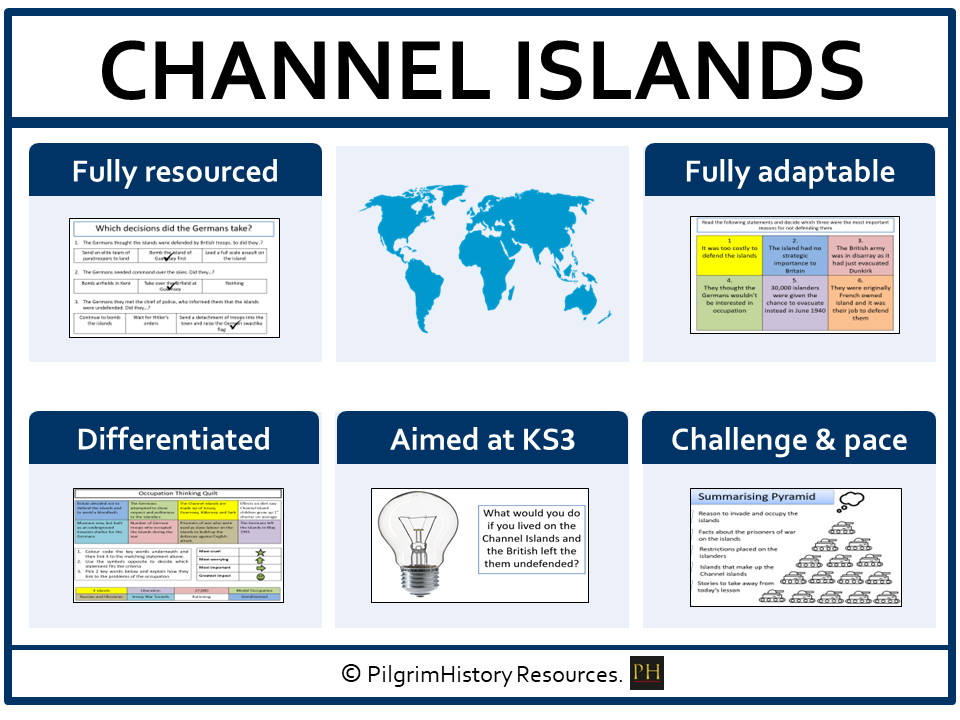
Fully planned and ready to teach, this lesson develops historical enquiry, source analysis, interpretation, evaluation and retrieval skills.
Included in this lesson:
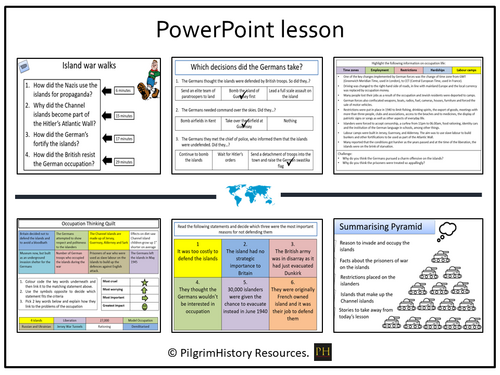
Fully editable PowerPoint
Historical sources and survivor testimonies
Video footage exploring the occupation
Thinking Quilt activity
Analysis of rationing, resistance and German control
Evaluation of the “model occupation” interpretation
Atlantic Wall and prisoner of war case study
Enquiry-based judgement tasks
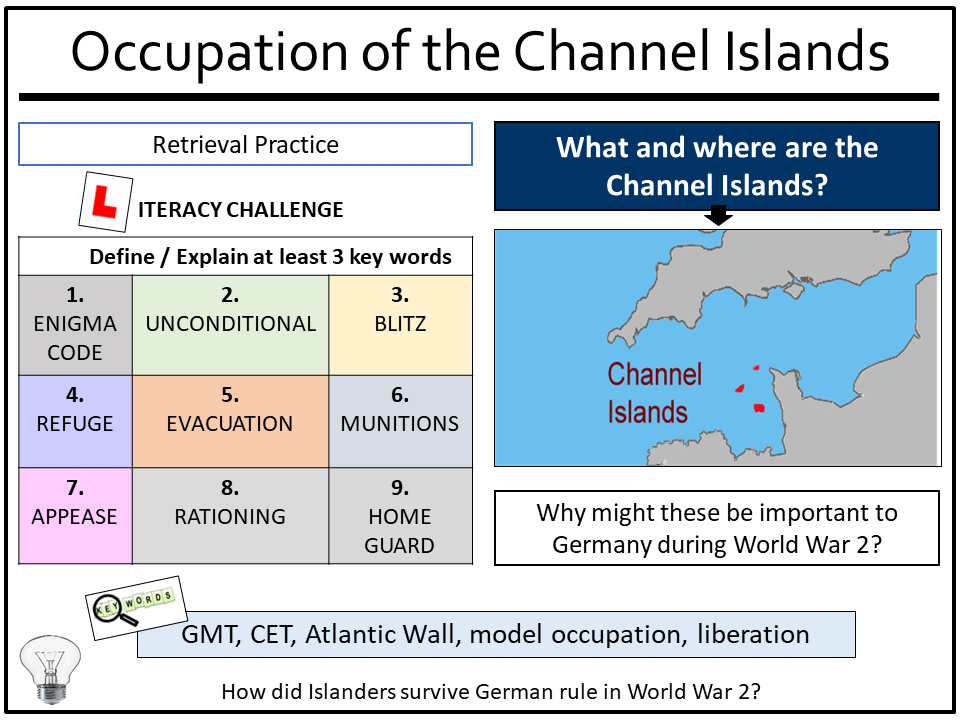
Retrieval practice
Differentiated resources and suggested teaching strategies
Please leave a review if you find this resource useful. Your feedback is greatly appreciated.
Something went wrong, please try again later.
This resource hasn't been reviewed yet
To ensure quality for our reviews, only customers who have purchased this resource can review it
Report this resourceto let us know if it violates our terms and conditions.
Our customer service team will review your report and will be in touch.
£3.00