


This PowerPoint resource provides a comprehensive lesson on understanding chemical formulas, naming compounds, and interpreting the number of atoms in chemical structures. Designed for middle school science classes, it builds foundational chemistry skills through clear explanations and interactive tasks.
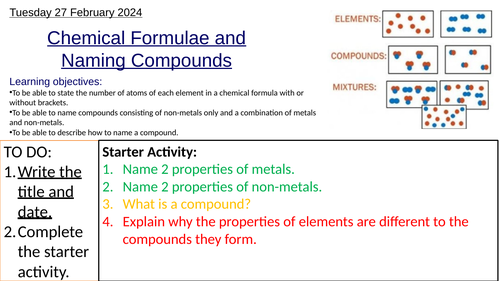
Key learning objectives:
- Identifying the number of atoms of each element in a chemical formula, with or without brackets.
- Naming compounds consisting of non-metals only or a combination of metals and non-metals.
- Understanding and applying the rules for naming compounds with prefixes (mono-, di-, tri-, etc.) or specific endings (-ide, -ate).
Resource features:
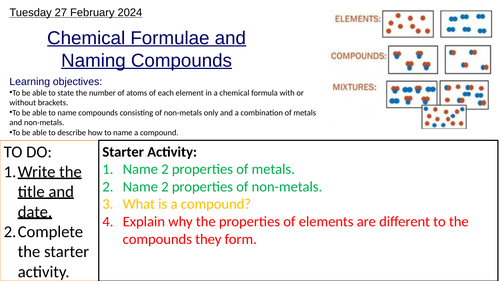
The lesson begins with a starter activity where students recall the properties of metals and non-metals, and explain why the properties of elements differ from the compounds they form. Core concepts are introduced with real-world examples and detailed guidance:
Chemical Formulae:
Explains the use of element symbols to represent compounds and the meaning of subscript numbers, showing the ratio of elements in compounds like carbon dioxide and water.
Brackets in Formulas:
Teaches how to multiply elements inside brackets by the subscript number outside, using examples like calcium hydroxide and aluminium nitrate.
Naming Non-Metal Compounds:
Guides students in naming compounds using prefixes to indicate the number of atoms (e.g., carbon dioxide, sulfur hexafluoride).
Naming Metal and Non-Metal Compounds:
Covers the rules for naming ionic compounds, such as sodium chloride and calcium carbonate, and explains common endings for polyatomic ions (e.g., sulfate, nitrate).
Interactive tasks include:
- Determining the number of atoms in given formulas.
- Naming compounds using provided rules and examples.
- Completing mixed practice questions, ranging from simple (e.g., NaCl) to complex formulas.
The lesson concludes with a plenary that reinforces learning objectives through review questions, ensuring students can name compounds and interpret chemical formulas with confidence.
File details:
This editable ‘.pptx’ file aligns with middle school science curricula. It features structured explanations, real-world applications, and engaging activities, making it an essential resource for teaching chemical formulae and compound naming.
Something went wrong, please try again later.
This resource hasn't been reviewed yet
To ensure quality for our reviews, only customers who have purchased this resource can review it
Report this resourceto let us know if it violates our terms and conditions.
Our customer service team will review your report and will be in touch.
£2.00