


Complementary colors? Coloured complexes of transition metals? Why zinc complexes are colourless? What is d orbital splitting? Coloured complexes absorb radiation? All this and more covered in this comprehensive lesson with questions and answers! This is a Year 13 A level lesson for Edexcel International Unit 5 – WCH15, but it can also be used for all UK exam boards. All the slides in this lesson are fully animated and include answers to every mini plenary question and exam question.
Slide 1 - Title and 5-minute starter. The starter is a grid of four questions entitled ‘last week, last lesson, today’s learning and future learning’. Use this generic slide for all your lessons by simply changing the questions and the answers each time.
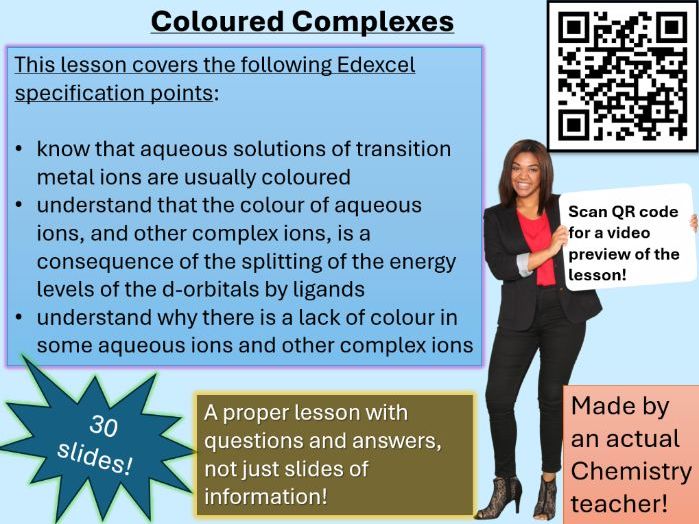
Slide 2 - Lesson objectives (see thumbnail image)
Slide 3 – Key word definitions (emit and transmit)
Slides 4 – 5: Hinge question – why are transition metal ions so colourful?
Slide 6 – reminder that white light is a mixture of many colours
Slide 7 – this slide contains a little information on how the cone cells in the eye work. While this is not in the specification, it will help students to understand about perceived colour
Slide 8 – this slide explains how a blue solution appears by absorbing red light from white and transmitting cyan (blue-green)
Slides 9 – 11: colour wheel for your students’ reference, print the hidden slides 10 – 11 for them
Slide 12 – hinge question: why is copper(II) sulfate blue, while zinc sulfate is colourless
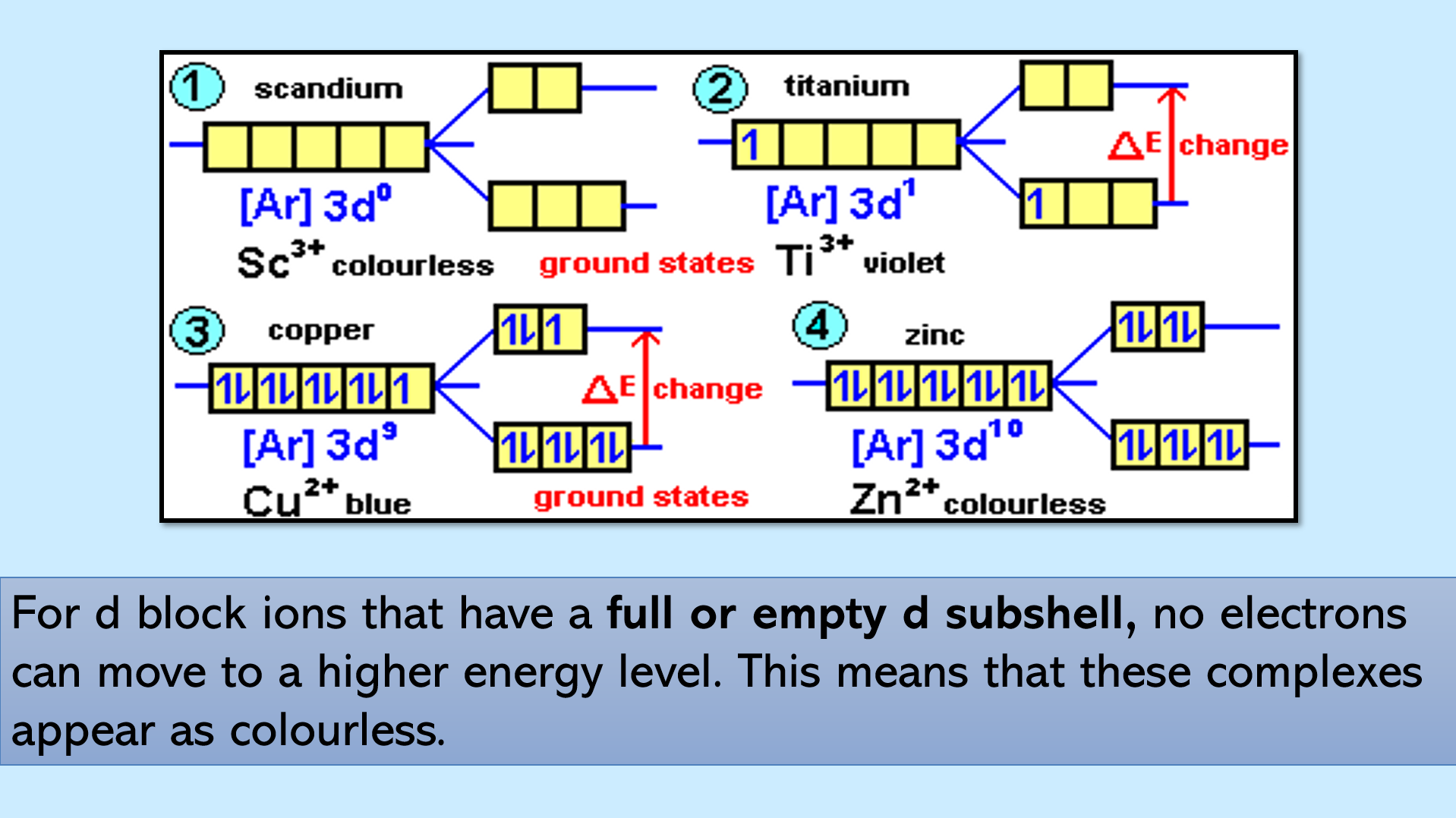
Slide 13 – a diagram showing 3d orbital splitting in an octahedral complex
Slides 14 – 15: hidden slides to be printed for students
Slide 16 – this slide explains what d orbital splitting is in more detail
Slide 17 – another visual of d orbital splitting
Slide 18 – explains the effect of d orbital splitting, i.e. electron transitions, emission of light complementary to the frequency absorbed
Slide 19 – this slide ties it all together, explaining why copper(II) sulfate is blue, i.e. red light is absorbed by the split d orbital electrons, etc.
Slide 20 – this slide explains why d block ions with full or empty d subshells form colourless complexes
Slide 21 - learning pit stop questions to test students’ understanding so far. Answers animate on the screen when you click
Slide 22 – the three factors which can alter the energy difference in the split d subshell, and subsequently the colours of the complexes
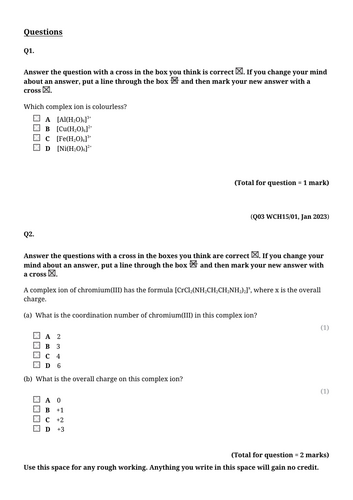
Slides 23 – 30: exam questions with mark scheme answers included with this resource
Please consider leaving a review! This really helps promote our store! Thanks!
Something went wrong, please try again later.
Helpful and to the point. I'm glad I purchased this resource
Report this resourceto let us know if it violates our terms and conditions.
Our customer service team will review your report and will be in touch.
£3.50