


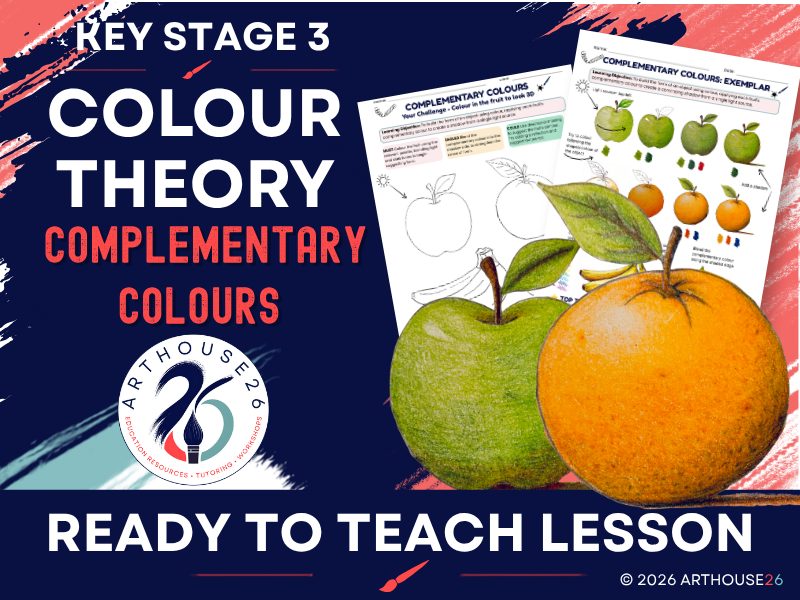
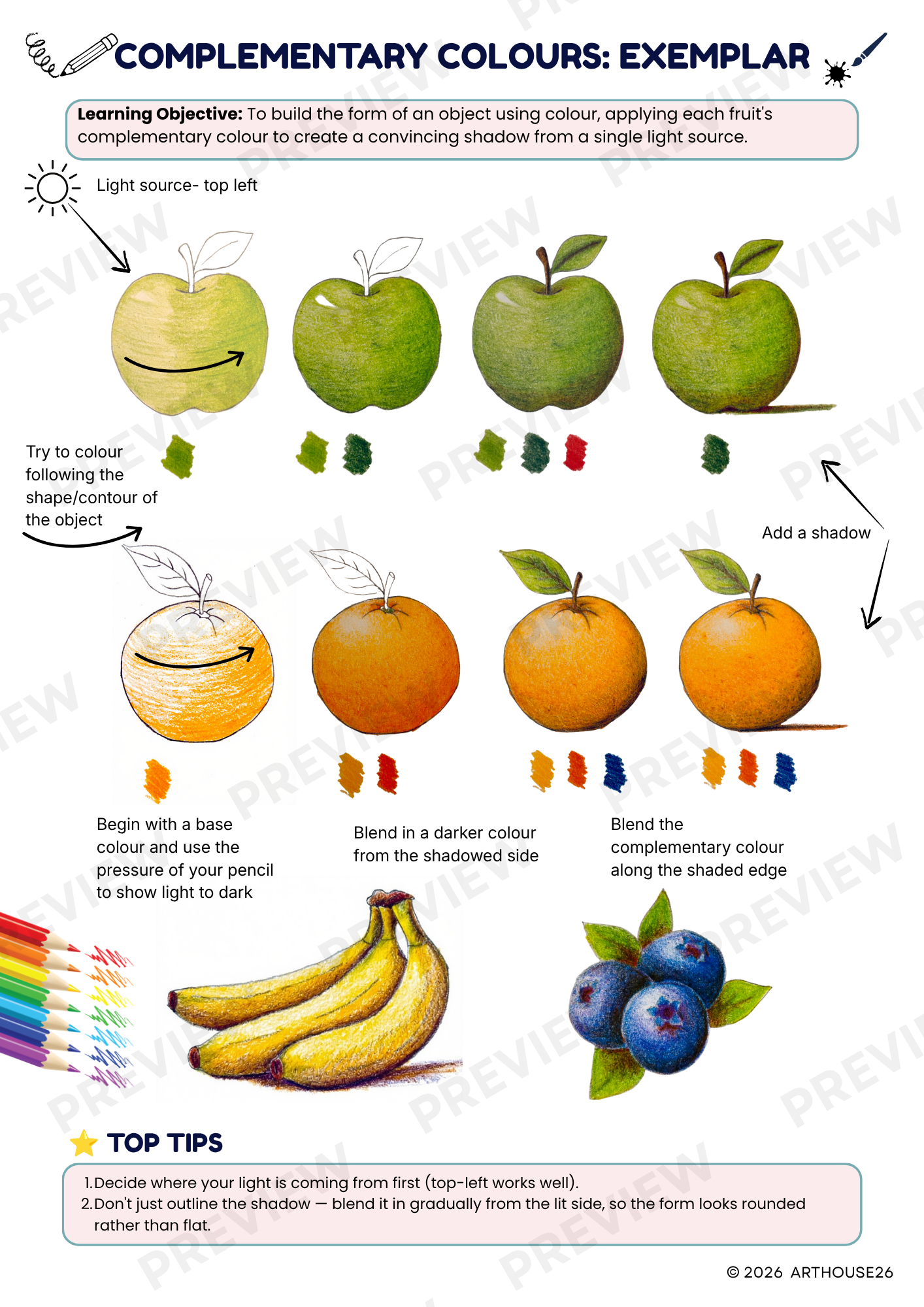
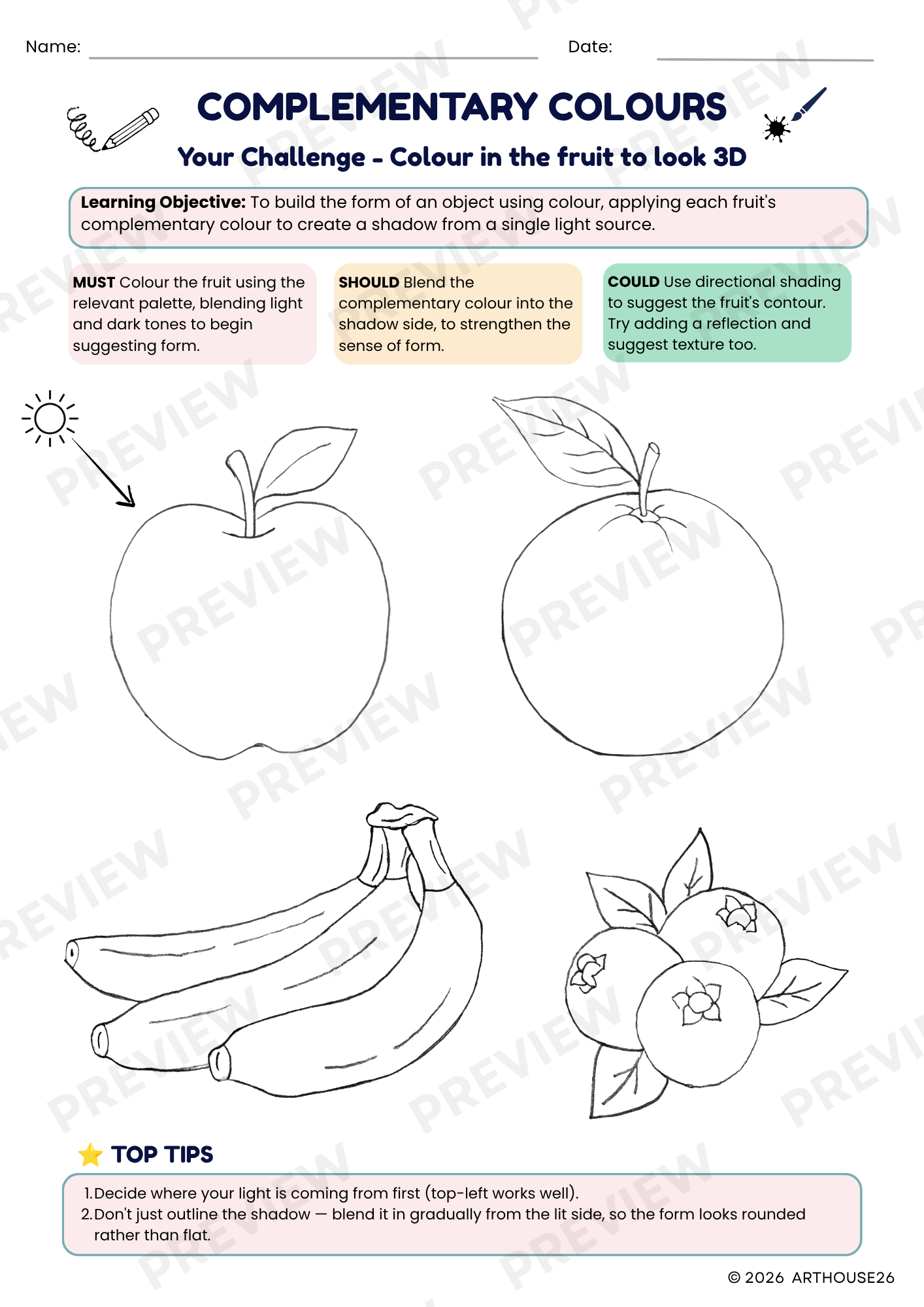
In this hands-on colour theory lesson, students shade an apple, an orange, bananas and blueberries. They use each fruit’s complementary colour to build a convincing shadow from a single light source. A step-by-step exemplar shows the technique in stages, so students can see exactly what to do, and the lesson works without specialist knowledge from the teacher.
Ideal for:
- Cover lessons and supply teachers: print and go, needing only coloured pencils
- Following a colour wheel or warm and cool colours lesson
- Preparing students for tonal and observational drawing
Key Stage: KS3 (Years 7–8) | Lesson length: 45–60 minutes | Materials: coloured pencils
What students will learn:
- What complementary colours are, and how to use them for shadows
- How to vary pencil pressure to move from light to dark
- How to blend colour smoothly rather than outlining a shadow
- How a single, consistent light source controls where the shadows fall
What’s included:
- Complementary Colours worksheet: four fruit outlines, a light source arrow, Must/Should/Could and Top Tips
- Exemplar page: the technique shown stage by stage, with pencil swatches for each step and finished examples of all four fruits
- Teacher guidance notes: learning objective, discussion starter, main task, plenary and extension
- Available US spelling/Letter
Part of the ArtHouse26 Colour Theory series. Pair it with the Colour Wheel and Warm & Cool Colours lessons.
Something went wrong, please try again later.
Absolutely great resource. Ideal for my KS3 groups. Highly recommend!
Report this resourceto let us know if it violates our terms and conditions.
Our customer service team will review your report and will be in touch.
£3.00