


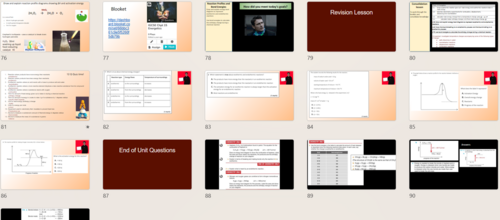
Bundle of 7 fully planned lessons and resources for Topic 3 a Energetics Edexcel IGCSE 9–1 Double/Separate Chemistry
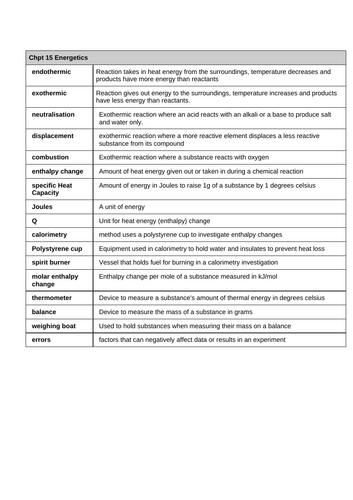
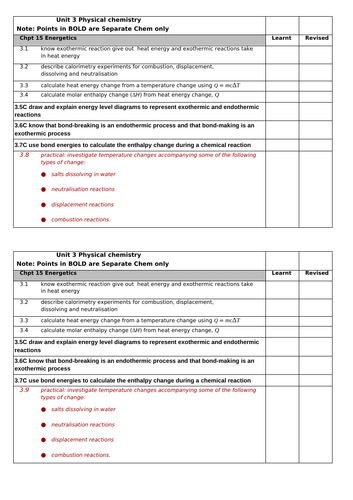
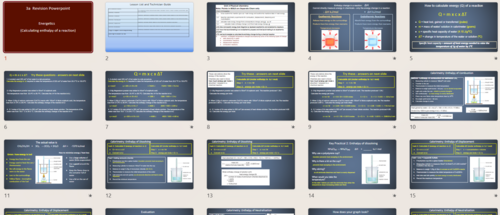
Checklist, key terms, definitions, tech guide, revision PowerPoint, coursebook questions and answers included. Perfect for new and experienced teachers, this resource provides an authentic, ready-to-teach unit requiring no additional preparation. All lessons are contained in one PowerPoint with a consistent, clear structure.
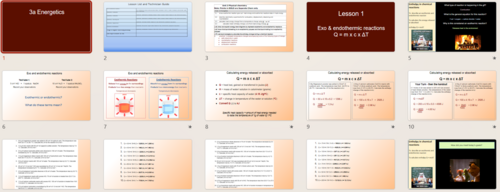
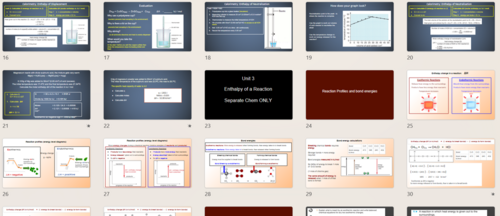
Each lesson includes starter slides with title, learning goals and tasks, along with key terms, bolded explanations, and content checked against the specification and examination papers. Core practicals or key demonstrations are included where relevant with step-by-step modelling, notes, diagrams and student tasks, blooket and quizzes. The PowerPoint features click-in animations, embedded video links, model questions and answers, and coursebook tasks to support strong conceptual understanding. Plenaries link back to learning goals. A technician guide and full lesson list appear on Slide 2 for easy planning.
Lessons & Key Content:
-
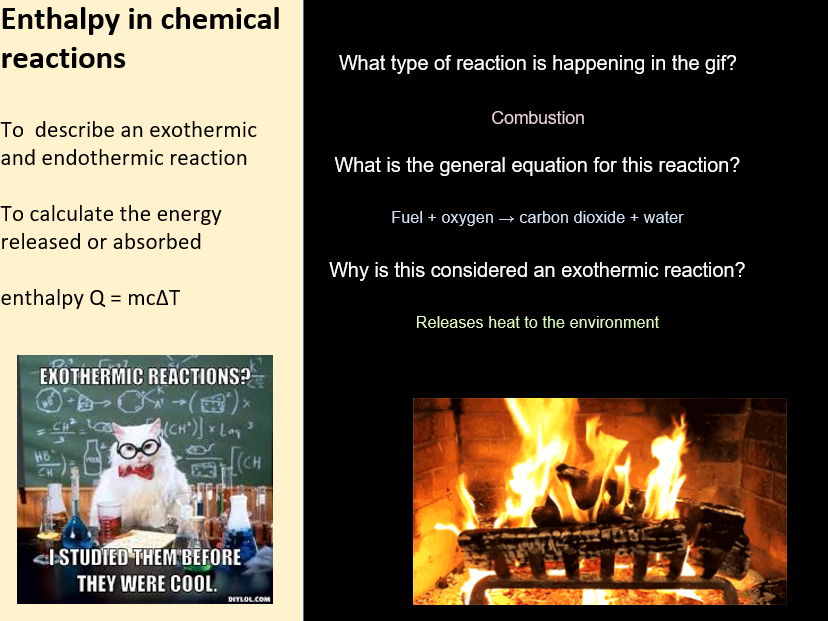
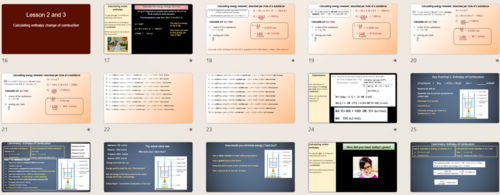
Exothermic & Endothermic Reactions; Q = mcΔT – identifying temperature changes, energy-level diagrams, applying the Q = mcΔT formula.
-
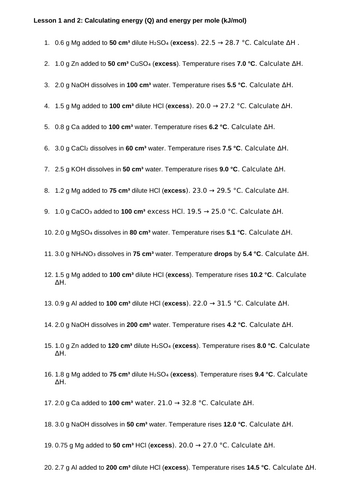
Calculating Enthalpy Change (ΔH) – converting J ↔ kJ, calculating ΔH using Q and moles, understanding sign conventions; worked examples.
-
Molar Enthalpy Calculations – multistep mole calculations (n = m/M), determining ΔH per mole, applications to dissolving and displacement reactions.
-
Enthalpy of Combustion (Core Practical) – calorimetry method, sources of error, calculating molar enthalpy values for different alcohols.
-
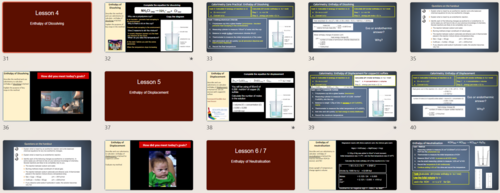
Enthalpy of Dissolving (Core Practical) – calorimetry setup, dissolving ionic solids, calculating ΔH and discussing exo/endothermic behaviour.
-
Enthalpy of Displacement (Core Practical) – metal displacement reactions (e.g., Zn + CuSO₄); calculating ΔH from concentration and volume data.
-
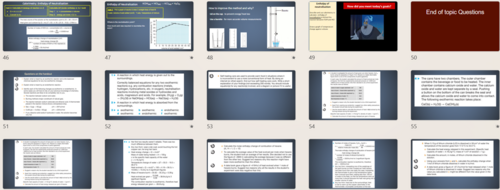
Enthalpy of Neutralisation (Core Practical) – continuous addition method; graphing
-
temperature vs volume; calculating ΔH and evaluating accuracy.
-
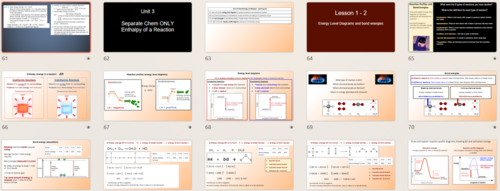
Bond Energies & Reaction Profiles (Separate Chemistry) – using bond energies to calculate ΔH, activation energy diagrams, catalysis; worked examples.
-
Revision Lesson – mixed enthalpy calculations, identification of reaction types, quizzes and exam-style questions.
Notes:
Slide 1 is repeated for TES display purposes.
Lesson starter slide background is black but PowerPoint colour schemes vary throughout.
Separate Chemistry content is clearly marked and distinguished from Double Award content
Something went wrong, please try again later.
This resource hasn't been reviewed yet
To ensure quality for our reviews, only customers who have purchased this resource can review it
Report this resourceto let us know if it violates our terms and conditions.
Our customer service team will review your report and will be in touch.
£9.00