

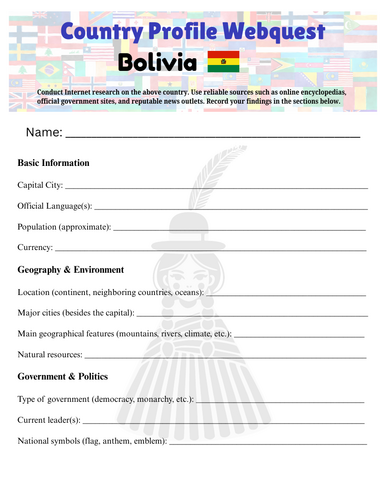

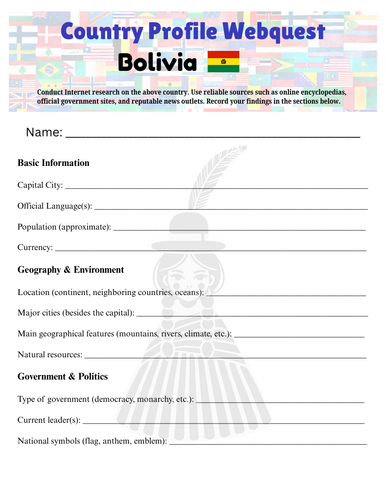
This worksheet on Bolivia guides students through an exploration of the country’s geography, culture, politics, and economy. Students begin with basic information, including the capital city Sucre (constitutional) and La Paz (administrative), official languages (Spanish and 36 indigenous languages), population, and currency (Boliviano). The geography section highlights Bolivia’s landlocked location in South America, neighboring countries, major cities, and diverse natural features such as the Andes Mountains, Altiplano plateau, Amazon Basin, and Lake Titicaca. Government and politics introduces Bolivia’s presidential republic system, current leaders, and national symbols like the flag and coat of arms. The economy section covers major industries such as mining, agriculture, and natural gas, as well as key exports and tourism. The culture and society portion explores indigenous traditions, festivals like Carnaval de Oruro, traditional foods, music, and art. Reflection questions encourage students to consider what surprised them, compare Bolivia to their own country, and identify places they would like to visit.
Keywords: Bolivia, Sucre, La Paz, South America, Andes Mountains, Altiplano, Amazon Basin, Lake Titicaca, culture, indigenous, economy, mining, agriculture, natural gas, festivals, music, tourism, geography, Model United Nations (MUN), reflection
Something went wrong, please try again later.
This resource hasn't been reviewed yet
To ensure quality for our reviews, only customers who have purchased this resource can review it
Report this resourceto let us know if it violates our terms and conditions.
Our customer service team will review your report and will be in touch.
£2.00