

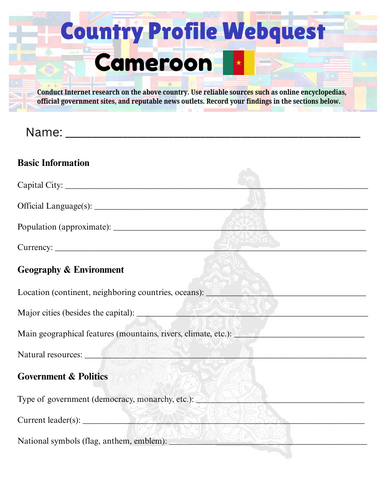

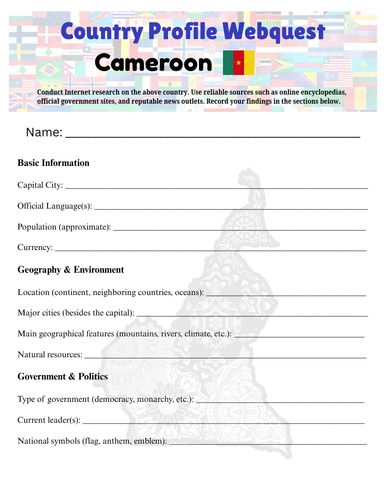
This worksheet on Cameroon helps students explore the geography, politics, economy, and culture of this diverse Central African nation. Students begin with basic information such as the capital city Yaoundé, official languages (French and English), population, and currency (Central African CFA franc). The geography section highlights Cameroon’s location in Central Africa, bordered by Nigeria, Chad, Central African Republic, Gabon, Equatorial Guinea, and the Republic of Congo, as well as its varied landscapes from coastal plains and rainforests to mountains and savannas. Mount Cameroon, one of Africa’s highest peaks, is a key feature. Government and politics introduces Cameroon’s unitary presidential republic, current leaders, and national symbols like the flag and anthem. The economy section examines industries such as oil, agriculture (cocoa, coffee, bananas), forestry, and services, along with major exports. The culture and society portion explores over 200 ethnic groups, major religions (Christianity, Islam, and traditional beliefs), foods like ndolé and achu, festivals, and music styles such as makossa. Tourism highlights include Waza National Park, Mount Cameroon, and Limbe’s beaches. Reflection questions prompt students to think about Cameroon’s nickname “Africa in Miniature” and what it reveals about its cultural and environmental diversity.
Keywords: Cameroon, Yaoundé, Central Africa, Mount Cameroon, Waza National Park, Limbe, rainforest, savanna, cocoa, coffee, bananas, oil, forestry, makossa, ndolé, achu, ethnic groups, culture, economy, geography, Model United Nations (MUN), reflection
Something went wrong, please try again later.
This resource hasn't been reviewed yet
To ensure quality for our reviews, only customers who have purchased this resource can review it
Report this resourceto let us know if it violates our terms and conditions.
Our customer service team will review your report and will be in touch.
£2.00