

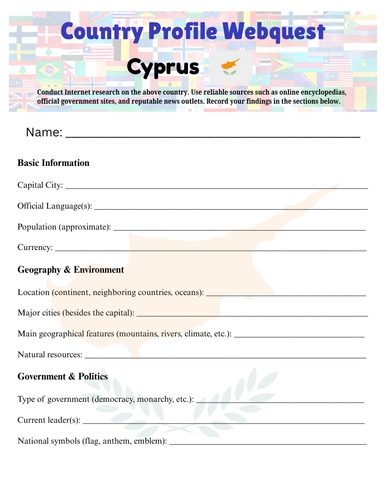

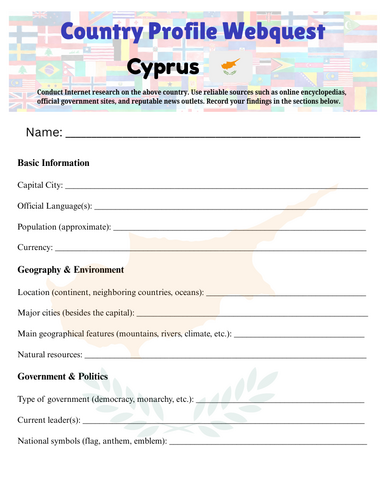
This worksheet on Cyprus guides students through research on the island nation’s geography, culture, politics, and economy. Students begin with basic information such as the capital city Nicosia, official languages (Greek and Turkish), population, and currency (Euro). The geography section highlights Cyprus’s location in the Eastern Mediterranean, neighboring proximity to Turkey, Greece, and the Middle East, as well as natural features like Troodos Mountains and beautiful coastlines. Government and politics introduces Cyprus’s presidential republic, current leaders, and the historical division between the Republic of Cyprus and Northern Cyprus, along with national symbols like the flag and anthem. The economy section covers major industries including tourism, shipping, financial services, and agriculture, with key exports like citrus fruits and wine. The culture and society portion explores Greek Orthodox and Muslim traditions, local cuisine such as halloumi and souvlaki, festivals, and contributions to art, literature, and music. Tourism highlights include ancient ruins, beaches, monasteries, and UNESCO World Heritage sites like Paphos. Reflection questions prompt students to think about Cyprus’s blend of cultures, its divided history, and its role in global affairs.
Keywords: Cyprus, Nicosia, Eastern Mediterranean, Troodos Mountains, Paphos, Greek, Turkish, halloumi, souvlaki, Orthodox Christianity, Islam, tourism, shipping, agriculture, culture, history, divided island, economy, geography, Model United Nations (MUN), reflection
Something went wrong, please try again later.
This resource hasn't been reviewed yet
To ensure quality for our reviews, only customers who have purchased this resource can review it
Report this resourceto let us know if it violates our terms and conditions.
Our customer service team will review your report and will be in touch.
£2.00