

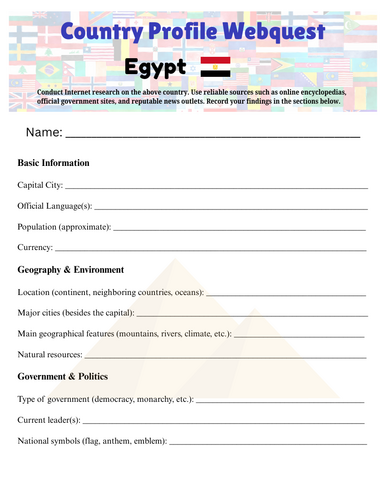

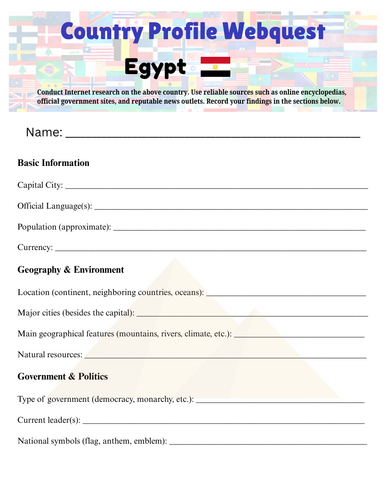
This worksheet on Egypt helps students explore the country’s geography, politics, economy, and culture through guided research and activities. Students begin with basic information such as the capital city Cairo, official language (Arabic), approximate population, and currency (Egyptian pound). The geography section highlights Egypt’s location in northeastern Africa, bordering Libya, Sudan, Israel, and the Mediterranean and Red Seas, with features including the Nile River, Nile Delta, deserts (Sahara), and oases. Government and politics introduces Egypt’s presidential republic, current leaders, and national symbols like the flag, coat of arms, and anthem. The economy section emphasizes major industries such as tourism, agriculture, petroleum, textiles, and Suez Canal trade. The culture and society portion explores major religions (Islam and Christianity), traditional foods like koshari and ful medames, festivals, music, literature, and ancient historical contributions. Tourism highlights include the Pyramids of Giza, Luxor, the Nile, and the Egyptian Museum. Reflection questions encourage students to consider how Egypt’s geography, history, and cultural heritage shape its modern identity.
Keywords: Egypt, Cairo, northeastern Africa, Nile River, Nile Delta, Sahara Desert, Suez Canal, tourism, agriculture, petroleum, textiles, Islam, Christianity, koshari, ful medames, pyramids, Luxor, culture, geography, Model United Nations (MUN), reflection
Something went wrong, please try again later.
This resource hasn't been reviewed yet
To ensure quality for our reviews, only customers who have purchased this resource can review it
Report this resourceto let us know if it violates our terms and conditions.
Our customer service team will review your report and will be in touch.
£2.00