

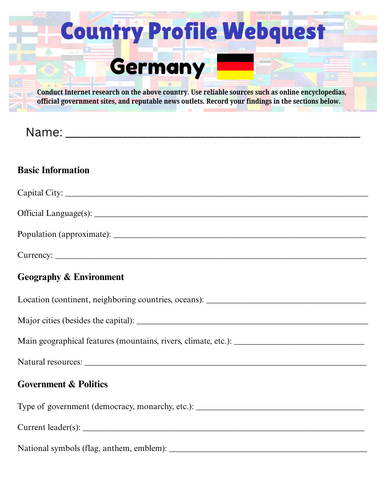

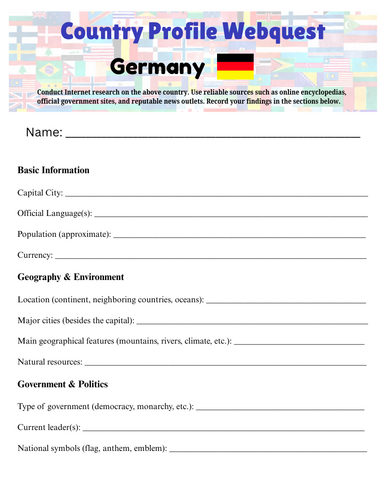
This worksheet on Germany guides students through a detailed exploration of the country’s geography, political system, economy, and vibrant culture. Students start by identifying essential facts such as the capital city Berlin, official language (German), population, and currency (Euro). In the geography section, students examine Germany’s location in Central Europe, bordered by nine countries, with diverse landscapes including the Alps in the south, the North Sea and Baltic Sea coasts, major rivers like the Rhine and Danube, and temperate forests. The government and politics section covers Germany’s federal parliamentary republic structure, current leadership, and national symbols such as the black-red-gold flag and eagle emblem. The economy section highlights Germany’s status as Europe’s largest economy, known for its strong industrial base (automotive, engineering, technology), exports, and high living standards. The culture and society portion explores traditions such as Oktoberfest, Christmas markets, classical music, literature, cuisine (pretzels, sausages), and major holidays. Tourism highlights include Berlin’s historic sites, the Bavarian Alps, castles, and cultural cities like Munich and Hamburg. Reflection questions prompt students to consider Germany’s role in Europe and its cultural influence globally.
Keywords: Germany, Berlin, Central Europe, Alps, Rhine River, Danube, German language, Euro, federal republic, automotive industry, engineering, culture, Oktoberfest, history, tourism, economy, geography, Model United Nations (MUN), reflection, politics
Something went wrong, please try again later.
This resource hasn't been reviewed yet
To ensure quality for our reviews, only customers who have purchased this resource can review it
Report this resourceto let us know if it violates our terms and conditions.
Our customer service team will review your report and will be in touch.
£2.00