

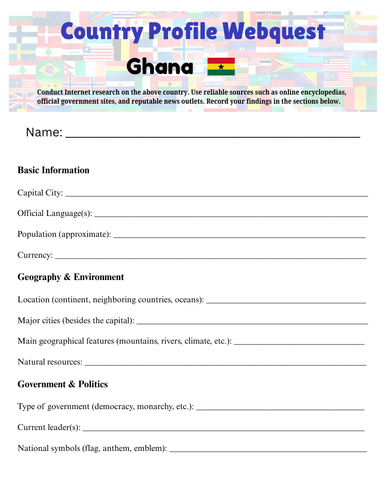

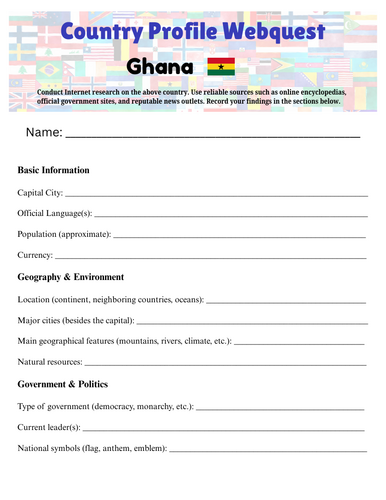
This worksheet on Ghana encourages students to explore the country’s geography, political system, economy, and cultural identity through structured research activities. Students begin by noting key facts such as the capital city Accra, official language (English), population, and currency (Ghanaian cedi). The geography section examines Ghana’s location in West Africa, bordered by Côte d’Ivoire, Burkina Faso, Togo, and the Gulf of Guinea, with diverse landscapes including coastal plains, forests, savannas, and Lake Volta — one of the world’s largest man-made lakes. In the government and politics section, students research Ghana’s democratic republic system, current leadership, and national symbols like the Black Star flag. The economy portion highlights Ghana’s major industries, including gold mining, cocoa production, oil, and services, as well as its role as one of Africa’s fastest-growing economies. The culture and society section explores Ghana’s ethnic diversity, languages, traditional festivals, music and dance (such as highlife and kente weaving), religious practices, and cuisine. Tourism highlights include Cape Coast Castle, Kakum National Park, Accra’s vibrant markets, and historical and cultural sites. Reflection questions prompt students to consider Ghana’s historical significance, cultural richness, and economic development.
Keywords: Ghana, Accra, West Africa, Lake Volta, Gulf of Guinea, English language, democracy, gold, cocoa, oil, economy, Black Star flag, culture, highlife music, kente weaving, tourism, history, geography, Model United Nations (MUN), reflection, politics
Something went wrong, please try again later.
This resource hasn't been reviewed yet
To ensure quality for our reviews, only customers who have purchased this resource can review it
Report this resourceto let us know if it violates our terms and conditions.
Our customer service team will review your report and will be in touch.
£2.00