


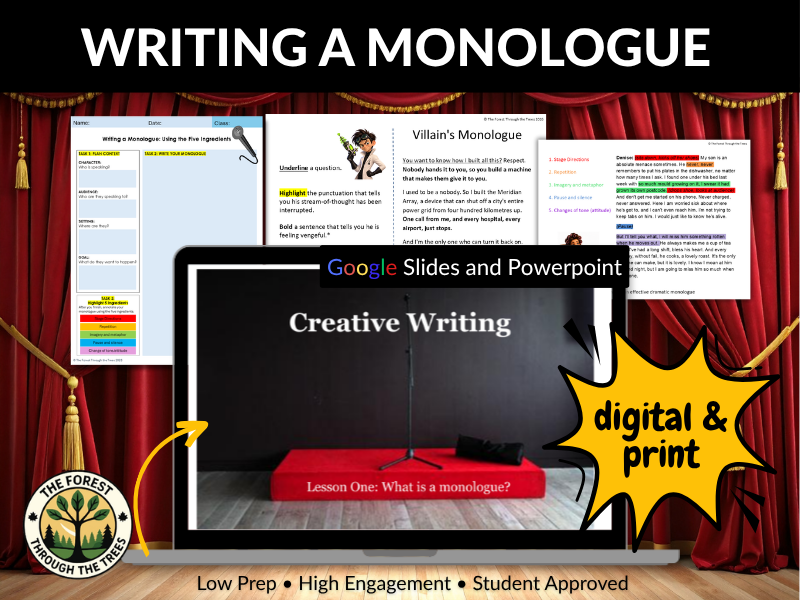
Help students move from reading and analysing monologues to confidently creating their own!
This engaging, step-by-step resource introduces students to the art of monologue writing and provides them with the tools they need to understand what makes an effective monologue.
Rather than simply asking students to write a monologue, this resource takes them through the process of analysing examples, exploring key techniques, developing context and character, and planning and writing their own original piece.
**What’s Included?
**
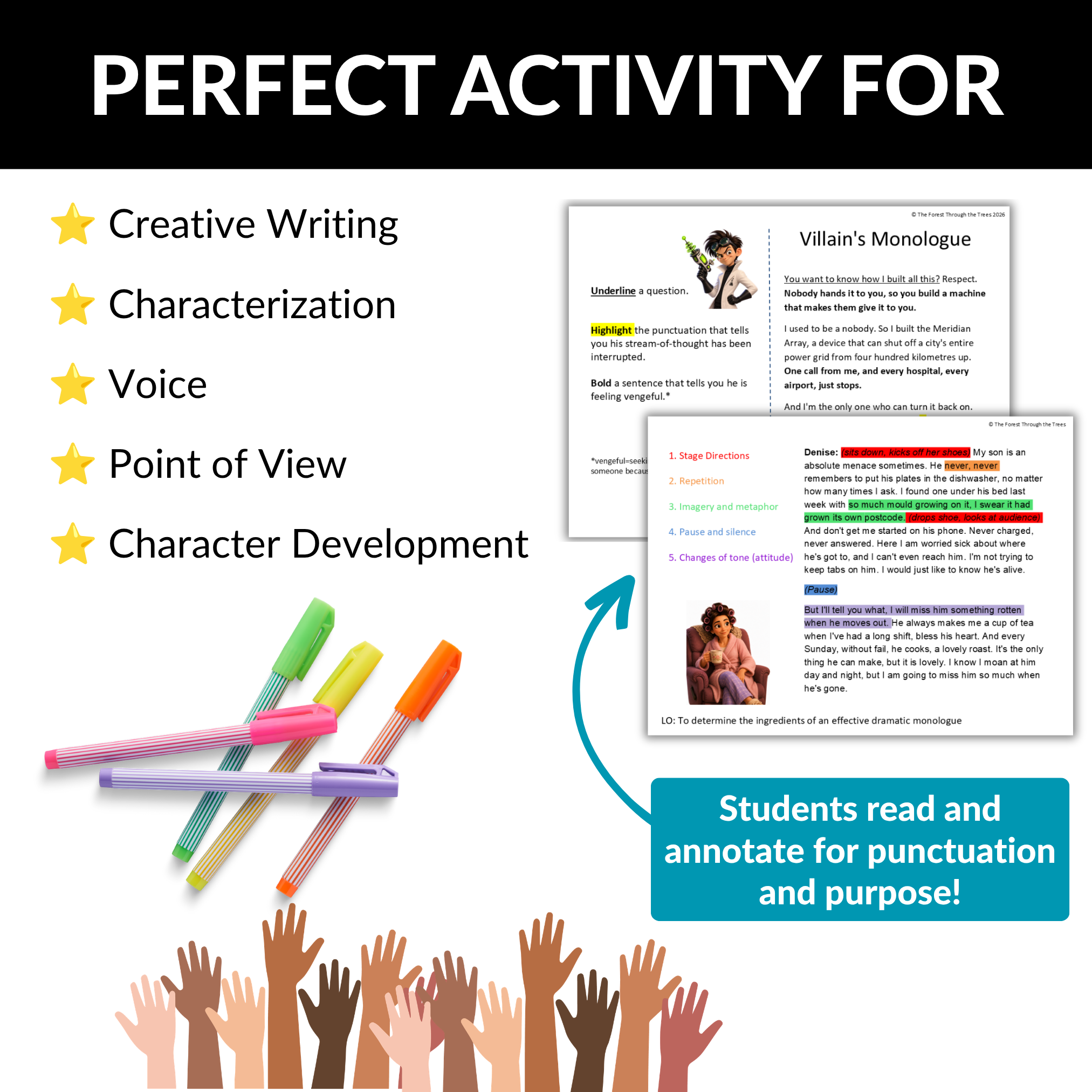
Analyse Three Example Monologues
Students examine three example monologues and explore how writers use:
Character
Context
Emotion
Voice
Punctuation
Structure
Other dramatic and writing techniques
Explore Punctuation & Formatting
Students consider how punctuation and formatting can communicate a character’s thoughts, feelings, pauses, interruptions, questions, excitement, uncertainty and changes in emotion.
The Five Ingredients of a Monologue
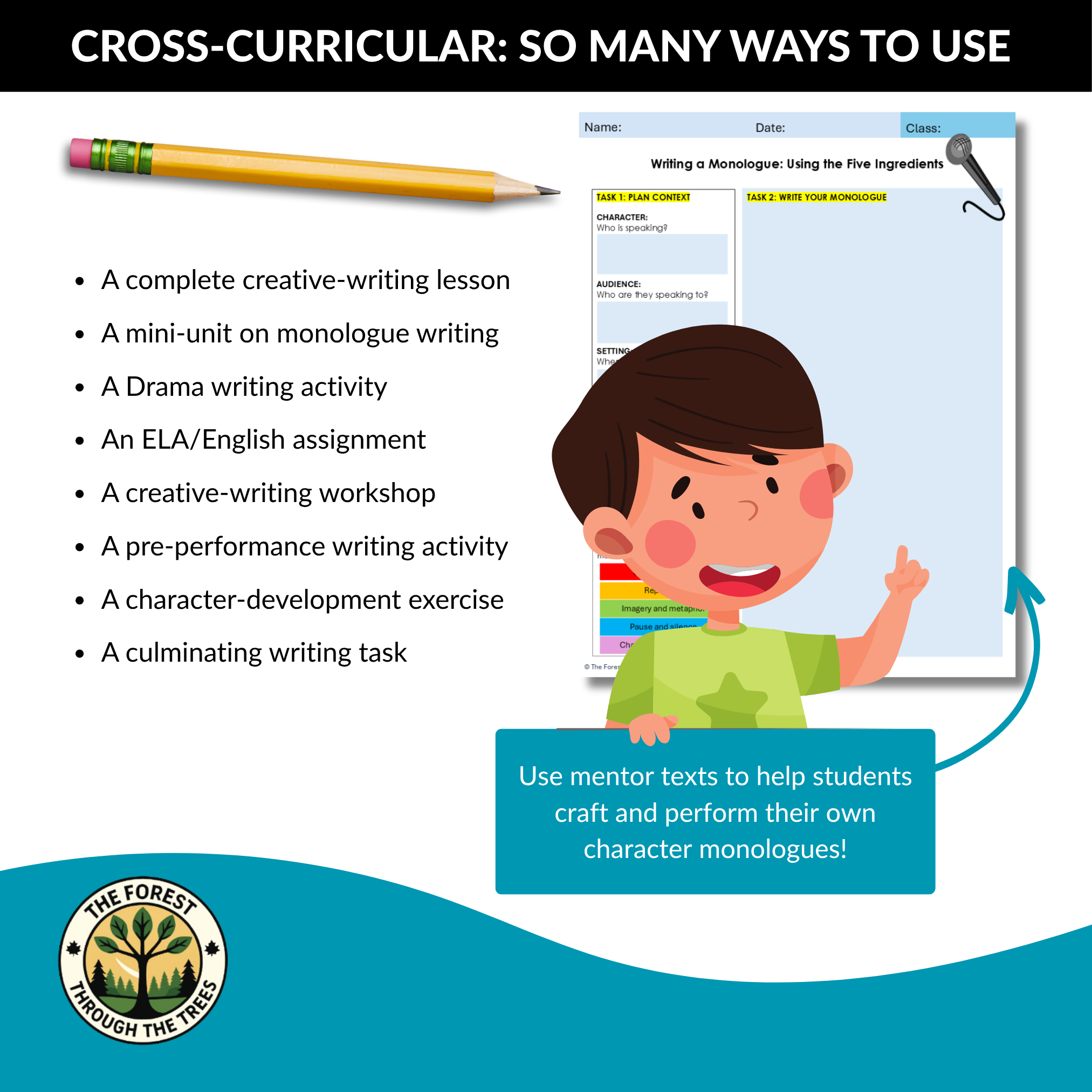
Students are introduced to five key ingredients that help turn an idea into an effective monologue.
They explore questions such as:
Who is speaking?
Where are they?
What has just happened?
Why are they speaking?
What do they want the audience to understand?
Develop Context & Character
Students learn that a strong monologue needs more than an interesting character. They need to establish the situation surrounding that character.
Students explore the who, where, what, when, why and what just happened behind their monologue so that their writing has a clear purpose and context.
Write an Original Monologue
After analysing the examples and learning the key techniques, students use what they have learned to plan and write their own original monologue.
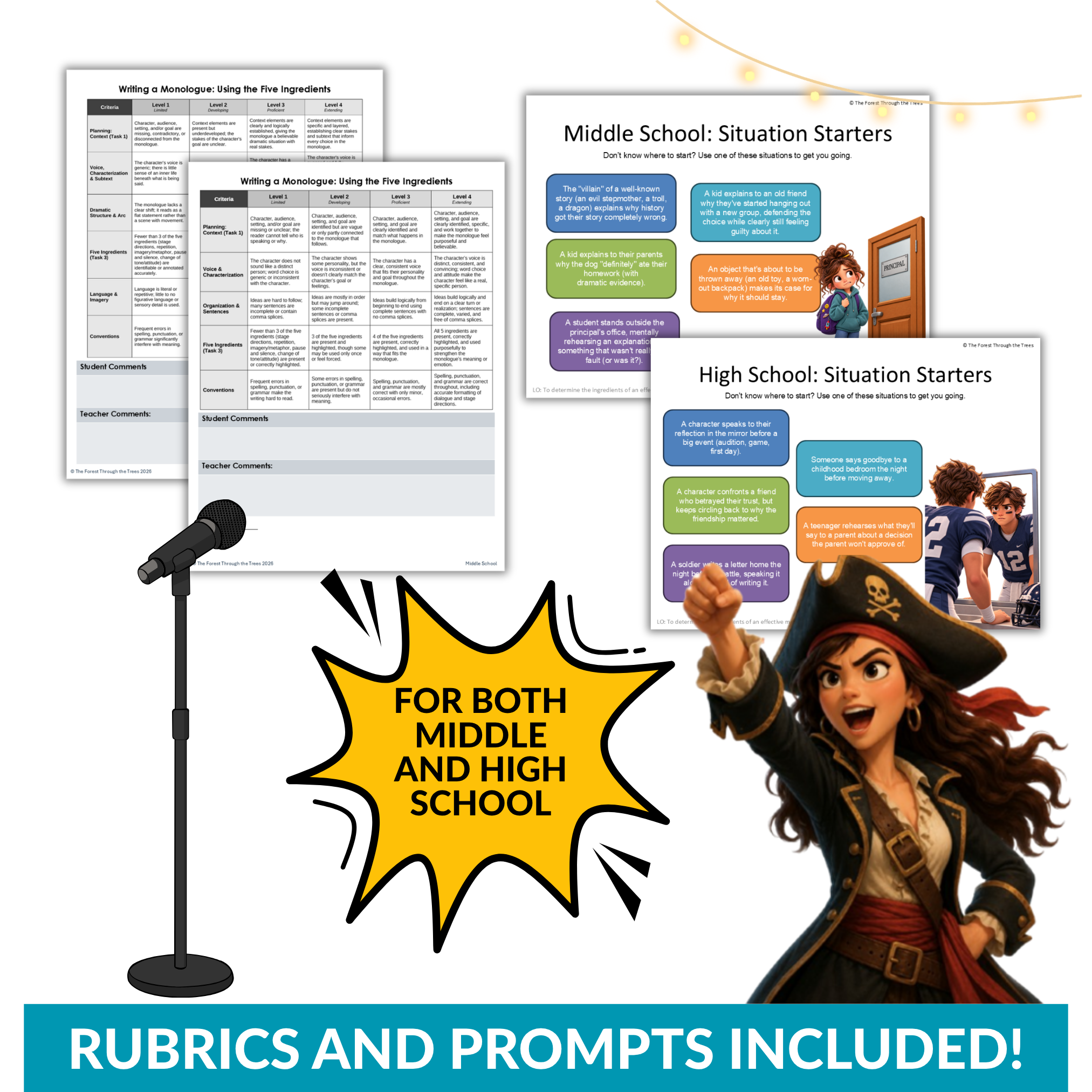
Differentiated Writing Prompts
The resource includes separate writing prompts for younger and older secondary students, allowing teachers to select appropriate tasks for their classes.
Assessment Rubrics
Separate rubrics are included for middle school and high school students, allowing teachers to assess student writing using age-appropriate expectations.
Why Use This Resource?
-
Step-by-step: Students are guided through the writing process rather than being given a blank page.
-
Student-friendly: Clear explanations make the techniques accessible to a range of learners.
-
Differentiated: Includes separate writing prompts and assessment rubrics for younger and older students.
-
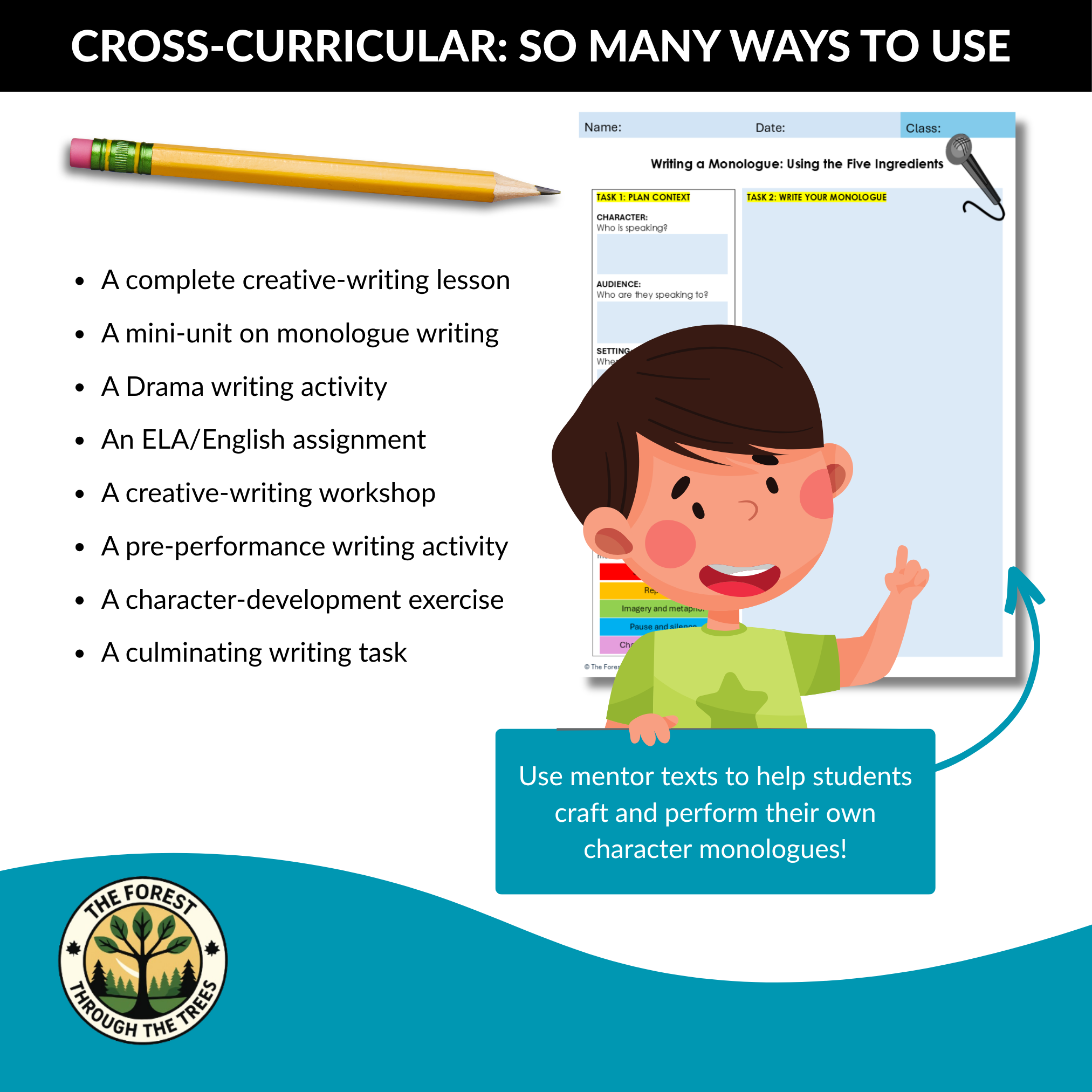
Flexible: Suitable for English, Creative Writing, Drama and Theatre lessons.
-
Reading AND writing: Students learn by analysing mentor examples before applying the techniques to their own writing.
-
Creative: Students develop an original character, situation, voice and story.
Suitable for Key Stages 3–5 / approximately ages 11–18.
Something went wrong, please try again later.
This resource hasn't been reviewed yet
To ensure quality for our reviews, only customers who have purchased this resource can review it
Report this resourceto let us know if it violates our terms and conditions.
Our customer service team will review your report and will be in touch.
£2.00