


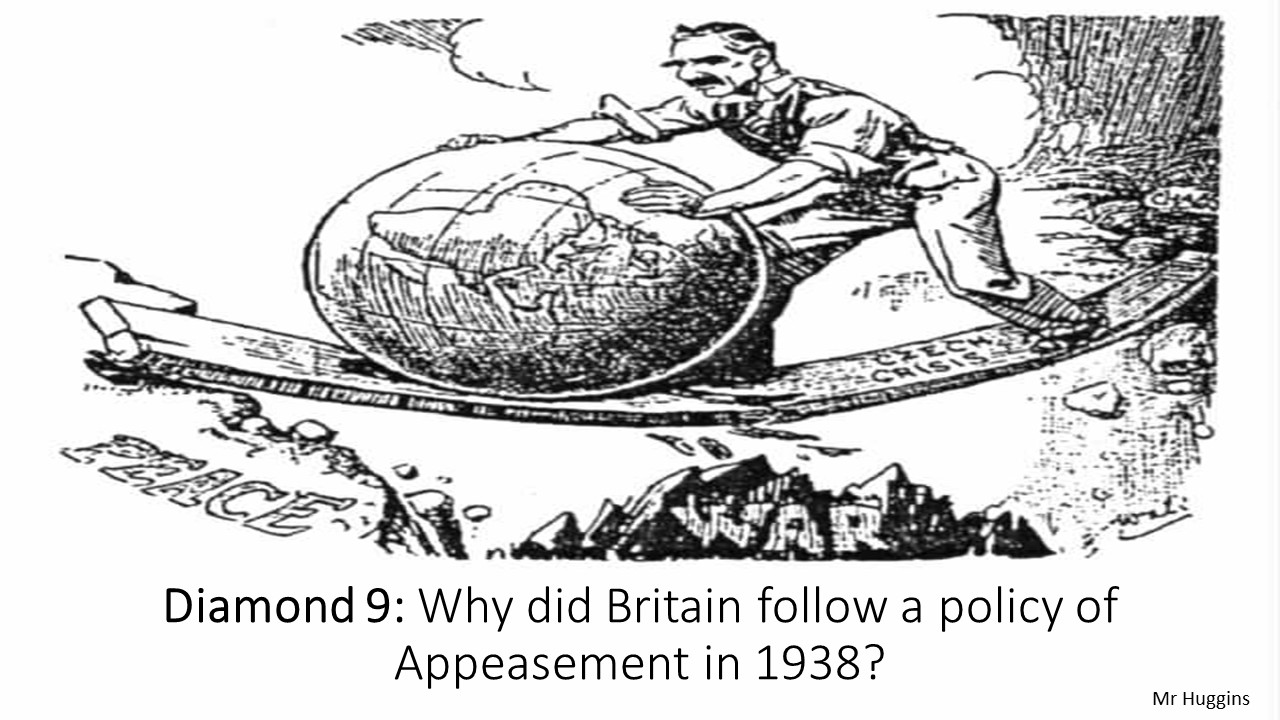
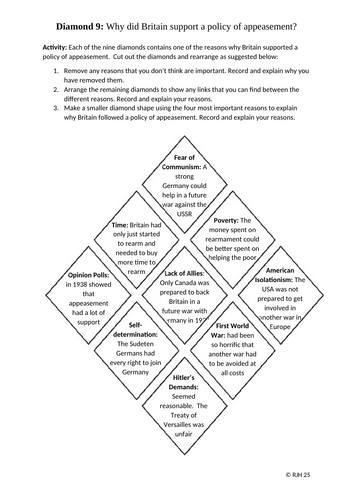
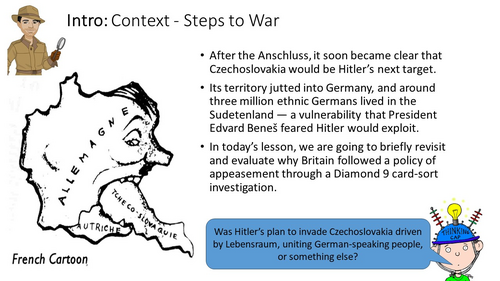
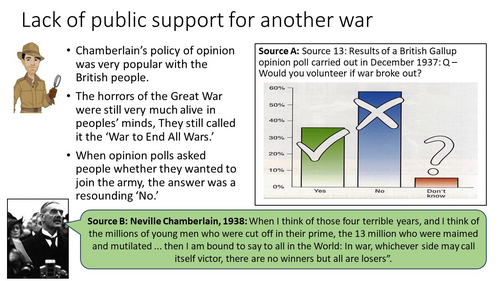
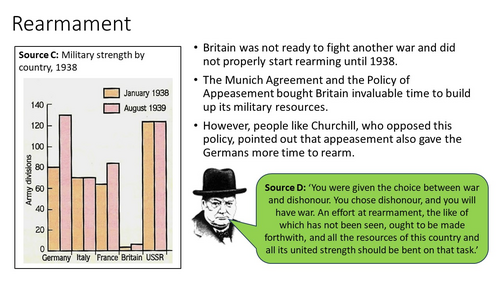
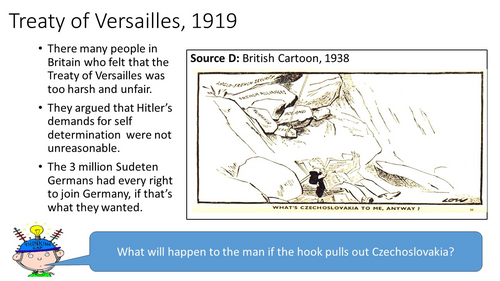
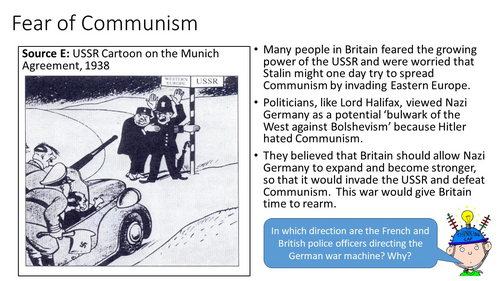

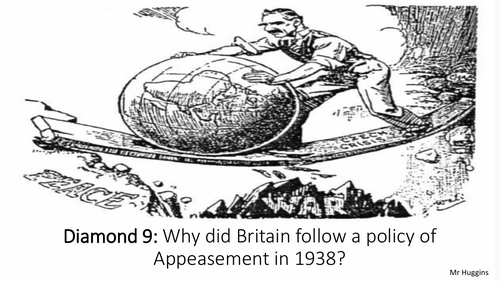
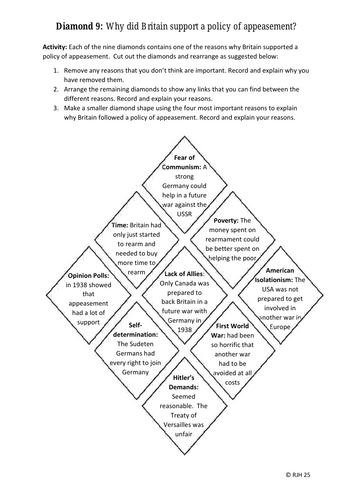
This Diamond 9 activity has been created to offer meaningful stretch and challenge for students studying why Britain followed a policy of appeasement in 1938. If you are looking for something for main stream students then please check out our card sort on the same topic.
Diamond ranking is widely used in UK classrooms because it is a powerful way to develop critical thinking. By ranking and organising information, pupils are required to explain their decisions, justify their reasoning, and make explicit the links they see between different causes. This makes it an excellent strategy for deepening historical understanding and strengthening analytical skills.
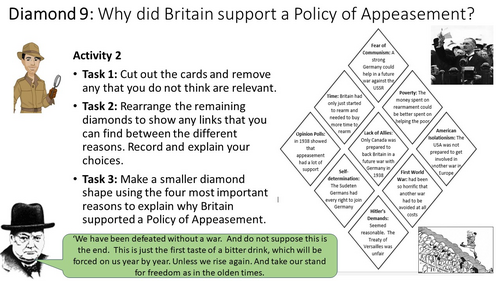
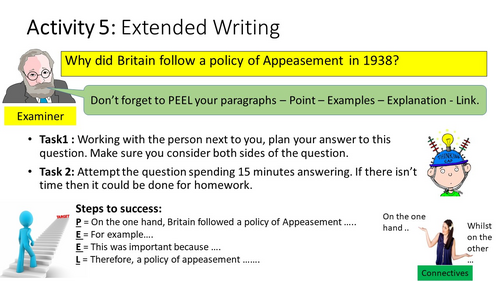
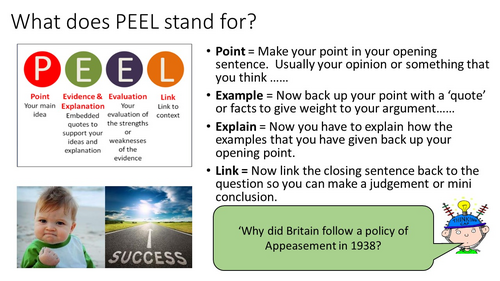
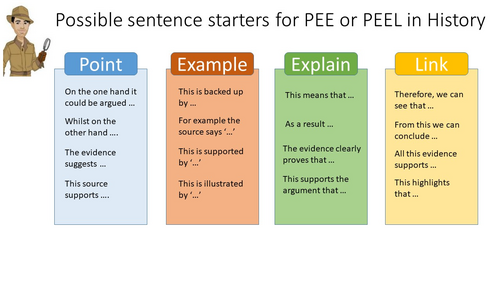
The resource works well as a starter, plenary, revision task, or as part of an assessment for learning approach. It includes nine diamond-shaped cards, each outlining a different factor that influenced Britain’s policy of appeasement. The activity is supplied in Microsoft Word, allowing you to edit or adapt it easily to suit your pupils or your exam board requirements. We have also including a fully resourced PowerPoint with aims, objectives, starters, plenaries, information slides, video clips, writing frames and templates, to accompany the diamond 9 activity.
Once pupils have cut out the cards, they complete three structured tasks that guide them through increasingly demanding thinking. First, they remove any factors they believe are less important and record the reasons for their choices. Next, they arrange the remaining cards into a diamond shape that reflects the connections and relationships between the causes, again explaining the logic behind their decisions. Finally, they create a smaller diamond containing what they judge to be the four most significant reasons why Britain pursued a policy of appeasement in 1938. Throughout, pupils are encouraged to discuss, defend, and refine their ideas with their peers. It is this dialogue — the explanation, challenge, and collaborative reasoning — that makes the strategy so effective for developing higher-order thinking.
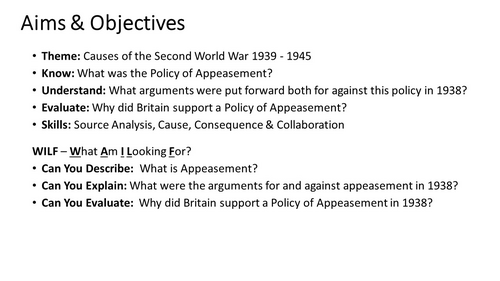
Aims and Objectives
Theme: Causes of the Second World War, 1939–1945
Know: What was the policy of appeasement?
Understand: What arguments were made for and against the policy in 1938?
Evaluate: Why did Britain support appeasement?
WILF – What Am I Looking For?
Identify and describe the policy of appeasement
Explain arguments for and against the policy
Analyse why Britain followed a policy of appeasement in 1938
If you find this resource helpful, you may wish to explore the other activities on this topic available in my TES shop. You can also follow The History Academy on social media for updates, new resources, and opportunities to share how you’ve used this activity in your classroom.
Thank you for your support, and happy teaching!
Kind Regards
Roy
Something went wrong, please try again later.
This resource hasn't been reviewed yet
To ensure quality for our reviews, only customers who have purchased this resource can review it
Report this resourceto let us know if it violates our terms and conditions.
Our customer service team will review your report and will be in touch.
£3.60