Digital Functional Skills Level One - Module 4- Complete 4.1 – 4.3 BUNDLE
Resource Bundle



These resources have been created for those delivering the Digital Functional Skills Qualification at Level 1, which replaces the current Functional Skills ICT Qualification.
The DFS qualification’s main purpose is to provide reliable evidence of a learner’s achievements against content that is relevant to the workplace and real life.
These resources provide a structured assessment in workbook form to evidence learner knowledge and skills, as well as their ability to apply these in different contexts and demonstrate that all learning outcomes have been met.
The qualification itself is made up of five main skill areas (Modules), each with its own series of units.
The unit workbooks include various challenges, activities and tasks to prove learners’ understanding. Each page has a header that includes the individual outcomes covered and can be assessed easily and signed off.
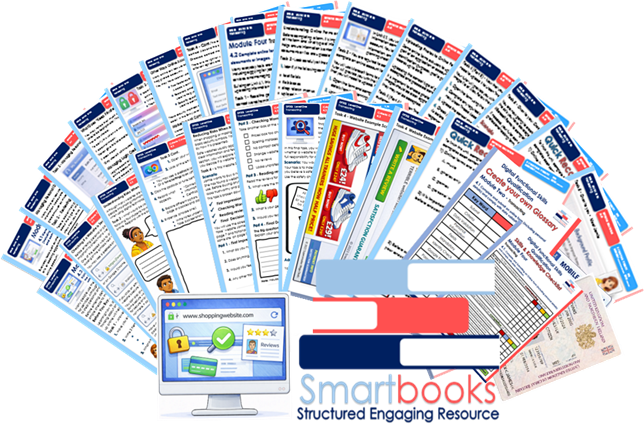
This Bundle of resources include all 3 units for Module 4 - Transacting
They are broken down as follows:
This resource covers:
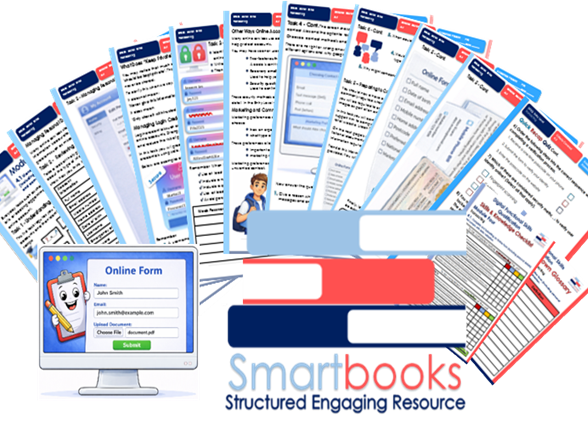
Unit 4.1
Manage account settings for an online service (including personal details, login credentials, and marketing and communication preferences).
Task 1 – Understanding Online Accounts
Learners identify common online services and match them to their main purpose, exploring why online accounts are used in everyday life.
Task 2 – Managing Personal Details
Learners review typical account information and decide which details are personal, need to be kept up to date, and should be kept private, supported by short discussion questions.
Task 3 – Login Credentials and Password Security
Learners identify weak passwords and practise rewriting them to meet strong password rules, developing awareness of how login credentials protect accounts.
Task 4 – Marketing and Communication Preferences
Learners use a realistic scenario to decide contact methods and marketing preferences, explaining how these settings help reduce unwanted contact.
Task 5 – Preparing to Complete an Online Form
Learners identify information needed to complete an online account, preparing them for Unit 4.2.
The unit ends with a 10-question multiple-choice recap quiz to reinforce learning.
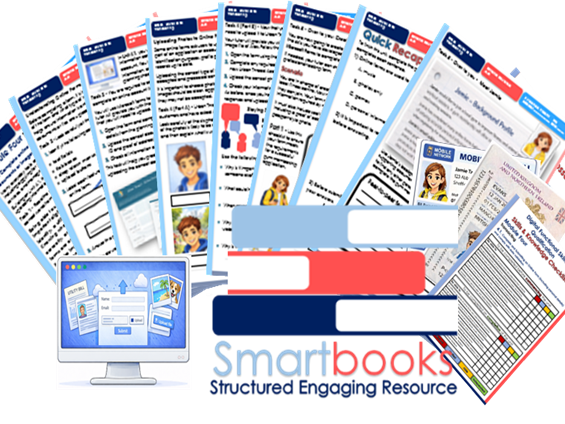
Unit 4.2 Complete online forms and upload documents or images.
Task 1 – Understanding Uploading Documents and Photos
Learners explore why online forms often require documents or images and identify when and how files need to be uploaded safely and accurately.
Task 2 – Understanding Online Forms
Learners identify common features of online forms, including text fields, tick boxes, drop-down menus and upload buttons, and consider why accurate information is important.
Task 3 – Completing an Online Form and Uploading Documents
Learners complete a realistic online application using Microsoft Forms, entering personal details and uploading the correct supporting documents such as proof of identity and proof of address.
Task 4 – Uploading Suitable Photos
Learners identify suitable and unsuitable images for online forms, explore photo requirements, and upload an appropriate photo using a realistic scenario.
Task 5 – Creating Your Own Online Form
Learners independently create their own online form using a fictional scenario, including questions, file upload sections and a final check, before sharing and reviewing forms with peers.
The unit ends with a 10-question multiple-choice recap quiz to reinforce learning.
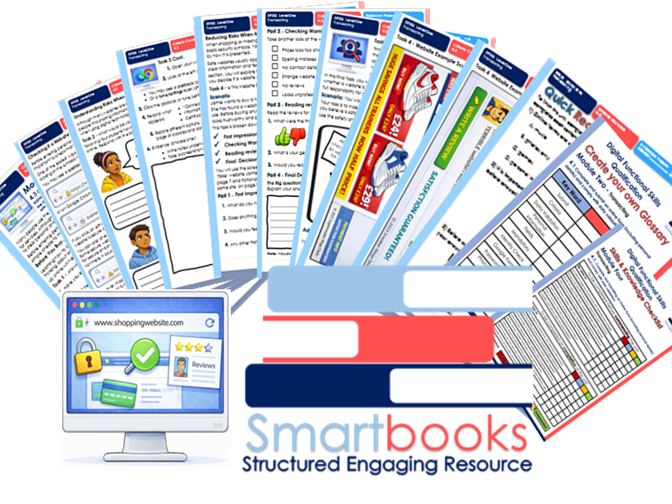
Unit 4.3 Carry out checks to reduce the risks involved in transactions online (including checking for the padlock next to the URL in the browser, checking if the website appears professional with a legitimate domain name and checking reviews).
Task 1 – Thinking About Online Risks
Learners reflect on their own experiences of buying and signing up online and consider why it is important to check that websites are safe before entering personal or payment details.
Task 2 – Understanding Online Risks and Giving Advice
Learners respond to realistic online dilemmas presented by other students and provide advice based on their knowledge of safe online behaviour, helping to build awareness of potential risks.
Task 3 – Checking Website Security
Learners explore how to identify secure websites by locating the padlock or tune/settings icon in the browser and investigating the information available when these are clicked. Learners record findings or provide screenshots as evidence.
Task 4 – Identifying Warning Signs and Reading Reviews
Using a realistic scenario, learners analyse a fictional shopping website to identify warning signs, assess professionalism and interpret customer reviews before deciding whether the site can be trusted.
Task 5 – Independent Online Safety Task (Over to You)
Learners independently search for a product online and apply a safety checklist to select a trustworthy website. They provide screenshots and written justification explaining why their chosen website is safe and suitable for making a transaction.
The unit concludes with a 10-question multiple-choice recap quiz to reinforce key learning and understanding of how to reduce risks when making transactions online.
Also included in this resource is a Skills and Knowledge checklist and a Glossary for learners to complete before, throughout and after delivery of this unit.
Other Workbooks in this DFSQ series are available on TES.
This resource is currently in a PDF file format. Word versions are available, please message me directly for these at SmartbooksEd@outlook.com.
Something went wrong, please try again later.
This resource hasn't been reviewed yet
To ensure quality for our reviews, only customers who have purchased this resource can review it
Report this resourceto let us know if it violates our terms and conditions.
Our customer service team will review your report and will be in touch.