


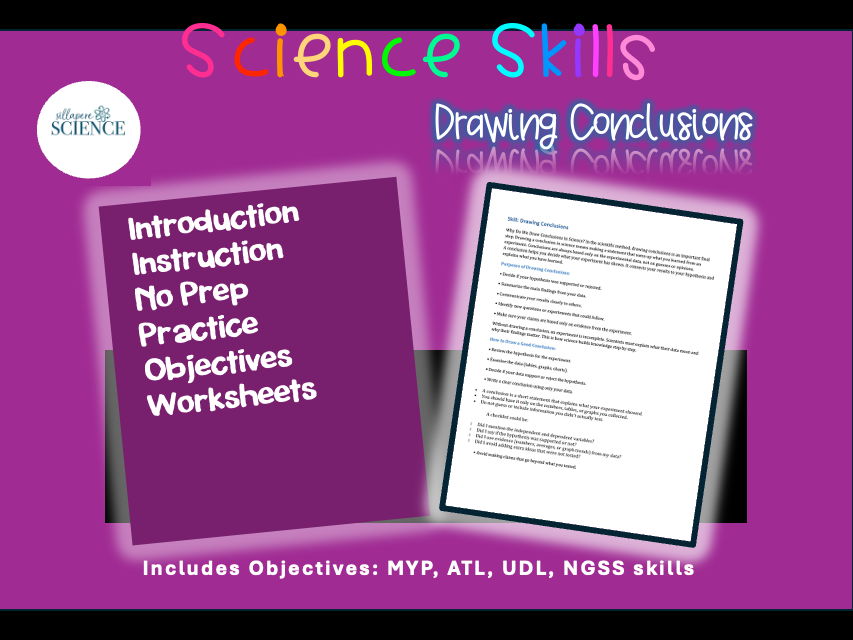
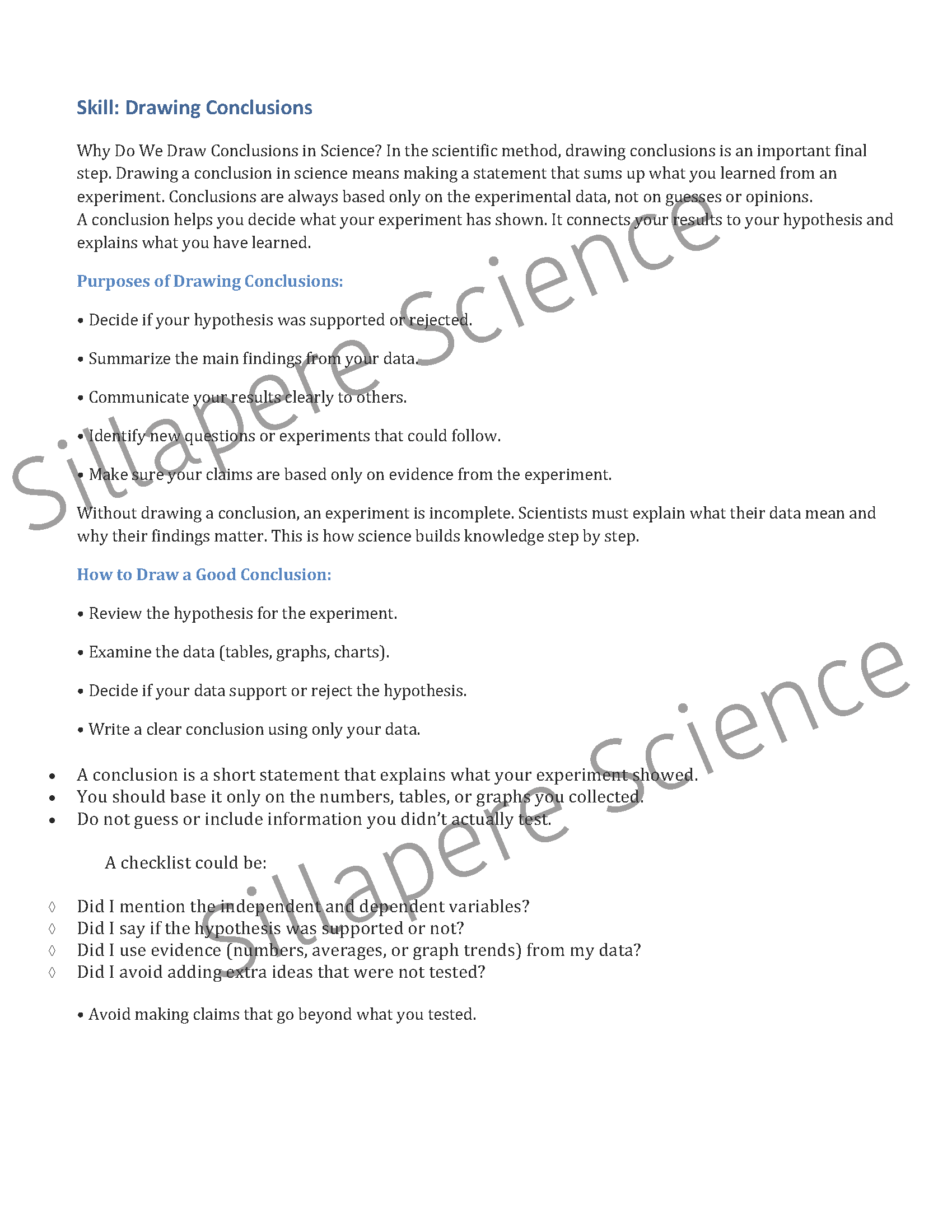
This student-friendly guide teaches how to correctly write scientific conclusions based on experimental data. It explains the role of conclusions in the scientific method and emphasizes that conclusions must come directly from the evidence collected. Students learn how to connect results to their hypothesis, identify when conclusions go too far, and use clear reasoning supported by data.
Included in the resource are complete objective descriptions for MYP Criterion, ATL, UDL, NGSS, and standard objectives.
Resource Highlights:
· Clear instructions on how to:
o Review the hypothesis and data before writing a conclusion
o Decide whether the hypothesis is supported or not
o Summarize findings using only the experimental evidence
o Avoid overgeneralizing beyond what was tested
o Use a checklist to ensure strong, valid conclusions
· Example experiment included:
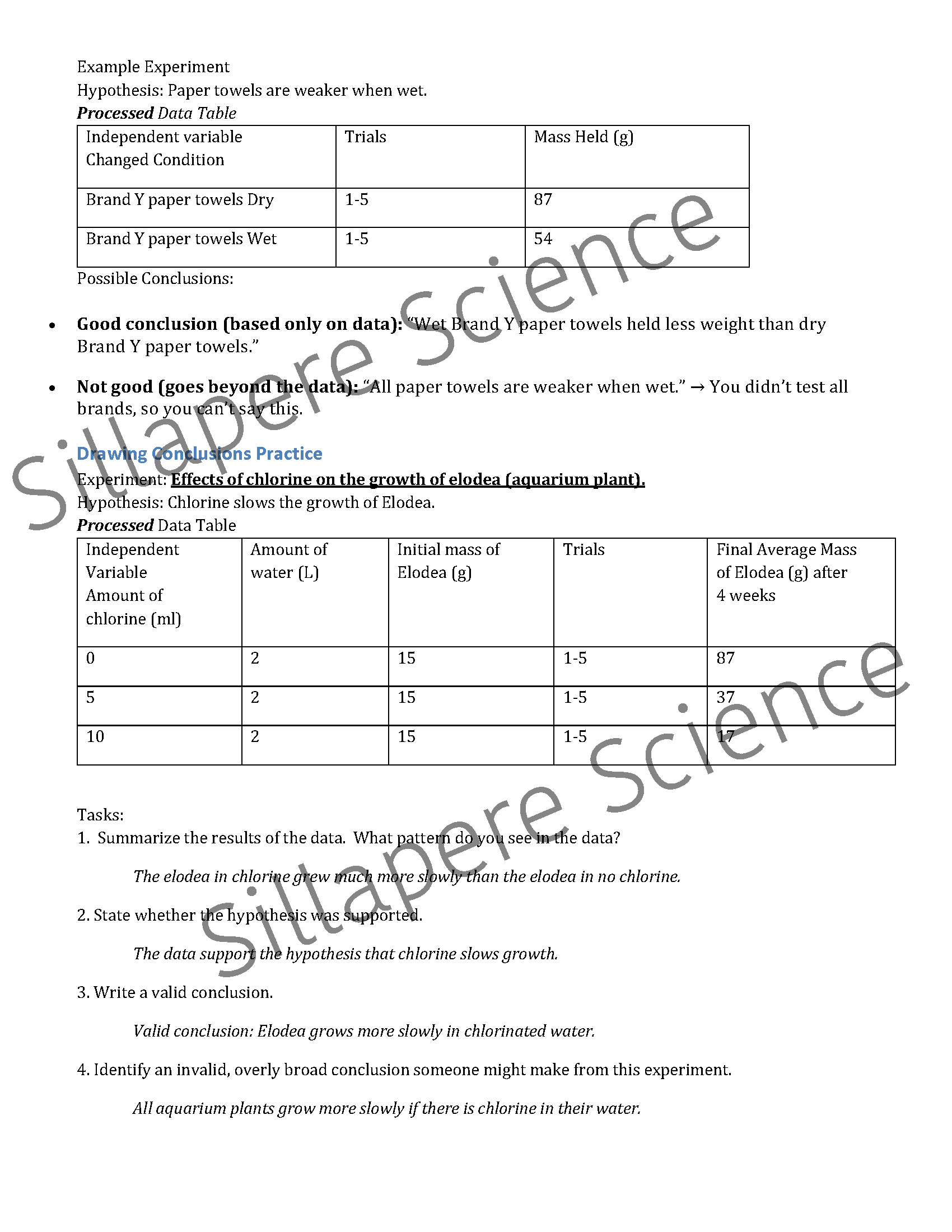
o Models a paper towel strength test with sample data table
o Demonstrates valid vs. invalid conclusions
· Practice worksheet:
o Elodea plant growth experiment with graph-based questions
o Additional scenarios on sugar dissolving and soil type effects
o Student tasks to summarize data, evaluate hypotheses, and write conclusions
· Support tools:
o “Good vs. Not Good” conclusion examples
o Student checklist for writing strong conclusions
This resource supports critical thinking and evidence-based reasoning for middle school students. It can be used as a guided activity, independent practice, or formative assessment.
Something went wrong, please try again later.
This resource hasn't been reviewed yet
To ensure quality for our reviews, only customers who have purchased this resource can review it
Report this resourceto let us know if it violates our terms and conditions.
Our customer service team will review your report and will be in touch.
£1.00