


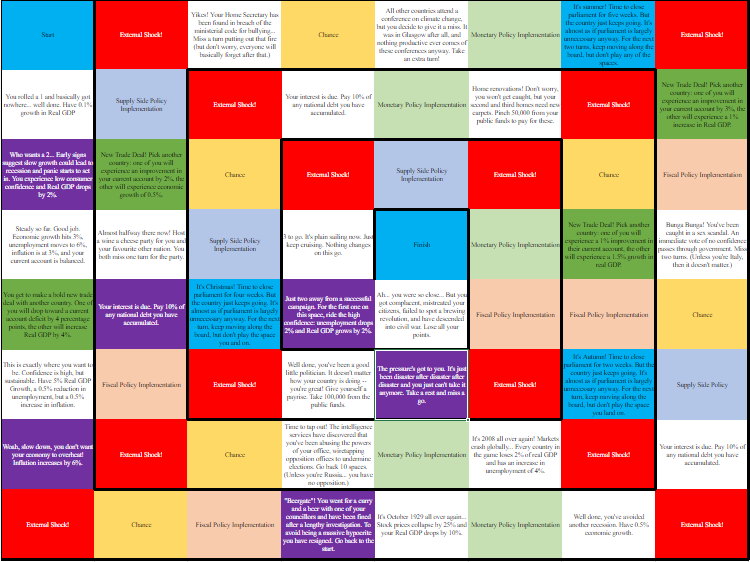

This game is a board game that pupils can play in pairs. They play as a country, moving around a board by rolling a die, implementing fiscal policies, monetary policies, and supply side policies at given intervals. The objective, like in the real world, is to optimise performance of an economy with reference to the major macroeconomic objectives (GDP, Unemployment, Inflation, and Current Account balance).
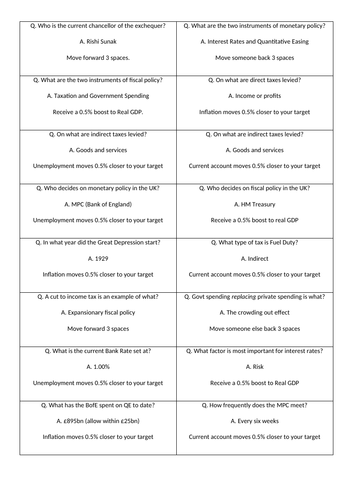
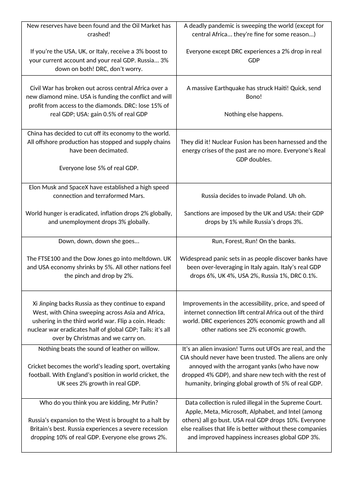
As pupils progress around the board, as well as having the opportunity to fine-tune their economic performance through various policies, they will encounter general knowledge chance questions to gain boosts to their targets, they will have opportunities to make trade deals with other playing nations, they will experience external shocks, missed goes, extra goes, political scandal, financial crashes, and more besides.
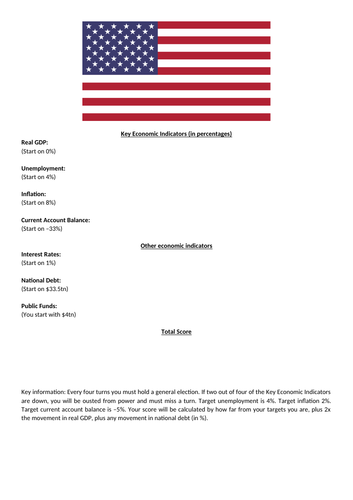
The country cards provided allow pupils to track their performance, updating their score sheet as they go, while also exposing them to real-life data points, with all country card data such as national debt, current inflation rates, central bank interest rates, unemployment rates, government revenue, and current account balance figures being accurate as of May 2022. These are provided in word format and can be edited and updated as world economic situations fluctuate. Further, the board provided is in excel format, and therefore can also be edited for different classes. When printing, select the fill to page option.
The resources (all in editable formats) included here are:
The Board
Country Cards
Chance Cards
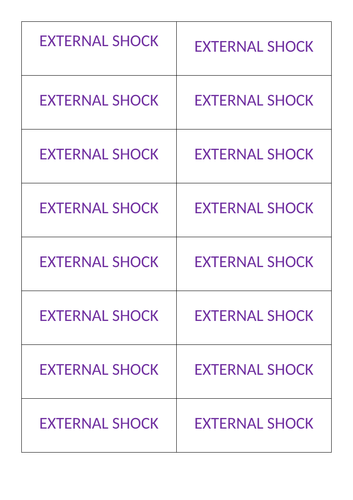
External Shocks Cards
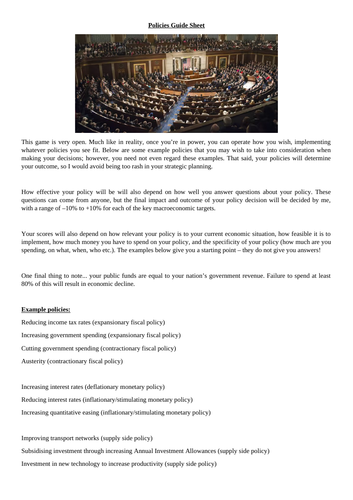
Policies Guide Sheet
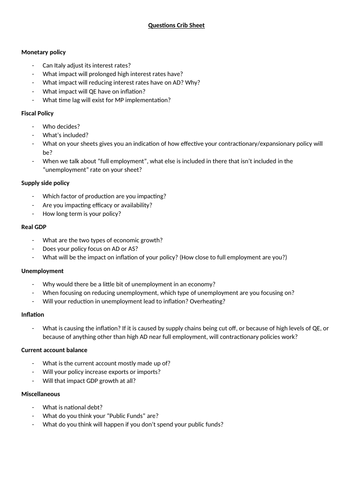
Questions Crib Sheet (to provide
The following is provided to pupils before they start and before they choose a country to give a brief overview of how the game will proceed:
*This game is very open. Much like in reality, once you’re in power, you can operate how you wish, implementing whatever policies you see fit. Below are some example policies that you may wish to take into consideration when making your decisions; however, you need not even regard these examples. That said, your policies will determine your outcome, so I would avoid being too rash in your strategic planning.
*How effective your policy will be will also depend on how well you answer questions about your policy. These questions can come from anyone, but the final impact and outcome of your policy decision will be decided by me, with a range of –10% to +10% for each of the key macroeconomic targets. *
*Your scores will also depend on how relevant your policy is to your current economic situation, how feasible it is to implement, how much money you have to spend on your policy, and the specificity of your policy (how much are you spending, on what, when, who etc.). The examples below give you a starting point – they do not give you answers!
*One final thing to note… your public funds are equal to your nation’s government revenue. Failure to spend at least 80% of this will result in economic decline. *
Something went wrong, please try again later.
This resource hasn't been reviewed yet
To ensure quality for our reviews, only customers who have purchased this resource can review it
Report this resourceto let us know if it violates our terms and conditions.
Our customer service team will review your report and will be in touch.
£4.00