


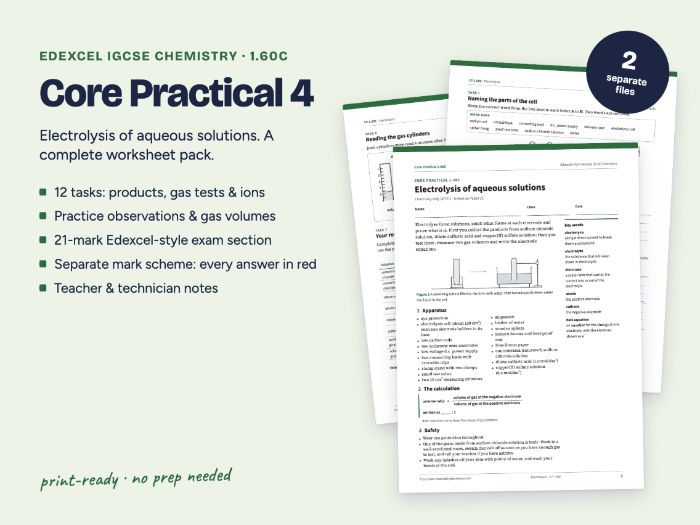
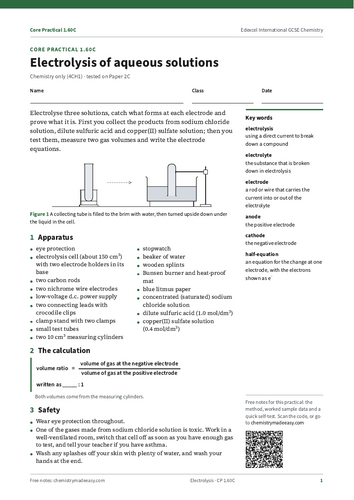
A complete Edexcel International GCSE Chemistry (4CH1) Core Practical 1.60C worksheet: investigating the electrolysis of aqueous solutions, with full mark scheme.
Two separate files
- Worksheet (12 pages): the student copy, print-ready in black and white
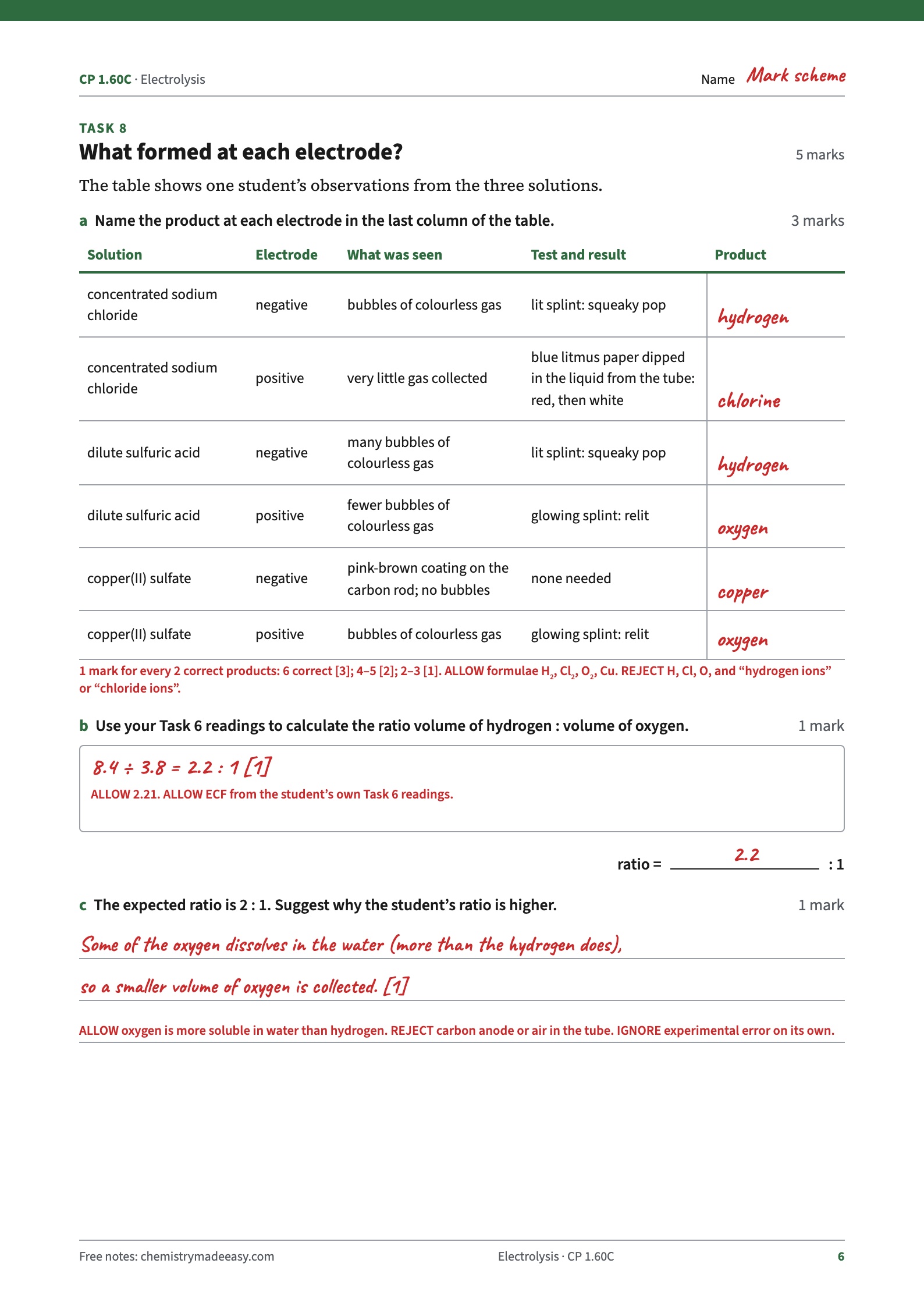
- Mark scheme (16 pages): the same worksheet completed with every answer written in red, with marks shown, plus teacher and technician notes, marking guidance and an Edexcel-style mark scheme for the exam questions
Use it during the practical, as a follow-up lesson or as homework. Students who miss the lab can still work through a full set of practice cylinder readings and electrode observations.
What students do
- Label the electrolysis cell set-up for concentrated sodium chloride solution, with gases collected over water
- Explain the reasons behind three practical choices (water-filled collecting tubes, concentrated sodium chloride solution, separate collecting tubes)
- Follow the method for concentrated sodium chloride solution, dilute sulfuric acid and copper(II) sulfate solution, with three “why?” prompts
- Pick the correct set-up for electrolysing dilute sulfuric acid from three drawn panels, and explain the faults in the other two
- Put eight steps for the electrolysis of molten lead(II) bromide demonstration in order
- Read two inverted 10 cm³ measuring cylinders to 0.2 cm³
- Record their own observations, or use the practice table to identify the products at each electrode, calculate the gas volume ratio and explain why the measured ratio is above 2 : 1
- Complete and write ionic half-equations, classify them as oxidation or reduction and explain why in terms of electrons
- Predict the products at both electrodes for copper(II) bromide and calcium nitrate solutions using the reactivity series and halide rules
- Spot an anomalous volume reading, find the expected reading, suggest the mistake made and calculate the mean rate of gas collection
- Decide how five procedural changes affect the calculated hydrogen-to-oxygen volume ratio (too high, too low or no change)
- Answer 8 exam-style questions (21 marks) in the Edexcel style, including two multiple-choice questions, why covalent ethanol does not conduct, half-equations for molten zinc iodide, calculating the mass of copper from the volume of oxygen, percentage yield of lead from molten lead(II) bromide, extraction of aluminium versus iron, and a 6-mark investigation of how voltage affects the volume of hydrogen produced
For teachers
- Quantities per group, recipes for the solutions, advice on carbon versus nichrome electrodes, timings and a safety note for each substance used
- Suggestion for a fourth unlabelled solution (solution X, magnesium sulfate) so live-lab observations go beyond the printed practice table
- Common slips to watch for
All questions are original. This is an independent resource, not endorsed by Pearson Edexcel.
Something went wrong, please try again later.
This resource hasn't been reviewed yet
To ensure quality for our reviews, only customers who have purchased this resource can review it
Report this resourceto let us know if it violates our terms and conditions.
Our customer service team will review your report and will be in touch.
£2.00