


What is EMF? How do you calculate EMF? How do you draw a cell diagram? What is cell diagram convention? What is cell notation? All this and more covered in this comprehensive lesson with questions and answers! This is a Year 13 A level lesson for Edexcel International Unit 5 – WCH15, but it can also be used for all UK exam boards. All the slides in this lesson are fully animated and include answers to every mini plenary question and exam question. The breakdown of the slides (which are best opened on Microsoft PowerPoint) is as follows:
Slide 1 - Title and 5-minute starter. The starter is a grid of four questions entitled ‘last week, last lesson, today’s learning and future learning’. Use this generic slide for all your lessons by simply changing the questions and the answers each time.
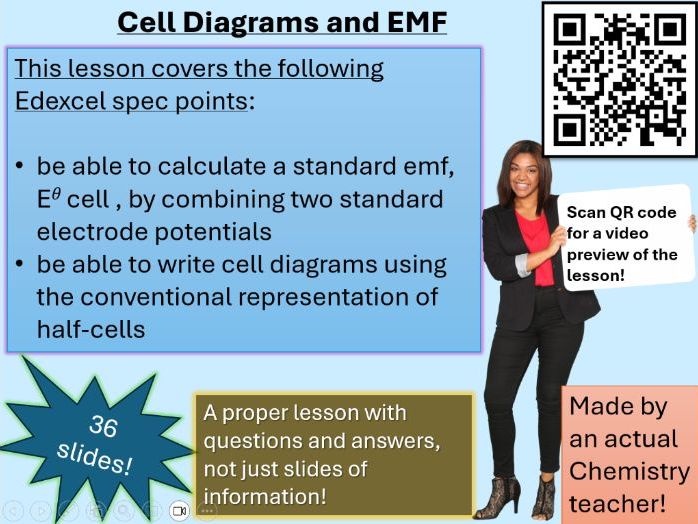
Slide 2 - Lesson objectives (see thumbnail image)
Slide 3 – word fill recap from previous lesson. Answers appear on the screen as you click
Slides 4 – 5: introduction to cell diagrams as a convenient shorthand to represent a voltaic cell. An example using the Daniell cell is included
Slide 6 – use this slide to teach students the rules/guidelines for drawing cell diagrams
Slide 7 – meaning of the word phase can be explained using this slide
Slide 8 – worked example 1, use this to show students how to draw the cell diagram for a magnesium-silver cell. The answer appears on the screen when you click
Slides 9 – 11: allow students to try this next example on a mini whiteboard (copper-silver cell). Answer included. Print slides 9 – 10 for students to glue into their book.
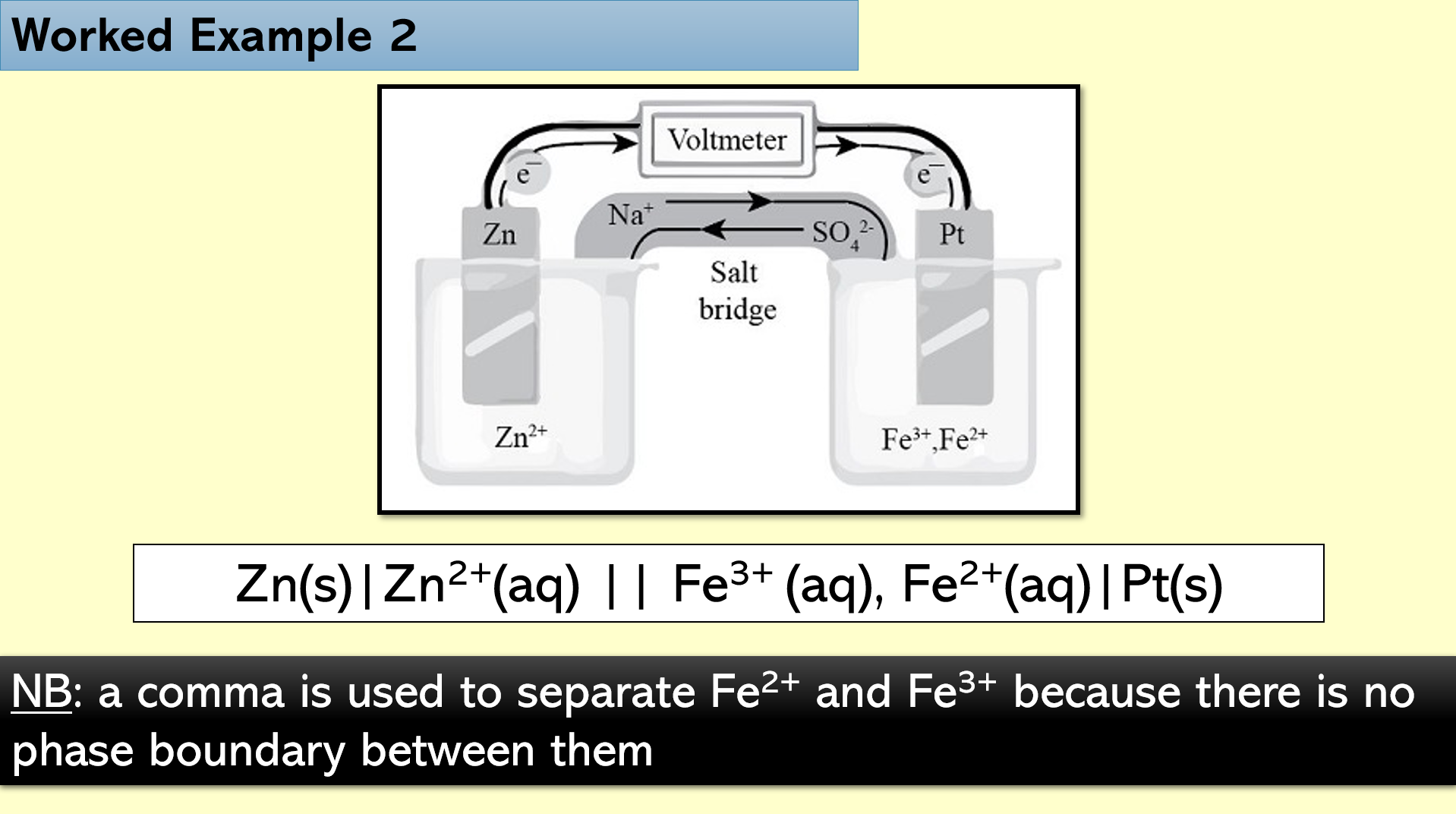
Slide 12 – worked example 2, use this to show students how to draw the cell diagram for a cell which involves elements in varying oxidation states. Model it on your whiteboard, but the answer also appears on the screen when you click
Slide 13 – student can attempt this cell diagram on a mini whiteboard, based on what you would have just taught them
Slides 14 – 16: worked example 3, use this one to show students to draw a cell diagram for a cell which has a standard hydrogen electrode. The slides that are hidden are to be printed for students
Slide 17 – a very challenging example involving the manganate(VI) half cell for students to attempt on a mini whiteboard
Slides 18 – 21: independent learning practice. Students get a chance to embed their learning and demonstrate their new skills. Print slides 19 and 20 so that they have copies of the questions. The answers are included on slide 21
Slide 22 – how to calculate EMF
Slide 23 - learning pit stop questions to test students’ understanding so far. Answers animate on the screen when you click
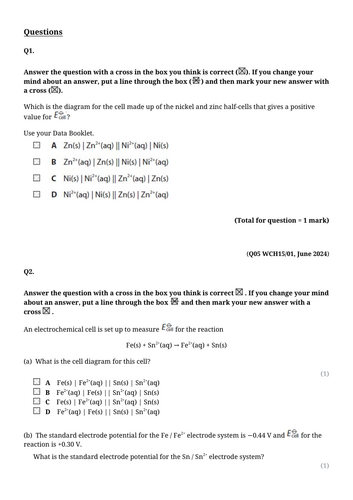
Slides 24 – 36: exam questions with mark scheme answers included with this resource
Please consider leaving a review! This really helps promote our store! Thanks!
Something went wrong, please try again later.
This resource hasn't been reviewed yet
To ensure quality for our reviews, only customers who have purchased this resource can review it
Report this resourceto let us know if it violates our terms and conditions.
Our customer service team will review your report and will be in touch.
£3.75